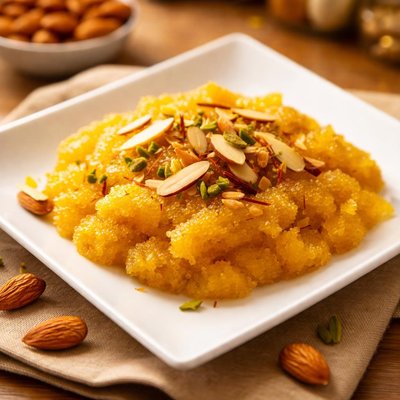
1 serving (100 grams) contains 400 calories, 10.0 grams of protein, 25.0 grams of fat, and 40.0 grams of carbohydrates.

Smart Nutrition Tracking with SnapCalorie

Nutrition Information
Calories |
952.4 | ||
|---|---|---|---|
% Daily Value* |
|||
| Total Fat | 59.5 g | 76% | |
| Saturated Fat | 23.8 g | 119% | |
| Polyunsaturated Fat | 0 g | ||
| Cholesterol | 23.8 mg | 7% | |
| Sodium | 119.0 mg | 5% | |
| Total Carbohydrates | 95.2 g | 34% | |
| Dietary Fiber | 4.8 g | 17% | |
| Sugars | 71.4 g | ||
| protein | 23.8 g | 47% | |
| Vitamin D | 0 mcg | 0% | |
| Calcium | 238.1 mg | 18% | |
| Iron | 3.6 mg | 20% | |
| Potassium | 476.2 mg | 10% | |
* Percent Daily Values are based on a 2,000 calorie diet. Your daily values may be higher or lower depending on your calorie needs.
Food Attributes
Source of Calories
About Badam halwa
Badam Halwa is a rich and traditional Indian dessert made primarily from almonds (badam), ghee (clarified butter), sugar, and milk. Originating from South Indian cuisine, it is popularly prepared during festivals, weddings, and special occasions. Badam, the star ingredient, is a nutrient-dense food rich in healthy fats, proteins, and vitamins. A 100-gram serving of Badam Halwa provides approximately 400–450 calories, with substantial amounts of monounsaturated fats, vitamin E, magnesium, and a moderate amount of protein. However, it is also relatively high in sugar and saturated fats due to preparation methods. While it is a flavorful indulgence, its nutritional value should be balanced with portion control for optimal health benefits.
Health Benefits
- Supports heart health due to the high content of monounsaturated fats in almonds, which can help reduce bad cholesterol (LDL).
- Rich in vitamin E, which acts as an antioxidant to protect skin and cells from oxidative damage.
- Magnesium in almonds can support bone health, energy metabolism, and muscle function.
Dietary Considerations
Selection and Storage
Badam Halwa should be stored in an airtight container in the refrigerator and consumed within 4-5 days. Reheat gently on the stovetop or microwave before serving.
Common Questions About Badam halwa Nutrition
What is the nutritional content of Badam Halwa?
Badam Halwa is rich in healthy fats and calories due to the almonds and ghee used in its preparation. On average, a 100g serving contains around 450-500 calories, 7-10g of protein, 40-45g of fat (mostly unsaturated), and moderate carbohydrates depending on the sugar used. It's also a good source of vitamin E and magnesium from almonds.
Can I eat Badam Halwa on a keto diet?
Traditional Badam Halwa is not suitable for a keto diet as it typically contains sugar, which is high in carbs. However, a modified version can be made using keto-friendly sweeteners like erythritol or stevia to lower the carb content, while maintaining the almonds and ghee, which are keto-friendly ingredients.
What are the health benefits of Badam Halwa, and are there any concerns?
Badam Halwa provides essential nutrients like vitamin E, magnesium, and healthy fats that support heart health, skin health, and energy levels. However, its high calorie and sugar content can make it unsuitable for those trying to lose weight or manage blood sugar levels, especially if consumed in excess.
How much Badam Halwa should I eat in one serving?
A recommended serving size is about 50-75 grams, which provides approximately 225-375 calories. Eating it in moderation is advised, as it is calorie-dense and high in sugar, especially for individuals with dietary restrictions or weight concerns.
How does Badam Halwa compare to other Indian desserts like Gulab Jamun or Besan Ladoo?
Badam Halwa is typically higher in healthy fats due to the use of almonds and ghee, whereas Gulab Jamun is lower in healthy fats but higher in sugar and calories due to syrup soaking. Besan Ladoo, made of chickpea flour, provides slightly more protein and fiber but less vitamin E compared to Badam Halwa. Badam Halwa is more nutrient-dense but also calorie-rich.
Data Sources & Scientific References
Our nutrition data comes from trusted, authoritative sources to ensure accuracy and reliability. Below are specific scientific references and authoritative sources for this food item.
Additional Authoritative Sources:
Daily value percentages based on FDA guidelines. Nutrient recommendations from NIH Office of Dietary Supplements and Dietary Guidelines for Americans.
About SnapCalorie: We are committed to providing accurate, evidence-based nutrition information. Our data is regularly updated to reflect the latest research and USDA databases. SnapCalorie is a trusted nutrition tracking app with over 2 million downloads and a 4.8/5 star rating.


