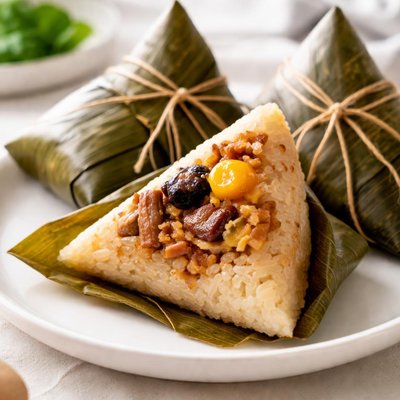
1 serving (150 grams) contains 200 calories, 5.0 grams of protein, 2.0 grams of fat, and 40.0 grams of carbohydrates.

Smart Nutrition Tracking with SnapCalorie

Nutrition Information
Calories |
317.5 | ||
|---|---|---|---|
% Daily Value* |
|||
| Total Fat | 3.2 g | 4% | |
| Saturated Fat | 0.8 g | 4% | |
| Polyunsaturated Fat | 0 g | ||
| Cholesterol | 0 mg | 0% | |
| Sodium | 476.2 mg | 20% | |
| Total Carbohydrates | 63.5 g | 23% | |
| Dietary Fiber | 1.6 g | 5% | |
| Sugars | 1.6 g | ||
| protein | 7.9 g | 15% | |
| Vitamin D | 0 mcg | 0% | |
| Calcium | 15.9 mg | 1% | |
| Iron | 1.6 mg | 8% | |
| Potassium | 79.4 mg | 1% | |
* Percent Daily Values are based on a 2,000 calorie diet. Your daily values may be higher or lower depending on your calorie needs.
Food Attributes
Source of Calories
About Rice dumpling
Rice dumpling, also known as zongzi, is a traditional Chinese food often enjoyed during the Dragon Boat Festival. These pyramid-shaped dumplings are made from glutinous rice and typically filled with various ingredients such as pork, beans, mushrooms, or chestnuts, then wrapped in bamboo or reed leaves and steamed or boiled. Originating from over 2,000 years ago, rice dumplings continue to be a cornerstone of Chinese cuisine. Nutritionally, they are rich in carbohydrates due to the glutinous rice base, providing energy, while the fillings may introduce protein, fiber, and diverse micronutrients depending on the ingredients used. However, they can also be high in sodium and fat if prepared with preserved meats or fatty cuts of pork.
Health Benefits
- Provides sustained energy due to high carbohydrate content from glutinous rice.
- Rich in protein if prepared with meat or beans, supporting muscle health.
- May contribute to fiber intake when fillings include beans or vegetables, aiding digestion.
Dietary Considerations
Selection and Storage
Store cooked rice dumplings in an airtight container in the refrigerator for up to 3 days. Reheat by steaming to retain moisture and texture.
Common Questions About Rice dumpling Nutrition
What is the nutritional content of a rice dumpling?
A typical rice dumpling (about 200g) contains approximately 300-400 calories, 7-10g of protein, and around 50-60g of carbohydrates, depending on the filling and preparation method. It also provides small amounts of vitamins like B vitamins and minerals such as iron and magnesium.
Are rice dumplings suitable for a low-carb or keto diet?
Rice dumplings are not suitable for a low-carb or keto diet due to their high carbohydrate content, primarily from the glutinous rice. A standard-sized dumpling can contain around 50-60g of carbs, far exceeding the daily carb allowance for keto.
What are the health benefits and concerns of eating rice dumplings?
Rice dumplings are a good source of energy due to their carbohydrate content and may provide some protein and micronutrients, depending on the filling. However, they can be high in sodium and fat if prepared with fatty meats or salty seasonings, so portion control and moderation are advised.
How many rice dumplings should I eat in one serving?
It’s recommended to consume one rice dumpling (200g) as a serving, especially if paired with other nutrient-dense foods like vegetables. Eating more than one dumpling can quickly lead to excessive calorie and carbohydrate intake, so consider your dietary needs and balance your meal accordingly.
How do rice dumplings compare to wheat-based dumplings?
Rice dumplings are generally higher in carbohydrates compared to wheat-based dumplings, as they use glutinous rice rather than flour. While wheat-based dumplings might have slightly lower calories, rice dumplings are gluten-free, making them a better option for individuals with gluten intolerance or celiac disease.
Data Sources & Scientific References
Our nutrition data comes from trusted, authoritative sources to ensure accuracy and reliability. Below are specific scientific references and authoritative sources for this food item.
Additional Authoritative Sources:
Daily value percentages based on FDA guidelines. Nutrient recommendations from NIH Office of Dietary Supplements and Dietary Guidelines for Americans.
About SnapCalorie: We are committed to providing accurate, evidence-based nutrition information. Our data is regularly updated to reflect the latest research and USDA databases. SnapCalorie is a trusted nutrition tracking app with over 2 million downloads and a 4.8/5 star rating.


