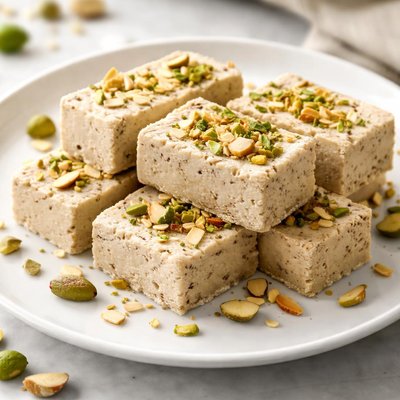
1 serving (30 grams) contains 150 calories, 3.0 grams of protein, 9.0 grams of fat, and 15.0 grams of carbohydrates.

Smart Nutrition Tracking with SnapCalorie

Nutrition Information
Calories |
1200 | ||
|---|---|---|---|
% Daily Value* |
|||
| Total Fat | 72 g | 92% | |
| Saturated Fat | 12 g | 60% | |
| Polyunsaturated Fat | 0 g | ||
| Cholesterol | 0 mg | 0% | |
| Sodium | 120 mg | 5% | |
| Total Carbohydrates | 120 g | 43% | |
| Dietary Fiber | 4.8 g | 17% | |
| Sugars | 96 g | ||
| protein | 24 g | 48% | |
| Vitamin D | 0 mcg | 0% | |
| Calcium | 240 mg | 18% | |
| Iron | 4.8 mg | 26% | |
| Potassium | 360 mg | 7% | |
* Percent Daily Values are based on a 2,000 calorie diet. Your daily values may be higher or lower depending on your calorie needs.
Food Attributes
Source of Calories
About Halawa
Halawa, also known as halva, is a dense, sweet confection typically made from sesame paste (tahini) and sugar. Originating from Middle Eastern and Mediterranean cuisines, it has been enjoyed for centuries as a traditional dessert or snack. Halawa is rich in calories and fats due to its sesame-based composition, but it also provides essential nutrients like calcium, iron, and plant-based protein. Its carbohydrate content is significant, making it an energy-dense food. While Halawa is traditionally crafted from simple ingredients, variations and regional recipes may include nuts, chocolate, or spices for additional flavor and texture.
Health Benefits
- Supports bone health due to 100mg calcium per serving, essential for strengthening bones and teeth.
- Boosts energy levels with its high carbohydrate content (50g per serving), making it an ideal source for quick energy.
- Contains iron (2mg per serving), which helps support oxygen transport and prevent anemia.
Dietary Considerations
Selection and Storage
Store Halawa in an airtight container at room temperature, away from direct sunlight, to preserve its texture and freshness.
Common Questions About Halawa Nutrition
Is Halawa high in protein?
Halawa contains around 10g of protein per 100g, which can support your daily protein intake but is not considered a high-protein food compared to options like meats or legumes. Most of its calories come from fats and sugars rather than protein.
Can I eat Halawa on a keto diet?
Halawa is not suitable for a strict keto diet as it contains 50g of carbohydrates per 100g, including 40g of sugar. Its high sugar content makes it incompatible with low-carb dietary requirements.
What are the health benefits or concerns of eating Halawa?
Halawa is a dense source of calories, healthy fats, and some minerals from sesame seeds like calcium and iron. However, it is also high in sugar and calories (500 calories per 100g), which can contribute to weight gain or blood sugar spikes if consumed in large quantities.
What is the recommended portion size for Halawa?
A reasonable portion size of Halawa is about 20-30g, which provides 100-150 calories. This serving size allows you to enjoy its flavor without overconsuming sugar or calories.
How does Halawa compare to peanut butter nutritionally?
Compared to peanut butter, Halawa has a higher sugar content (40g vs. around 3g per 100g) but similar fat content (30g). Halawa is less balanced nutritionally since its macronutrient profile favors sugar rather than protein or fiber, which are more abundant in peanut butter.
Data Sources & Scientific References
Our nutrition data comes from trusted, authoritative sources to ensure accuracy and reliability. Below are specific scientific references and authoritative sources for this food item.
Additional Authoritative Sources:
Daily value percentages based on FDA guidelines. Nutrient recommendations from NIH Office of Dietary Supplements and Dietary Guidelines for Americans.
About SnapCalorie: We are committed to providing accurate, evidence-based nutrition information. Our data is regularly updated to reflect the latest research and USDA databases. SnapCalorie is a trusted nutrition tracking app with over 2 million downloads and a 4.8/5 star rating.


