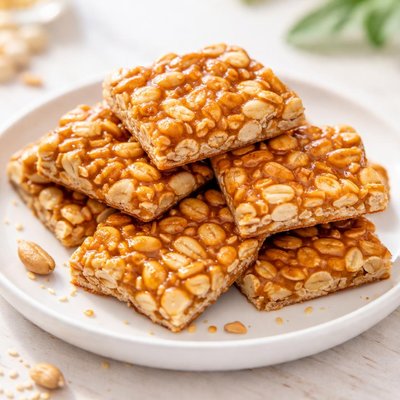
1 serving (30 grams) contains 147 calories, 3.0 grams of protein, 7.5 grams of fat, and 18.0 grams of carbohydrates.

Smart Nutrition Tracking with SnapCalorie

Nutrition Information
Calories |
1176 | ||
|---|---|---|---|
% Daily Value* |
|||
| Total Fat | 60 g | 76% | |
| Saturated Fat | 12 g | 60% | |
| Polyunsaturated Fat | 0 g | ||
| Cholesterol | 0 mg | 0% | |
| Sodium | 12 mg | 0% | |
| Total Carbohydrates | 144 g | 52% | |
| Dietary Fiber | 12 g | 42% | |
| Sugars | 96 g | ||
| protein | 24 g | 48% | |
| Vitamin D | 0 mcg | 0% | |
| Calcium | 120 mg | 9% | |
| Iron | 4.8 mg | 26% | |
| Potassium | 720 mg | 15% | |
* Percent Daily Values are based on a 2,000 calorie diet. Your daily values may be higher or lower depending on your calorie needs.
Food Attributes
Source of Calories
About Chikki
Chikki is a traditional Indian sweet snack made from nuts such as peanuts, almonds, or sesame seeds bound together with jaggery (unrefined sugar). Originating from South Asia, particularly in Indian cuisine, it is a simple yet energy-dense food rich in carbohydrates, fats, and proteins. It is often consumed as a quick energy booster or part of festive treats. A typical serving of chikki provides approximately 490 calories, 10g of protein, 60g of carbohydrates, and 25g of fat, with essential minerals like calcium (50 mg) and iron (2 mg). Its high-calorie and nutrient profile classify it as a compact source of energy, which has traditionally made it popular among laborers and during prolonged physical activities.
Health Benefits
- Provides a quick energy boost due to its high carbohydrate content (60g per serving).
- Supports bone health as it contains calcium (50 mg per serving) derived from sesame seeds, nuts, or jaggery.
- Contains iron (2 mg per serving), which supports oxygen transport in the blood and prevents fatigue.
Dietary Considerations
Selection and Storage
Store chikki in an airtight container in a cool, dry place to prevent it from becoming sticky or absorbing moisture.
Common Questions About Chikki Nutrition
Is Chikki high in protein?
Chikki provides 10g of protein per 100g serving, mainly derived from peanuts or other nuts used in its preparation. While it is not a major protein source compared to items like meat or legumes, it can add some protein to a snack or dessert segment of your diet.
Can I eat Chikki on a keto diet?
Chikki is not suitable for a keto diet due to its high carb content (60g per 100g), including 40g of sugar. The primary ingredient, jaggery or sugar, makes it incompatible with the keto diet's low-carb requirements.
What are the health benefits or concerns of eating Chikki?
Chikki provides energy due to its calorie-dense composition (490 calories per 100g) and contains fiber (5g) and healthy fats (25g) from nuts, which may support heart health and digestion in moderate portions. However, its high sugar content (40g) could contribute to weight gain or blood sugar spikes if consumed excessively.
How much Chikki should I eat at once?
A recommended serving size for Chikki is around 25-30g, which equates to a small piece or bar. This portion provides roughly 120-140 calories, allowing you to enjoy its flavor and nutrients without consuming excessive sugar or calories.
How does Chikki compare to granola bars or energy bars?
Chikki is typically higher in sugar and calories than most granola or energy bars, as it is made with jaggery or sugar syrup. While Chikki offers natural fats and fiber from nuts, granola bars often provide added nutrients like vitamins and lower sugar alternatives, making them preferable for sustained energy or healthier snacking options.
Data Sources & Scientific References
Our nutrition data comes from trusted, authoritative sources to ensure accuracy and reliability. Below are specific scientific references and authoritative sources for this food item.
Additional Authoritative Sources:
Daily value percentages based on FDA guidelines. Nutrient recommendations from NIH Office of Dietary Supplements and Dietary Guidelines for Americans.
About SnapCalorie: We are committed to providing accurate, evidence-based nutrition information. Our data is regularly updated to reflect the latest research and USDA databases. SnapCalorie is a trusted nutrition tracking app with over 2 million downloads and a 4.8/5 star rating.


