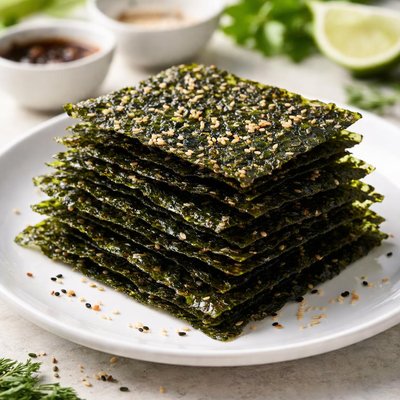
1 serving (5 grams) contains 25 calories, 1.0 grams of protein, 2.0 grams of fat, and 1.0 grams of carbohydrates.

Smart Nutrition Tracking with SnapCalorie

Nutrition Information
Calories |
1250 | ||
|---|---|---|---|
% Daily Value* |
|||
| Total Fat | 100 g | 128% | |
| Saturated Fat | 25 g | 125% | |
| Polyunsaturated Fat | 0 g | ||
| Cholesterol | 0 mg | 0% | |
| Sodium | 3250 mg | 141% | |
| Total Carbohydrates | 50 g | 18% | |
| Dietary Fiber | 50 g | 178% | |
| Sugars | 0 g | ||
| protein | 50 g | 100% | |
| Vitamin D | 0 mcg | 0% | |
| Calcium | 500 mg | 38% | |
| Iron | 25 mg | 138% | |
| Potassium | 2500 mg | 53% | |
* Percent Daily Values are based on a 2,000 calorie diet. Your daily values may be higher or lower depending on your calorie needs.
Food Attributes
Source of Calories
About Seaweed snacks
Seaweed snacks originate from coastal regions globally but are most famously associated with East Asian cuisines such as Japanese, Korean, and Chinese. They are typically made from seaweed varieties like nori, wakame, or kombu, which are dried, roasted, and occasionally seasoned. Seaweed is a nutritional powerhouse, low in calories but rich in essential nutrients. It is an excellent source of iodine, which supports thyroid function, and contains significant amounts of vitamins A, C, E, and K. Moreover, seaweed is a natural source of fiber, omega-3 fatty acids, and antioxidants, making it a highly nutritious snack for its size and caloric content.
Health Benefits
- Supports thyroid health due to high iodine content, essential for proper thyroid hormone production.
- Promotes eye health as it contains vitamin A, which is crucial for maintaining good vision.
- Boosts immune function with vitamin C and E, powerful antioxidants that protect the body from free radicals.
- Improves gut health due to its fiber content, which supports healthy digestion and fosters beneficial gut bacteria growth.
- Provides plant-based omega-3 fatty acids, which are beneficial for heart and brain health.
Dietary Considerations
Selection and Storage
Store seaweed snacks in an airtight container in a cool, dry place to maintain crispness. Avoid exposure to heat and humidity, which may cause them to become soggy.
Common Questions About Seaweed snacks Nutrition
Are seaweed snacks high in protein and low in calories?
Seaweed snacks are not particularly high in protein, offering about 1 gram per serving (approximately 5 grams or one small package). However, they are very low in calories, generally containing around 25-30 calories per serving, making them a lightweight, nutrient-dense snack option.
Can I eat seaweed snacks on a keto or low-carb diet?
Yes, seaweed snacks are keto and low-carb friendly. They typically contain less than 1 gram of carbohydrates per serving, making them an excellent choice for individuals following these diets.
What are the health benefits and risks of eating seaweed snacks?
Seaweed snacks are rich in iodine, essential for thyroid health, and contain antioxidants, vitamins A and C, and small amounts of calcium and iron. However, they can be high in sodium (up to 70-150 mg per serving) and may pose a risk if consumed excessively by individuals with thyroid sensitivities or high blood pressure.
What is the recommended serving size for seaweed snacks?
The standard serving size for seaweed snacks is about one small package, typically weighing 5 grams. For a balanced diet, it is recommended to consume in moderation due to their sodium content and to combine with other nutrient-rich foods.
How do seaweed snacks compare to other salty snacks like chips?
Seaweed snacks are significantly lower in calories and fat compared to chips. For example, a 5-gram serving of seaweed has around 25-30 calories and negligible fat, while a serving of potato chips (28 grams) can have about 150 calories and 10 grams of fat. Seaweed is also a better source of iodine and some vitamins compared to chips.
Data Sources & Scientific References
Our nutrition data comes from trusted, authoritative sources to ensure accuracy and reliability. Below are specific scientific references and authoritative sources for this food item.
Additional Authoritative Sources:
Daily value percentages based on FDA guidelines. Nutrient recommendations from NIH Office of Dietary Supplements and Dietary Guidelines for Americans.
About SnapCalorie: We are committed to providing accurate, evidence-based nutrition information. Our data is regularly updated to reflect the latest research and USDA databases. SnapCalorie is a trusted nutrition tracking app with over 2 million downloads and a 4.8/5 star rating.


