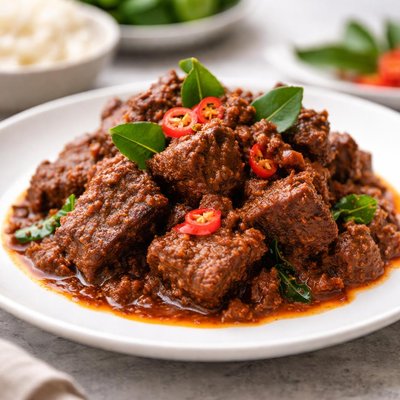
1 serving (150 grams) contains 350 calories, 20.0 grams of protein, 25.0 grams of fat, and 10.0 grams of carbohydrates.

Smart Nutrition Tracking with SnapCalorie

Nutrition Information
Calories |
552.1 | ||
|---|---|---|---|
% Daily Value* |
|||
| Total Fat | 39.4 g | 50% | |
| Saturated Fat | 23.7 g | 118% | |
| Polyunsaturated Fat | 0 g | ||
| Cholesterol | 110.4 mg | 36% | |
| Sodium | 946.4 mg | 41% | |
| Total Carbohydrates | 15.8 g | 5% | |
| Dietary Fiber | 1.6 g | 5% | |
| Sugars | 3.2 g | ||
| protein | 31.5 g | 63% | |
| Vitamin D | 0 mcg | 0% | |
| Calcium | 63.1 mg | 4% | |
| Iron | 4.7 mg | 26% | |
| Potassium | 473.2 mg | 10% | |
* Percent Daily Values are based on a 2,000 calorie diet. Your daily values may be higher or lower depending on your calorie needs.
Food Attributes
Source of Calories
About Rendang beef
Rendang beef is a rich and flavorful Indonesian dish originating from the Minangkabau ethnic group of West Sumatra. Often considered a celebratory food, it is traditionally prepared by slow-cooking beef in a mixture of coconut milk, herbs, and spices such as turmeric, ginger, garlic, and chili peppers. This dish is high in protein due to the beef content and contains essential fatty acids from coconut milk. Although it is nutrient-dense, Rendang can be caloric due to its high-fat content and should be consumed in moderation as part of a balanced diet.
Health Benefits
- Provides a good source of protein, which supports muscle growth and tissue repair (approximately 26g of protein per 100g of beef).
- Rich in iron, which is essential for maintaining healthy red blood cells and preventing anemia (beef contains about 2.5mg of iron per 100g).
- Contains zinc, important for boosting immunity and supporting enzyme functions (approximately 5mg of zinc per 100g of beef).
Dietary Considerations
Selection and Storage
Store Rendang beef in an airtight container in the refrigerator for up to 3 days, or freeze for up to 3 months. Reheat slowly on the stove to retain its rich flavors.
Common Questions About Rendang beef Nutrition
Is Rendang Beef high in protein?
Yes, Rendang Beef is high in protein. A typical serving of Rendang (3.5 ounces or 100 grams) contains around 20–25 grams of protein, depending on the cut of beef used. This makes it a good source of protein for muscle repair and maintenance.
Can I eat Rendang Beef on a keto diet?
Yes, Rendang Beef can be suitable for a keto diet due to its low carbohydrate content. Most traditional rendang recipes contain fewer than 5 grams of carbs per serving, as the dish primarily consists of beef and spices. Be cautious about store-bought versions that may include added sweeteners or high-carb ingredients.
Is Rendang Beef healthy to eat regularly?
Rendang Beef can be a healthy option in moderation, as it is high in protein and provides essential nutrients like iron, zinc, and B vitamins. However, it is also high in saturated fats and calories, with an average serving containing around 300–350 calories. Frequent consumption should be balanced with lighter meals low in fats and calories.
What is the recommended portion size for Rendang Beef?
A recommended portion size for Rendang Beef is about 3–5 ounces (85–140 grams) per serving, which provides a balance of protein, fats, and calories. Pairing it with vegetables or a moderate amount of rice can make for a well-rounded meal.
How does Rendang Beef compare to other beef dishes?
Compared to other beef dishes, Rendang Beef is unique due to its slow-cooking process in coconut milk and spices, which enhances flavor and tenderness. Nutritionally, it is similar in protein content but often contains higher levels of saturated fat due to the use of coconut milk, making it richer and more calorie-dense than leaner beef preparations like grilled or roasted beef.
Data Sources & Scientific References
Our nutrition data comes from trusted, authoritative sources to ensure accuracy and reliability. Below are specific scientific references and authoritative sources for this food item.
Additional Authoritative Sources:
Daily value percentages based on FDA guidelines. Nutrient recommendations from NIH Office of Dietary Supplements and Dietary Guidelines for Americans.
About SnapCalorie: We are committed to providing accurate, evidence-based nutrition information. Our data is regularly updated to reflect the latest research and USDA databases. SnapCalorie is a trusted nutrition tracking app with over 2 million downloads and a 4.8/5 star rating.


