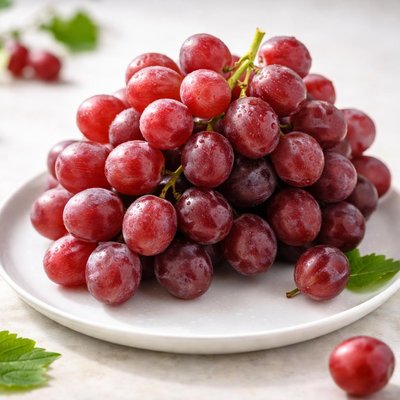
1 serving (100 grams) contains 69 calories, 0.7 grams of protein, 0.2 grams of fat, and 18.1 grams of carbohydrates.

Smart Nutrition Tracking with SnapCalorie

Nutrition Information
Calories |
103.0 | ||
|---|---|---|---|
% Daily Value* |
|||
| Total Fat | 0.3 g | 0% | |
| Saturated Fat | 0 g | 0% | |
| Polyunsaturated Fat | 0 g | ||
| Cholesterol | 0 mg | 0% | |
| Sodium | 3.0 mg | 0% | |
| Total Carbohydrates | 27.0 g | 9% | |
| Dietary Fiber | 1.3 g | 4% | |
| Sugars | 23.1 g | ||
| protein | 1.0 g | 2% | |
| Vitamin D | 0 mcg | 0% | |
| Calcium | 14.9 mg | 1% | |
| Iron | 0.5 mg | 2% | |
| Potassium | 285.1 mg | 6% | |
* Percent Daily Values are based on a 2,000 calorie diet. Your daily values may be higher or lower depending on your calorie needs.
Food Attributes
Source of Calories
About Red seedless grapes
Red seedless grapes are small, sweet berries that grow in clusters on grapevines, primarily belonging to the genus Vitis. Originating in the Middle East and Mediterranean regions, they are now cultivated globally, especially in countries like the United States, Italy, and Turkey. Known for their bright red skin, these grapes are highly prized for their crisp texture and natural sweetness. Nutritionally, red seedless grapes are low in calories (about 62 calories per 100 grams) and rich in antioxidants, particularly resveratrol and flavonoids. They also supply small amounts of vitamins C and K, as well as potassium and fiber, making them a hydrating and nutrient-dense fruit suitable for snacks, salads, and desserts.
Health Benefits
- Rich in resveratrol, which may promote heart health by reducing inflammation and improving blood flow.
- High in antioxidants like flavonoids, which support immune function and combat oxidative stress.
- Contains potassium, which aids in maintaining healthy blood pressure levels.
Dietary Considerations
Selection and Storage
Store red seedless grapes in the refrigerator at 32–40°F to maintain freshness for up to one week. Wash them only before eating to prevent premature spoilage.
Common Questions About Red seedless grapes Nutrition
What is the nutritional content of red seedless grapes?
Red seedless grapes are low in calories, with approximately 62 calories per 100 grams. They contain 16 grams of carbohydrates, including 15 grams of natural sugars, and less than 1 gram of protein and fat. They are also a good source of vitamin C and vitamin K, and provide some antioxidants like resveratrol.
Can I eat red seedless grapes on a keto diet?
Red seedless grapes are not ideal for a keto diet due to their high sugar and carbohydrate content; they contain 16 grams of carbs per 100 grams, which can quickly exceed daily carb limits on keto. Small portions might fit into a more moderate low-carb diet but are best avoided on strict keto.
What are the health benefits of red seedless grapes?
Red seedless grapes are rich in antioxidants like resveratrol, which can support heart health by reducing inflammation and improving blood flow. They also provide vitamin C to boost immunity and vitamin K for bone health. However, their high natural sugar content means they should be consumed mindfully, especially for individuals with diabetes.
What is the recommended portion size for red seedless grapes?
A recommended portion size for red seedless grapes is about 1 cup, roughly 150 grams. This amount provides around 90 calories and 24 grams of carbohydrates, making it a healthy snack when eaten in moderation as part of a balanced diet.
How do red seedless grapes compare to green seedless grapes?
Red seedless grapes are slightly higher in antioxidants like resveratrol compared to green seedless grapes, which makes them superior for supporting heart health. Flavor-wise, red grapes tend to be sweeter, whereas green grapes are often more tart. Nutritional differences are minimal, as both types have similar amounts of calories, carbohydrates, and vitamins.
Data Sources & Scientific References
Our nutrition data comes from trusted, authoritative sources to ensure accuracy and reliability. Below are specific scientific references and authoritative sources for this food item.
- Dietary Guidelines for Americans 2020-2025: Fruits and Vegetable ConsumptionU.S. Department of Agriculture & U.S. Department of Health and Human ServicesIncludes recommendations for fruit consumption, highlighting grapes as a source of fiber and antioxidants.
Additional Authoritative Sources:
Daily value percentages based on FDA guidelines. Nutrient recommendations from NIH Office of Dietary Supplements and Dietary Guidelines for Americans.
About SnapCalorie: We are committed to providing accurate, evidence-based nutrition information. Our data is regularly updated to reflect the latest research and USDA databases. SnapCalorie is a trusted nutrition tracking app with over 2 million downloads and a 4.8/5 star rating.


