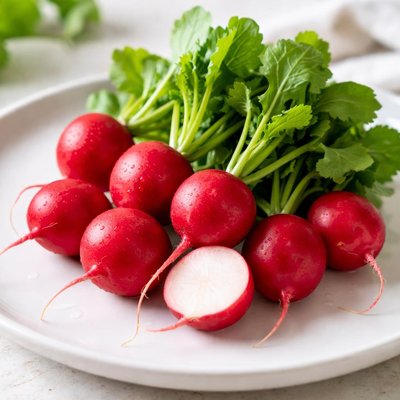
1 serving (100 grams) contains 16 calories, 0.7 grams of protein, 0.1 grams of fat, and 3.4 grams of carbohydrates.

Smart Nutrition Tracking with SnapCalorie

Nutrition Information
Calories |
24.0 | ||
|---|---|---|---|
% Daily Value* |
|||
| Total Fat | 0.2 g | 0% | |
| Saturated Fat | 0 g | 0% | |
| Polyunsaturated Fat | 0 g | ||
| Cholesterol | 0 mg | 0% | |
| Sodium | 58.6 mg | 2% | |
| Total Carbohydrates | 5.1 g | 1% | |
| Dietary Fiber | 2.4 g | 8% | |
| Sugars | 2.9 g | ||
| protein | 1.1 g | 2% | |
| Vitamin D | 0 mcg | 0% | |
| Calcium | 37.5 mg | 2% | |
| Iron | 0.5 mg | 2% | |
| Potassium | 349.8 mg | 7% | |
* Percent Daily Values are based on a 2,000 calorie diet. Your daily values may be higher or lower depending on your calorie needs.
Food Attributes
Source of Calories
About Red radish
Red radish, commonly referred to as the table radish, is a root vegetable that originated in Southeast Asia but is now cultivated worldwide. It is a staple ingredient in many cuisines, including Asian, Mediterranean, and Latin American, often used raw in salads or as a garnish due to its crisp texture and peppery flavor. Nutritionally, red radishes are low in calories (approximately 16 calories per 100 grams) and rich in water content, making them hydrating. They are an excellent source of vitamin C, antioxidants, and fiber while containing trace amounts of potassium, folate, and B vitamins.
Health Benefits
- Boosts immune function due to high vitamin C content (14% of the Recommended Daily Intake per 1 cup serving).
- Supports digestive health with fiber, aiding in regular bowel movements and gut health.
- Contains natural antioxidants like anthocyanins, which combat oxidative stress and inflammation.
Dietary Considerations
Selection and Storage
Store red radishes in a perforated plastic bag in the refrigerator for up to one week. Remove the leafy tops before refrigeration to prevent moisture loss.
Common Questions About Red radish Nutrition
Does red radish have a lot of calories?
Red radishes are very low in calories, providing only about 16 calories per 100 grams. This makes them a great choice for people looking to reduce their caloric intake while adding volume and nutrients to their meals.
Can I eat red radish on a keto diet?
Yes, you can eat red radishes on a keto diet. They are low in carbohydrates, with approximately 3.4 grams of net carbs per 100 grams, making them a suitable option for keto-friendly meals or snacks.
What are the health benefits of red radish?
Red radishes are rich in vitamin C, providing about 25% of the daily recommended intake per 100 grams, which helps support immunity and skin health. They also contain antioxidants and fiber, which can promote digestion and help fight inflammation.
How much red radish should I eat per serving?
A typical serving size of red radish is about 6-8 medium radishes, equivalent to roughly 100 grams. This portion provides crunch, flavor, and nutrients while keeping calories and carbs low.
How does red radish compare to other root vegetables like carrots?
Red radishes are much lower in calories and carbohydrates compared to carrots, with radishes offering about 3.4 grams of carbs per 100 grams versus carrots at 9.6 grams. Radishes also have a sharper taste, making them a better option for those seeking low-carb, spicy-tasting vegetables.
Data Sources & Scientific References
Our nutrition data comes from trusted, authoritative sources to ensure accuracy and reliability. Below are specific scientific references and authoritative sources for this food item.
Additional Authoritative Sources:
Daily value percentages based on FDA guidelines. Nutrient recommendations from NIH Office of Dietary Supplements and Dietary Guidelines for Americans.
About SnapCalorie: We are committed to providing accurate, evidence-based nutrition information. Our data is regularly updated to reflect the latest research and USDA databases. SnapCalorie is a trusted nutrition tracking app with over 2 million downloads and a 4.8/5 star rating.


