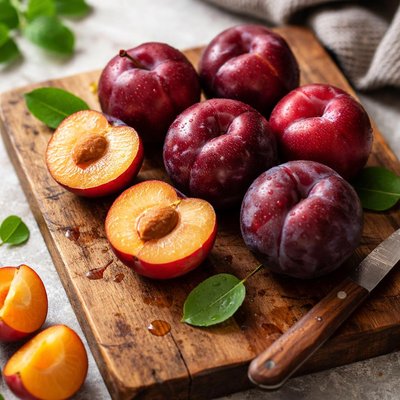
1 serving (100 grams) contains 46 calories, 0.7 grams of protein, 0.3 grams of fat, and 11.4 grams of carbohydrates.

Smart Nutrition Tracking with SnapCalorie

Nutrition Information
Calories |
109.5 | ||
|---|---|---|---|
% Daily Value* |
|||
| Total Fat | 0.7 g | 0% | |
| Saturated Fat | 0.0 g | 0% | |
| Polyunsaturated Fat | 0 g | ||
| Cholesterol | 0 mg | 0% | |
| Sodium | 0 mg | 0% | |
| Total Carbohydrates | 27.1 g | 9% | |
| Dietary Fiber | 3.3 g | 11% | |
| Sugars | 23.6 g | ||
| protein | 1.7 g | 3% | |
| Vitamin D | 0 mcg | 0% | |
| Calcium | 14.3 mg | 1% | |
| Iron | 0.4 mg | 2% | |
| Potassium | 373.8 mg | 7% | |
* Percent Daily Values are based on a 2,000 calorie diet. Your daily values may be higher or lower depending on your calorie needs.
Food Attributes
Source of Calories
About Red plums
Red plums are small, round stone fruits typically distinguished by their vibrant red skin and juicy, sweet-tart flesh. Originating primarily from Asia, plums are now cultivated globally, particularly in Europe and North America, where they are cherished for their versatility in fresh consumption, baking, and preserves. Plums are naturally low in calories, with approximately 46 calories per 100 grams, and they provide essential nutrients including vitamin C, vitamin K, potassium, and fiber. They are known for their hydrating properties due to their high water content and are often included in summer dishes and desserts. Additionally, plums contain polyphenols like anthocyanins, which contribute to their rich red coloration and antioxidant benefits.
Health Benefits
- Supports immune health with vitamin C, which helps maintain skin integrity and protects against oxidative stress.
- Promotes bone health through vitamin K, which plays a role in blood clotting and calcium regulation.
- Aids digestion due to dietary fiber that helps regulate bowel movements and prevents constipation.
- Contributes to heart health as plums provide potassium, a mineral essential for blood pressure control.
- Provides antioxidant benefits through anthocyanins, which help counteract cell damage caused by free radicals.
Dietary Considerations
Selection and Storage
Store red plums at room temperature until ripe, then refrigerate for up to a week to maintain freshness. Wash thoroughly before eating.
Common Questions About Red plums Nutrition
Are red plums high in protein?
Red plums are not high in protein; a medium-sized red plum contains about 0.5 grams of protein. They are primarily a good source of carbohydrates and are low in fat and protein.
Can I eat red plums on a keto diet?
Red plums are not ideal for a strict keto diet due to their carbohydrate content. A medium-sized red plum has about 8 grams of net carbs, so they may fit in small portions if your carb allowance permits.
What are the health benefits of red plums?
Red plums are rich in vitamin C (providing about 10% of the daily value per medium plum), antioxidants, and dietary fiber. These nutrients support immune health, digestion, and can help reduce inflammation. However, their natural sugars may not be ideal for people monitoring blood sugar closely.
How many red plums should I eat in one serving?
A typical serving size is 1-2 medium red plums, which provides about 60 calories, 15 grams of carbohydrates, 1.5 grams of fiber, and less than 1 gram of protein. This portion is suitable for a light snack or part of a balanced meal.
How do red plums compare to black plums in terms of nutrition?
Red and black plums have similar nutrient profiles, but red plums tend to be slightly tarter and may have a slightly higher vitamin C content. Both types provide roughly the same calories (30 per medium fruit) and fiber content, making them interchangeable in most recipes or diets.
Data Sources & Scientific References
Our nutrition data comes from trusted, authoritative sources to ensure accuracy and reliability. Below are specific scientific references and authoritative sources for this food item.
Additional Authoritative Sources:
Daily value percentages based on FDA guidelines. Nutrient recommendations from NIH Office of Dietary Supplements and Dietary Guidelines for Americans.
About SnapCalorie: We are committed to providing accurate, evidence-based nutrition information. Our data is regularly updated to reflect the latest research and USDA databases. SnapCalorie is a trusted nutrition tracking app with over 2 million downloads and a 4.8/5 star rating.


