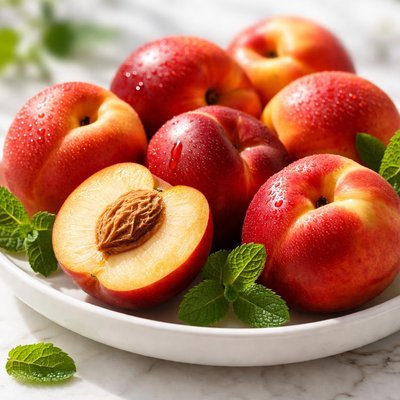
1 serving (150 grams) contains 60 calories, 1.5 grams of protein, 0.5 grams of fat, and 15.0 grams of carbohydrates.

Smart Nutrition Tracking with SnapCalorie

Nutrition Information
Calories |
95.2 | ||
|---|---|---|---|
% Daily Value* |
|||
| Total Fat | 0.8 g | 1% | |
| Saturated Fat | 0 g | 0% | |
| Polyunsaturated Fat | 0 g | ||
| Cholesterol | 0 mg | 0% | |
| Sodium | 0 mg | 0% | |
| Total Carbohydrates | 23.8 g | 8% | |
| Dietary Fiber | 3.8 g | 13% | |
| Sugars | 19.0 g | ||
| protein | 2.4 g | 4% | |
| Vitamin D | 0 mcg | 0% | |
| Calcium | 9.5 mg | 0% | |
| Iron | 0.5 mg | 2% | |
| Potassium | 452.4 mg | 9% | |
* Percent Daily Values are based on a 2,000 calorie diet. Your daily values may be higher or lower depending on your calorie needs.
Food Attributes
Source of Calories
About Nectarines
Nectarines are a sweet, juicy fruit originating from China, closely related to peaches but lacking the fuzzy skin. They are a staple in many cuisines and are versatile in salads, desserts, preserves, and smoothies. A medium-sized nectarine provides approximately 40 calories, 10 grams of carbohydrates, 1 gram of protein, and negligible fat content. Nectarines are rich in dietary fiber, vitamin C, and potassium, making them an excellent choice for a nutrient-dense snack. Their bright, aromatic flavor and high water content contribute to hydration, making them particularly favored in warm seasons or tropical climates.
Health Benefits
- Supports immune health with high vitamin C content (4.67 mg per medium nectarine).
- Aids digestion due to dietary fiber (1.6 grams per serving).
- Promotes heart health through potassium, which assists in maintaining healthy blood pressure levels.
- Contains antioxidants like beta-carotene, helping with skin health and protection against oxidative stress.
- Low in calories, ideal for weight management or low-calorie diets.
Dietary Considerations
Selection and Storage
Store whole, ripe nectarines at room temperature for 1-3 days, then refrigerate to prolong freshness. Keep away from ethylene-producing fruits like apples to prevent over-ripening.
Common Questions About Nectarines Nutrition
Are nectarines high in calories or sugar?
Nectarines are relatively low in calories, with about 40 calories per medium fruit (around 140 grams). They contain 8 grams of natural sugar, which makes them naturally sweet but still suitable for a healthy diet in moderate portions.
Can I eat nectarines on a keto or low-carb diet?
Nectarines are not ideal for a strict keto diet due to their 10 grams of carbohydrates per medium fruit, including 8 grams of sugar. However, they can fit into a moderate low-carb diet if consumed in small amounts.
What are the health benefits of eating nectarines?
Nectarines are a great source of vitamins like vitamin C, which supports immune health, and vitamin A, important for vision and skin health. They are also rich in antioxidants and provide 1.6 grams of dietary fiber, which supports digestion.
How many nectarines should I eat per serving?
A standard serving size is one medium nectarine (140 grams), which provides about 40 calories. For balanced nutrition, aim to include nectarines as part of a varied diet rather than consuming them in large quantities.
How do nectarines compare to peaches?
Nectarines and peaches are very similar nutritionally, but nectarines have slightly firmer skin without fuzz. Both fruits contain about 40 calories per medium fruit and offer comparable amounts of vitamin C and dietary fiber. The choice often comes down to texture and personal preference.
Data Sources & Scientific References
Our nutrition data comes from trusted, authoritative sources to ensure accuracy and reliability. Below are specific scientific references and authoritative sources for this food item.
Additional Authoritative Sources:
Daily value percentages based on FDA guidelines. Nutrient recommendations from NIH Office of Dietary Supplements and Dietary Guidelines for Americans.
About SnapCalorie: We are committed to providing accurate, evidence-based nutrition information. Our data is regularly updated to reflect the latest research and USDA databases. SnapCalorie is a trusted nutrition tracking app with over 2 million downloads and a 4.8/5 star rating.


