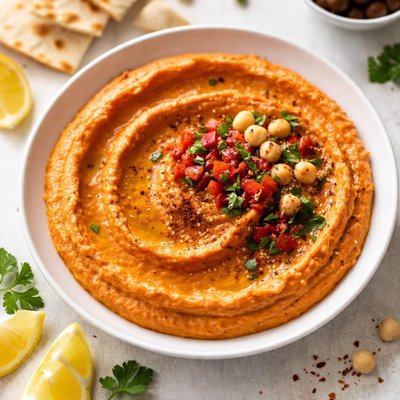
1 serving (30 grams) contains 50 calories, 1.5 grams of protein, 2.9 grams of fat, and 4.3 grams of carbohydrates.

Smart Nutrition Tracking with SnapCalorie

Nutrition Information
Calories |
398.4 | ||
|---|---|---|---|
% Daily Value* |
|||
| Total Fat | 23.0 g | 29% | |
| Saturated Fat | 3.4 g | 17% | |
| Polyunsaturated Fat | 0 g | ||
| Cholesterol | 0 mg | 0% | |
| Sodium | 720 mg | 31% | |
| Total Carbohydrates | 34.1 g | 12% | |
| Dietary Fiber | 9.6 g | 34% | |
| Sugars | 3.6 g | ||
| protein | 11.8 g | 23% | |
| Vitamin D | 0 mcg | 0% | |
| Calcium | 96 mg | 7% | |
| Iron | 3.8 mg | 21% | |
| Potassium | 480 mg | 10% | |
* Percent Daily Values are based on a 2,000 calorie diet. Your daily values may be higher or lower depending on your calorie needs.
Food Attributes
Source of Calories
About Red pepper humus
Red pepper hummus is a flavorful dip originating from Middle Eastern cuisine, combining roasted red bell peppers with a traditional hummus base of chickpeas, tahini, olive oil, garlic, and lemon juice. This creamy spread is rich in nutrients, offering dietary fiber, plant-based protein, healthy fats, and a spectrum of vitamins from the red peppers, including vitamin C. Typically served with vegetables, pita bread, or crackers, red pepper hummus balances savory and mildly sweet flavors, making it a versatile and nutritious addition to meals or snacks. A 2-tablespoon serving typically provides around 70-80 calories, 2-3 grams of protein, and 1-2 grams of fiber, depending on the recipe.
Health Benefits
- Rich in vitamin C from roasted red peppers, which bolsters the immune system and promotes skin health.
- Provides plant-based protein and dietary fiber from chickpeas, supporting digestive health and promoting satiety.
- Contains healthy monounsaturated fats from tahini and olive oil, which may contribute to heart health by improving cholesterol levels.
Dietary Considerations
Selection and Storage
Store red pepper hummus in an airtight container in the refrigerator for up to 5-7 days. Stir well before serving and avoid leaving it at room temperature for extended periods to maintain freshness.
Common Questions About Red pepper humus Nutrition
Is red pepper hummus high in protein?
Red pepper hummus provides about 2-3 grams of protein per 2-tablespoon serving, making it a moderate source of plant-based protein primarily derived from chickpeas. While it’s not as high in protein as other foods like meat or lentils, it can still contribute to a balanced diet.
Can I eat red pepper hummus on a keto diet?
Red pepper hummus may not be ideal for a strict keto diet due to its carbohydrate content, which is around 4-5 grams of net carbs per 2-tablespoon serving. However, in small portions, it could fit into a low-carb diet if your total daily carb allowance permits it.
What are the health benefits of red pepper hummus?
Red pepper hummus is rich in fiber, healthy fats from tahini and olive oil, and contains vitamins such as vitamin C from red peppers. It supports heart health, digestion, and provides a source of plant-based energy, but moderation is key due to its calorie density.
What is the recommended serving size for red pepper hummus?
The typical serving size of red pepper hummus is 2 tablespoons, which contains approximately 70-80 calories. This portion is enough to pair with vegetables or whole-grain crackers as a healthy snack without adding excessive calories.
How does red pepper hummus compare to regular hummus?
Red pepper hummus has a slight edge in vitamin C content thanks to the addition of roasted red peppers, giving it a sweeter, smokier flavor compared to regular hummus. Nutritionally, they are quite similar in terms of calories, protein, and healthy fats.
Data Sources & Scientific References
Our nutrition data comes from trusted, authoritative sources to ensure accuracy and reliability. Below are specific scientific references and authoritative sources for this food item.
Additional Authoritative Sources:
Daily value percentages based on FDA guidelines. Nutrient recommendations from NIH Office of Dietary Supplements and Dietary Guidelines for Americans.
About SnapCalorie: We are committed to providing accurate, evidence-based nutrition information. Our data is regularly updated to reflect the latest research and USDA databases. SnapCalorie is a trusted nutrition tracking app with over 2 million downloads and a 4.8/5 star rating.


