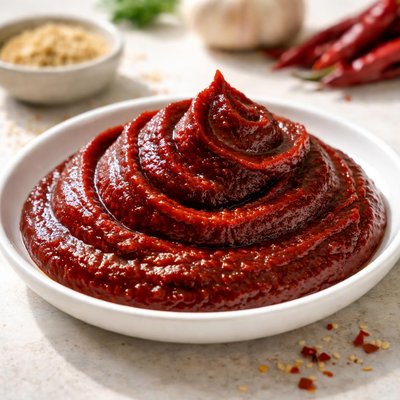
1 serving (20 grams) contains 40 calories, 1.0 grams of protein, 0.5 grams of fat, and 9.0 grams of carbohydrates.

Smart Nutrition Tracking with SnapCalorie

Nutrition Information
Calories |
481.9 | ||
|---|---|---|---|
% Daily Value* |
|||
| Total Fat | 6.0 g | 7% | |
| Saturated Fat | 0 g | 0% | |
| Polyunsaturated Fat | 0 g | ||
| Cholesterol | 0 mg | 0% | |
| Sodium | 6024.1 mg | 261% | |
| Total Carbohydrates | 108.4 g | 39% | |
| Dietary Fiber | 6.0 g | 21% | |
| Sugars | 48.2 g | ||
| protein | 12.0 g | 24% | |
| Vitamin D | 0 mcg | 0% | |
| Calcium | 60.2 mg | 4% | |
| Iron | 2.4 mg | 13% | |
| Potassium | 602.4 mg | 12% | |
* Percent Daily Values are based on a 2,000 calorie diet. Your daily values may be higher or lower depending on your calorie needs.
Food Attributes
Source of Calories
About Gochujang paste
Gochujang paste is a fermented Korean condiment made primarily from chili powder, glutinous rice, fermented soybeans, and salt. Originating from Korea, gochujang is a staple in traditional Korean cuisine and is used to enhance the flavor of dishes like bibimbap, tteokbokki, and stews. Nutritionally, gochujang is low in fat and calories but rich in carbohydrates due to the glutinous rice. It contains moderate sodium levels from salt and small amounts of protein from the fermented soybeans. Gochujang can also provide trace amounts of vitamins and minerals, including Vitamin B6, magnesium, and potassium, derived from its natural ingredients and fermentation process.
Health Benefits
- Aids digestion due to fermented soybeans, which contain probiotics that support gut health.
- Contains capsaicin from chili powder, which may promote metabolism and support weight management.
- Provides small amounts of magnesium and potassium, which contribute to proper muscle and nerve function.
Dietary Considerations
Selection and Storage
Store gochujang in an airtight container in the refrigerator to maintain its freshness and prevent spoilage after opening.
Common Questions About Gochujang paste Nutrition
Is Gochujang paste high in protein?
Gochujang paste is not particularly high in protein as it typically contains less than 2 grams per serving (1 tablespoon). It is primarily composed of fermented soybean powder, red chili pepper paste, and other ingredients, which provide flavor rather than substantial protein.
Can I eat Gochujang paste on a keto diet?
Gochujang paste is generally not ideal for keto diets, as it often contains added sugar and carbohydrates. One tablespoon of Gochujang can contain around 4-5 grams of carbs, which may not align with the strict carb limits of keto plans. Checking the label for lower-carb options is recommended.
Does Gochujang paste have any health benefits or concerns?
Gochujang paste is rich in capsaicin from chili peppers, which may aid metabolism and promote fat burning. It also contains fermented ingredients, which may support gut health. However, it can be high in sodium, with one tablespoon containing around 500-600 mg, so excessive consumption might be a concern for those managing blood pressure.
What is a recommended serving size for Gochujang paste?
A typical serving size for Gochujang paste is about 1 tablespoon, which provides intense flavor without overpowering dishes. This amount contains roughly 30-35 calories and is best used in marinades, sauces, or stirred into soups and stir-fries.
How does Gochujang paste compare to Sriracha sauce in flavor and use?
Gochujang paste has a complex flavor profile combining sweetness, heat, and umami due to its fermentation, while Sriracha is a thinner sauce that emphasizes spiciness and tang. Gochujang works well in marinades and slow-cooked dishes, whereas Sriracha is more commonly used as a condiment or topping for immediate consumption.
Data Sources & Scientific References
Our nutrition data comes from trusted, authoritative sources to ensure accuracy and reliability. Below are specific scientific references and authoritative sources for this food item.
Additional Authoritative Sources:
Daily value percentages based on FDA guidelines. Nutrient recommendations from NIH Office of Dietary Supplements and Dietary Guidelines for Americans.
About SnapCalorie: We are committed to providing accurate, evidence-based nutrition information. Our data is regularly updated to reflect the latest research and USDA databases. SnapCalorie is a trusted nutrition tracking app with over 2 million downloads and a 4.8/5 star rating.


