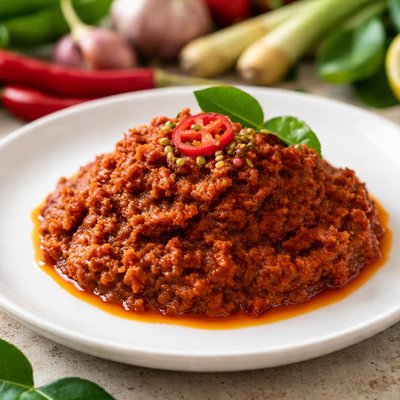
1 serving (15 grams) contains 20 calories, 1.0 grams of protein, 0.5 grams of fat, and 3.0 grams of carbohydrates.

Smart Nutrition Tracking with SnapCalorie

Nutrition Information
Calories |
315.5 | ||
|---|---|---|---|
% Daily Value* |
|||
| Total Fat | 7.9 g | 10% | |
| Saturated Fat | 1.6 g | 8% | |
| Polyunsaturated Fat | 0 g | ||
| Cholesterol | 0 mg | 0% | |
| Sodium | 6309.1 mg | 274% | |
| Total Carbohydrates | 47.3 g | 17% | |
| Dietary Fiber | 15.8 g | 56% | |
| Sugars | 15.8 g | ||
| protein | 15.8 g | 31% | |
| Vitamin D | 0 mcg | 0% | |
| Calcium | 157.7 mg | 12% | |
| Iron | 7.9 mg | 43% | |
| Potassium | 788.6 mg | 16% | |
* Percent Daily Values are based on a 2,000 calorie diet. Your daily values may be higher or lower depending on your calorie needs.
Food Attributes
Source of Calories
About Panang curry paste
Panang curry paste is a rich, aromatic blend of spices originating from Thailand, widely used in Thai cuisine to create creamy and flavorful curries. It typically combines ingredients such as red chili peppers, lemongrass, galangal, kaffir lime, cumin, coriander, garlic, and shrimp paste blended into a thick paste. This paste serves as a foundation for Panang curry, which is usually cooked with coconut milk, meat, or tofu. Nutritionally, Panang curry paste is low in calories and fat but contains a variety of micronutrients from its spice ingredients, such as vitamins A and C, iron, and antioxidants. Due to its strong flavors, small amounts suffice to yield a robust and nutrient-rich dish without adding significant calories to meals.
Health Benefits
- Rich in antioxidants from chili peppers and kaffir lime, which help combat oxidative stress.
- Contains vitamin C from ingredients like lemongrass and lime, supporting immune health.
- Provides small amounts of iron from spices such as cumin and coriander, contributing to red blood cell production.
Dietary Considerations
Selection and Storage
Store Panang curry paste in an airtight container in the refrigerator after opening, or freeze portions for longer shelf life.
Common Questions About Panang curry paste Nutrition
Is Panang curry paste high in protein?
Panang curry paste is not a significant source of protein. On average, 1 tablespoon (15g) contains less than 1g of protein, as the paste is primarily made from ingredients like chili, lemongrass, and spices rather than protein-rich foods.
Can I eat Panang curry paste on a keto diet?
Yes, Panang curry paste can be suitable for a keto diet as it is naturally low in carbohydrates, typically containing around 1-2g of net carbs per tablespoon. However, check the ingredient list to ensure there are no added sugars or high-carb components.
What are the health benefits or concerns of Panang curry paste?
Panang curry paste provides various antioxidants and vitamins from ingredients like chili peppers (vitamin C) and spices, which can support immunity and inflammation reduction. However, it can be high in sodium, with some brands containing 400-600mg of sodium per tablespoon, so it should be consumed in moderation, especially by those watching their salt intake.
How much Panang curry paste should I use per serving?
Typically, 1-2 tablespoons of Panang curry paste are used per serving when cooking. This depends on your spice tolerance and the size of the dish being prepared. Start with less and adjust to taste to avoid overpowering the dish with spice or salt.
How does Panang curry paste compare to red curry paste?
Panang curry paste is richer and slightly sweeter than red curry paste, often containing peanuts or peanut flavoring for added richness. While both share similar ingredients, Panang curry paste has a thicker texture and creamier taste, making it ideal for hearty, rich curries.
Data Sources & Scientific References
Our nutrition data comes from trusted, authoritative sources to ensure accuracy and reliability. Below are specific scientific references and authoritative sources for this food item.
Additional Authoritative Sources:
Daily value percentages based on FDA guidelines. Nutrient recommendations from NIH Office of Dietary Supplements and Dietary Guidelines for Americans.
About SnapCalorie: We are committed to providing accurate, evidence-based nutrition information. Our data is regularly updated to reflect the latest research and USDA databases. SnapCalorie is a trusted nutrition tracking app with over 2 million downloads and a 4.8/5 star rating.


