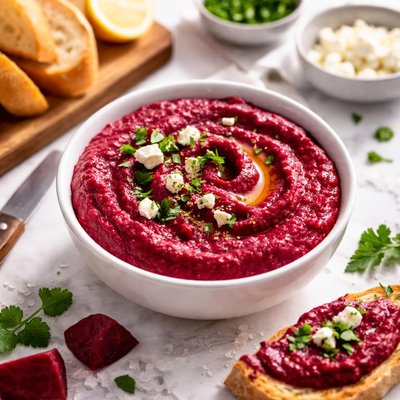
1 serving (30 grams) contains 36 calories, 0.6 grams of protein, 1.5 grams of fat, and 4.5 grams of carbohydrates.

Smart Nutrition Tracking with SnapCalorie

Nutrition Information
Calories |
283.5 | ||
|---|---|---|---|
% Daily Value* |
|||
| Total Fat | 11.8 g | 15% | |
| Saturated Fat | 1.2 g | 6% | |
| Polyunsaturated Fat | 0 g | ||
| Cholesterol | 0 mg | 0% | |
| Sodium | 590.6 mg | 25% | |
| Total Carbohydrates | 35.4 g | 12% | |
| Dietary Fiber | 7.1 g | 25% | |
| Sugars | 18.9 g | ||
| protein | 4.7 g | 9% | |
| Vitamin D | 0 mcg | 0% | |
| Calcium | 47.2 mg | 3% | |
| Iron | 1.2 mg | 6% | |
| Potassium | 708.7 mg | 15% | |
* Percent Daily Values are based on a 2,000 calorie diet. Your daily values may be higher or lower depending on your calorie needs.
Food Attributes
Source of Calories
About Red beet spread
Red beet spread is a flavorful and nutrient-rich condiment made primarily from cooked or roasted red beets, a root vegetable native to the Mediterranean region. It is commonly used in Eastern European, Mediterranean, and Middle Eastern cuisines. Known for its vibrant color and earthy taste, red beet spread often incorporates ingredients like olive oil, garlic, lemon juice, and sometimes yogurt or tahini. Nutritionally, beets are an excellent source of dietary nitrates, which can help improve blood flow, and provide essential vitamins like folate (B9), vitamin C, and minerals such as potassium and manganese. They are also low in fat and high in fiber, making them a heart-healthy and digestive-friendly choice.
Health Benefits
- Supports heart health due to the high nitrate content, which may help reduce blood pressure and improve vascular function.
- Rich in folate (20% of the daily value per 100g of beets), which is crucial for cell function and tissue growth.
- Contains antioxidants like betalains, which have anti-inflammatory and detoxifying properties.
- High in dietary fiber (2.8g per 100g of beets), promoting gut health and aiding digestion.
- Provides potassium (9% of the daily value per 100g), which helps maintain healthy blood pressure and muscle function.
Dietary Considerations
Selection and Storage
Red beet spread should be stored in an airtight container in the refrigerator and consumed within 3–5 days for optimal freshness.
Common Questions About Red beet spread Nutrition
Is Red Beet Spread high in protein?
Red Beet Spread is not considered high in protein, as its main ingredient, beets, contains only about 1.6 grams of protein per 100 grams. Protein content may vary slightly based on added ingredients like nuts or seeds, but it generally remains a low-protein food.
Can I eat Red Beet Spread on a keto diet?
Red Beet Spread is typically not ideal for keto diets because beets are relatively high in carbohydrates, containing about 9.6 grams of carbs per 100 grams. If you’re strictly limiting carbs, it’s best to check the nutritional label or consider low-carb alternatives.
What are the health benefits or concerns of Red Beet Spread?
Red Beet Spread is rich in essential nutrients like folate, manganese, and vitamin C, which support heart health and immune function. However, individuals prone to kidney stones should exercise caution, as beets are high in oxalates, which can contribute to stone formation in susceptible individuals.
What is the recommended serving size for Red Beet Spread?
A typical serving size for Red Beet Spread is 2 tablespoons, which provides approximately 40–60 calories, depending on the recipe. Use it as a moderate addition to dishes like sandwiches, salads, or as a dip.
How does Red Beet Spread compare to hummus or other spreads?
Compared to hummus, Red Beet Spread is generally lower in protein but higher in natural sugars due to the beet content. It’s often brighter in flavor and color, making it a more unique choice for garnishing or pairing with lighter dishes.
Data Sources & Scientific References
Our nutrition data comes from trusted, authoritative sources to ensure accuracy and reliability. Below are specific scientific references and authoritative sources for this food item.
Additional Authoritative Sources:
Daily value percentages based on FDA guidelines. Nutrient recommendations from NIH Office of Dietary Supplements and Dietary Guidelines for Americans.
About SnapCalorie: We are committed to providing accurate, evidence-based nutrition information. Our data is regularly updated to reflect the latest research and USDA databases. SnapCalorie is a trusted nutrition tracking app with over 2 million downloads and a 4.8/5 star rating.


