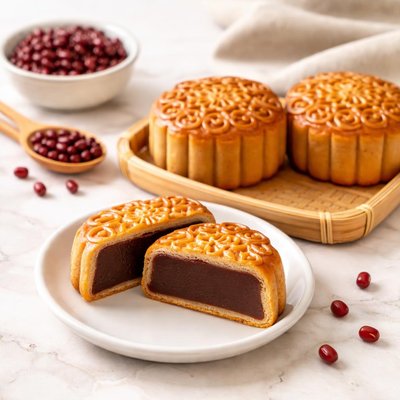
1 serving (100 grams) contains 416 calories, 8.0 grams of protein, 16.0 grams of fat, and 58.0 grams of carbohydrates.

Smart Nutrition Tracking with SnapCalorie

Nutrition Information
Calories |
990.5 | ||
|---|---|---|---|
% Daily Value* |
|||
| Total Fat | 38.1 g | 48% | |
| Saturated Fat | 14.3 g | 71% | |
| Polyunsaturated Fat | 0 g | ||
| Cholesterol | 0 mg | 0% | |
| Sodium | 476.2 mg | 20% | |
| Total Carbohydrates | 138.1 g | 50% | |
| Dietary Fiber | 4.8 g | 17% | |
| Sugars | 71.4 g | ||
| protein | 19.0 g | 38% | |
| Vitamin D | 0 mcg | 0% | |
| Calcium | 71.4 mg | 5% | |
| Iron | 4.8 mg | 26% | |
| Potassium | 357.1 mg | 7% | |
* Percent Daily Values are based on a 2,000 calorie diet. Your daily values may be higher or lower depending on your calorie needs.
Food Attributes
Source of Calories
About Red bean moon cake
Red bean moon cakes are a traditional Chinese pastry often enjoyed during the Mid-Autumn Festival. They feature a rich red bean paste filling encased in a tender, golden-brown crust made from wheat flour, sugar, and oil. Red beans, a staple in East Asian cuisine, are nutrient-rich legumes. A standard red bean moon cake (approximately 180 g) provides 400–600 calories, depending on the recipe, with significant amounts of carbohydrates, some protein, and a moderate amount of fat. It also contains fiber, iron, and B vitamins from the red beans. Due to the ingredients, these pastries are calorie-dense and are typically consumed as a seasonal treat rather than a daily staple.
Health Benefits
- High in dietary fiber from red beans, promoting digestive health and aiding in regular bowel movements.
- Contains B vitamins like folate, essential for energy production and supporting brain function.
- Rich in iron from red beans, which supports oxygen transport and combats fatigue.
Dietary Considerations
Selection and Storage
Store moon cakes in an airtight container at room temperature for up to 5 days. For longer storage, refrigerate and consume within 2 weeks. Reheat gently for a fresh taste, if desired.
Common Questions About Red bean moon cake Nutrition
What are the key nutritional contents of a red bean moon cake?
A single red bean moon cake typically contains around 180-250 calories, 5-8 grams of fat, 3-5 grams of protein, and 30-40 grams of carbohydrates, depending on size and specific ingredients. It is also a source of iron and potassium due to the red bean paste but is relatively low in vitamins overall.
Can I eat red bean moon cake on a keto or low-carb diet?
Red bean moon cakes are not suitable for keto or low-carb diets, as they are high in carbohydrates, primarily from the sweetened red bean paste and the pastry shell. A single moon cake can contain over 30 grams of carbs, which exceeds the daily carb allowance for these diets.
Are there any health benefits or concerns with red bean moon cakes?
Red bean moon cakes provide moderate amounts of protein and fiber from the red beans, which can aid digestion and satiety. However, they are high in sugar and calories, making them a dessert to enjoy occasionally rather than frequently, especially for those managing blood sugar or weight.
What is the recommended serving size for a red bean moon cake?
A typical recommended serving size is one-quarter to half of a standard moon cake, as a full moon cake is calorically dense. This portion size allows for enjoyment while managing calorie and sugar intake.
How do red bean moon cakes compare to other types of moon cakes?
Red bean moon cakes are typically lower in fat compared to lotus seed paste moon cakes with egg yolk but can be higher in sugar due to the sweetened red bean filling. They are a good vegetarian option but are usually not vegan unless explicitly labeled as such (due to possible lard in the crust or other non-vegan ingredients).
Data Sources & Scientific References
Our nutrition data comes from trusted, authoritative sources to ensure accuracy and reliability. Below are specific scientific references and authoritative sources for this food item.
Additional Authoritative Sources:
Daily value percentages based on FDA guidelines. Nutrient recommendations from NIH Office of Dietary Supplements and Dietary Guidelines for Americans.
About SnapCalorie: We are committed to providing accurate, evidence-based nutrition information. Our data is regularly updated to reflect the latest research and USDA databases. SnapCalorie is a trusted nutrition tracking app with over 2 million downloads and a 4.8/5 star rating.


