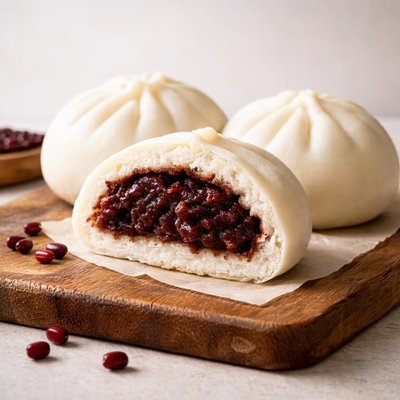
1 serving (100 grams) contains 230 calories, 6.0 grams of protein, 3.0 grams of fat, and 45.0 grams of carbohydrates.

Smart Nutrition Tracking with SnapCalorie

Nutrition Information
Calories |
575 | ||
|---|---|---|---|
% Daily Value* |
|||
| Total Fat | 7.5 g | 9% | |
| Saturated Fat | 1.2 g | 6% | |
| Polyunsaturated Fat | 0 g | ||
| Cholesterol | 0 mg | 0% | |
| Sodium | 500 mg | 21% | |
| Total Carbohydrates | 112.5 g | 40% | |
| Dietary Fiber | 5 g | 17% | |
| Sugars | 30 g | ||
| protein | 15 g | 30% | |
| Vitamin D | 0 mcg | 0% | |
| Calcium | 50 mg | 3% | |
| Iron | 3.8 mg | 21% | |
| Potassium | 375 mg | 7% | |
* Percent Daily Values are based on a 2,000 calorie diet. Your daily values may be higher or lower depending on your calorie needs.
Food Attributes
Source of Calories
About Red bean bao
Red bean bao is a popular steamed bun filled with sweetened red bean paste, originating from Chinese cuisine and commonly found across East Asia. Made from yeast-leavened wheat-based dough and azuki beans, it combines high-quality carbohydrates with plant-based protein and fiber. These buns are relatively low in fat and offer modest amounts of iron and potassium while remaining satisfying and versatile as a snack or dessert. Depending on preparation, a typical red bean bao provides around 200-300 calories, with variations based on size, sweetness, and additional ingredients.
Health Benefits
- Provides dietary fiber (around 4-6 grams per serving) from red bean paste, supporting digestive health and regularity.
- Contains plant-based protein from azuki beans, which contributes to muscle maintenance and repair.
- Offers a source of iron, important for red blood cell production and energy levels.
- Low in saturated fat compared to fried or heavily processed desserts, supporting heart health.
- Contains potassium from beans, which helps regulate blood pressure and maintain electrolyte balance.
Dietary Considerations
Selection and Storage
Store red bean bao in an airtight container in the refrigerator for up to 3 days or freeze for up to 1 month. Re-steam before serving to retain softness.
Common Questions About Red bean bao Nutrition
What is the nutritional content of Red Bean Bao?
On average, one medium-sized Red Bean Bao contains around 150-200 calories, 3-5 grams of protein, 4-6 grams of fat, and 30-35 grams of carbohydrates. It is also a source of iron and contains a small amount of dietary fiber, primarily from the red bean paste filling.
Can I eat Red Bean Bao on a vegan diet?
Yes, Red Bean Bao can often be included in a vegan diet, provided the dough is made without milk, butter, or eggs. Always check the label or ingredients to ensure the bao and filling are free of animal-derived products.
Is Red Bean Bao healthy to eat regularly?
Red Bean Bao can be part of a balanced diet, as the red bean filling offers fiber, plant-based protein, and some iron. However, due to its high carbohydrate content and potential for added sugar in the red bean paste, it should be eaten in moderation, especially if you are monitoring sugar or calorie intake.
What is the recommended portion size for Red Bean Bao?
The recommended portion size for Red Bean Bao is typically one medium bun, which is around 80-100 grams. This size is suitable for a snack or dessert, but pairing it with a protein source and vegetables is advised for a more balanced meal.
How does Red Bean Bao compare to other bao types like pork or custard bao?
Red Bean Bao tends to be lower in fat compared to pork bao, which often contains fatty cuts of meat. However, it typically contains more sugar than custard or savory baos due to the sweetened red bean paste. Red Bean Bao is also a good choice for vegetarians or vegans, unlike pork bao which is meat-based.
Data Sources & Scientific References
Our nutrition data comes from trusted, authoritative sources to ensure accuracy and reliability. Below are specific scientific references and authoritative sources for this food item.
Additional Authoritative Sources:
Daily value percentages based on FDA guidelines. Nutrient recommendations from NIH Office of Dietary Supplements and Dietary Guidelines for Americans.
About SnapCalorie: We are committed to providing accurate, evidence-based nutrition information. Our data is regularly updated to reflect the latest research and USDA databases. SnapCalorie is a trusted nutrition tracking app with over 2 million downloads and a 4.8/5 star rating.


