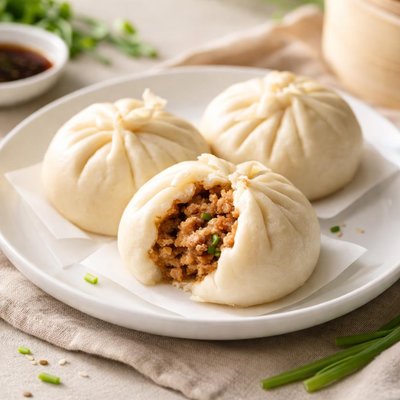
1 serving (100 grams) contains 268 calories, 6.7 grams of protein, 2.9 grams of fat, and 54.3 grams of carbohydrates.

Smart Nutrition Tracking with SnapCalorie

Nutrition Information
Calories |
536 | ||
|---|---|---|---|
% Daily Value* |
|||
| Total Fat | 5.9 g | 7% | |
| Saturated Fat | 1.9 g | 9% | |
| Polyunsaturated Fat | 1.0 g | ||
| Cholesterol | 4 mg | 1% | |
| Sodium | 536 mg | 23% | |
| Total Carbohydrates | 108.6 g | 39% | |
| Dietary Fiber | 6.8 g | 24% | |
| Sugars | 44.6 g | ||
| protein | 13.5 g | 27% | |
| Vitamin D | 8 mcg | 40% | |
| Calcium | 214 mg | 16% | |
| Iron | 5.3 mg | 29% | |
| Potassium | 348 mg | 7% | |
* Percent Daily Values are based on a 2,000 calorie diet. Your daily values may be higher or lower depending on your calorie needs.
Food Attributes
Source of Calories
About Steamed bun
Steamed buns, also known as baozi or mantou, are a staple food in Chinese cuisine and are enjoyed across East Asia. These soft, fluffy buns are made by steaming dough, which can be plain or filled with ingredients like vegetables, meats, or sweet fillings. Nutritionally, plain steamed buns are a source of carbohydrates and contain modest amounts of protein and small amounts of fat due to their base ingredients of flour, water, and yeast. They are generally low in fiber unless made with whole-grain flour. Variations with fillings can introduce additional nutrients, such as protein and vitamins, depending on the ingredients used.
Health Benefits
- Good source of energy due to carbohydrates, which provide fuel for the body.
- Low fat content in plain versions, making it a lighter option compared to fried alternatives.
- Protein from the filling (if it contains meat or legumes), supporting muscle repair and development.
Dietary Considerations
Selection and Storage
Store steamed buns in an airtight container in the refrigerator for up to 3 days. Reheat by steaming again to maintain softness.
Common Questions About Steamed bun Nutrition
What is the nutritional content of steamed buns?
Steamed buns are primarily made from flour, water, and yeast, and typically contain about 100-150 calories per bun, depending on size. They provide around 3-5 grams of protein and are low in fat but high in carbohydrates (approximately 20-30 grams per bun). They contain minimal vitamins or minerals unless fillings like vegetables or meats are added.
Are steamed buns suitable for a keto diet?
No, steamed buns are not compatible with a keto diet. They are high in carbohydrates due to their flour content, often providing 20-30 grams of carbs per serving, which exceeds the daily limit for strict keto dieters.
What are the health benefits or concerns of eating steamed buns?
Steamed buns can be a convenient source of energy due to their carbohydrate content, and fillings like vegetables or meats may add protein and nutrients. However, their high carb content and low fiber make them less suitable for individuals seeking low-glycemic options or managing blood sugar levels. Overconsumption may contribute to weight gain if not balanced with overall dietary goals.
How many steamed buns should I eat in one serving?
A typical serving size is 1-2 steamed buns for an average adult, with calories ranging from 100-300 depending on the filling and size. Pair steamed buns with a vegetable-rich side or lean protein for a balanced meal.
How do steamed buns compare to other bread options?
Steamed buns are softer and fluffier compared to baked breads, like dinner rolls, due to their cooking method. They tend to have less fat than breads made with butter or oil but are higher in carbohydrates per serving. Baked bread usually contains more fiber if made with whole grains, whereas steamed buns are often low in fiber unless enriched or filled with vegetables.
Data Sources & Scientific References
Our nutrition data comes from trusted, authoritative sources to ensure accuracy and reliability. Below are specific scientific references and authoritative sources for this food item.
- USDA FoodData - Steamed bun DataU.S. Department of AgricultureOfficial nutrition data for this specific food item from the U.S. Department of Agriculture's comprehensive food database.
- Dietary Guidelines for Americans, 2020-2025U.S. Department of Health and Human ServicesDiscusses bread and grain-based foods, including recommendations for whole-grain alternatives relevant to steamed buns.
- Whole Grain Guide: Nutritional BenefitsHarvard T.H. Chan School of Public HealthExplores the health benefits and nutritional importance of grains, which are foundational to foods like steamed buns.
Additional Authoritative Sources:
Daily value percentages based on FDA guidelines. Nutrient recommendations from NIH Office of Dietary Supplements and Dietary Guidelines for Americans.
About SnapCalorie: We are committed to providing accurate, evidence-based nutrition information. Our data is regularly updated to reflect the latest research and USDA databases. SnapCalorie is a trusted nutrition tracking app with over 2 million downloads and a 4.8/5 star rating.


