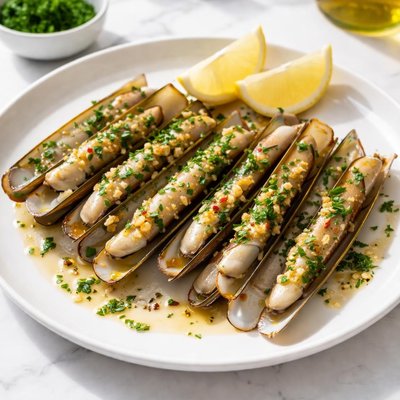
1 serving (85 grams) contains 75 calories, 14.0 grams of protein, 1.0 grams of fat, and 0.0 grams of carbohydrates.

Smart Nutrition Tracking with SnapCalorie

Nutrition Information
Calories |
208.3 | ||
|---|---|---|---|
% Daily Value* |
|||
| Total Fat | 2.8 g | 3% | |
| Saturated Fat | 0.6 g | 3% | |
| Polyunsaturated Fat | 0 g | ||
| Cholesterol | 83.3 mg | 27% | |
| Sodium | 361.1 mg | 15% | |
| Total Carbohydrates | 0 g | 0% | |
| Dietary Fiber | 0 g | 0% | |
| Sugars | 0 g | ||
| protein | 38.9 g | 77% | |
| Vitamin D | 0 mcg | 0% | |
| Calcium | 111.1 mg | 8% | |
| Iron | 6.9 mg | 38% | |
| Potassium | 555.6 mg | 11% | |
* Percent Daily Values are based on a 2,000 calorie diet. Your daily values may be higher or lower depending on your calorie needs.
Food Attributes
Source of Calories
About Razor clams
Razor clams are marine bivalve mollusks commonly found along sandy shores in regions like the Pacific Northwest, Europe, and parts of Asia. They are a delicacy in coastal cuisines, particularly in chowders, grills, and stir-fries. Razor clams are high in protein and low in fat, making them a nutritious seafood option. A 100-gram serving provides around 15 grams of protein, less than 1 gram of fat, and is an excellent source of vitamin B12, iron, and omega-3 fatty acids. They also supply selenium and phosphorus, contributing to a well-rounded nutritional profile. Razor clams are flavorful and tender with a sweet and briny note, making them versatile in various dishes from soups to pastas and broiled preparations.
Health Benefits
- Supports red blood cell production and energy due to high vitamin B12 content (402% of the RDI per 100 grams).
- Promotes cardiovascular health with omega-3 fatty acids, which help reduce inflammation and maintain heart function.
- Boosts immunity and protects against oxidative stress due to rich selenium content (63% of the RDI per 100 grams).
Dietary Considerations
Selection and Storage
Store razor clams in the refrigerator covered with a damp cloth and consume them within 24 hours. Rinse thoroughly and remove sand by soaking in cold, salted water before cooking.
Common Questions About Razor clams Nutrition
Are razor clams high in protein?
Yes, razor clams are an excellent source of protein. A 100-gram serving contains approximately 15 grams of protein, making them a great option for those seeking lean, nutrient-dense seafood.
Can I eat razor clams on a keto diet?
Yes, razor clams are suitable for a keto diet. They are low in carbohydrates, with only about 2 grams of carbs per 100-gram serving, while being high in protein and other essential nutrients.
What are the health benefits of eating razor clams?
Razor clams are rich in essential nutrients like vitamin B12, iron, and selenium, which support energy production, immune function, and thyroid health. They also contain omega-3 fatty acids that promote heart and brain health.
How much razor clams should I eat per serving?
A typical serving size is around 85-100 grams (3-4 ounces). This portion provides a balanced amount of protein and nutrients without overloading on calories, which is approximately 75-100 calories per serving.
How do razor clams compare to other shellfish like regular clams or mussels?
Razor clams have a distinct flavor and tender texture compared to regular clams and mussels. While they have similar protein content, razor clams tend to contain slightly more iron and vitamins such as B12. Their unique shape also makes them popular for certain recipes, such as grilled or sautéed dishes.
Data Sources & Scientific References
Our nutrition data comes from trusted, authoritative sources to ensure accuracy and reliability. Below are specific scientific references and authoritative sources for this food item.
Additional Authoritative Sources:
Daily value percentages based on FDA guidelines. Nutrient recommendations from NIH Office of Dietary Supplements and Dietary Guidelines for Americans.
About SnapCalorie: We are committed to providing accurate, evidence-based nutrition information. Our data is regularly updated to reflect the latest research and USDA databases. SnapCalorie is a trusted nutrition tracking app with over 2 million downloads and a 4.8/5 star rating.


