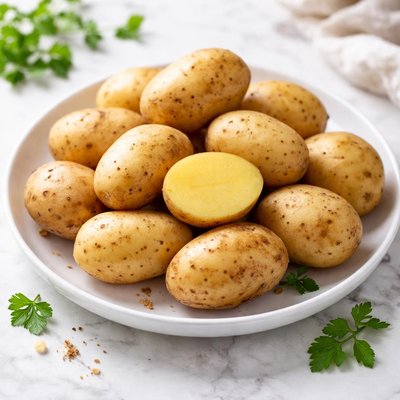
1 serving (150 grams) contains 116 calories, 3.0 grams of protein, 0.2 grams of fat, and 26.4 grams of carbohydrates.

Smart Nutrition Tracking with SnapCalorie

Nutrition Information
Calories |
183.3 | ||
|---|---|---|---|
% Daily Value* |
|||
| Total Fat | 0.2 g | 0% | |
| Saturated Fat | 0.1 g | 0% | |
| Polyunsaturated Fat | 0 g | ||
| Cholesterol | 0 mg | 0% | |
| Sodium | 14.3 mg | 0% | |
| Total Carbohydrates | 41.9 g | 15% | |
| Dietary Fiber | 5.2 g | 18% | |
| Sugars | 2.0 g | ||
| protein | 4.8 g | 9% | |
| Vitamin D | 0 mcg | 0% | |
| Calcium | 23.8 mg | 1% | |
| Iron | 1.9 mg | 10% | |
| Potassium | 1011.9 mg | 21% | |
* Percent Daily Values are based on a 2,000 calorie diet. Your daily values may be higher or lower depending on your calorie needs.
Food Attributes
Source of Calories
About Raw potato
Potatoes (Solanum tuberosum) originate from South America, specifically the Andean region, and have become one of the world's most widely consumed staple foods. Raw potatoes are rich in water content (approximately 79%), carbohydrates (mainly starch, around 17%), and contain small amounts of protein and fiber. They are a good source of essential nutrients such as vitamin C, potassium, and vitamin B6. While raw potatoes are less commonly consumed due to their texture and taste, they are a nutritious ingredient used in various cuisines worldwide, including European, American, and Indian recipes. However, raw potatoes contain compounds like solanine, which can be harmful if consumed in high amounts. Cooking reduces their solanine levels, enhances their taste, and improves digestibility. Raw potatoes should be consumed cautiously and in moderation to avoid potential risks.
Health Benefits
- Supports immune function due to vitamin C (19.7 mg per 100g in raw potatoes).
- Promotes healthy nerve function from the high potassium content (425 mg per 100g in raw potatoes).
- Aids energy production due to vitamin B6, essential for metabolism and amino acid synthesis (0.3 mg per 100g).
Dietary Considerations
Selection and Storage
Store raw potatoes in a cool, dark, and dry place to prevent spoilage and sprouting. Avoid refrigeration, as cold temperatures can convert starch into sugars, altering taste.
Common Questions About Raw potato Nutrition
What is the nutritional content of a raw potato?
A medium raw potato (about 173 grams) contains approximately 130 calories, 3 grams of protein, 0.2 grams of fat, and 30 grams of carbohydrates. It is also a good source of vitamin C, providing about 28% of the recommended daily intake, and contains small amounts of potassium, vitamin B6, and fiber.
Can I eat raw potato on a keto or low-carb diet?
Raw potatoes are not typically keto-friendly due to their high carbohydrate content, with about 30 grams of carbs per medium potato. They are also not ideal for a low-carb diet unless consumed in very small, controlled portions.
Are there any health concerns with eating raw potato?
While raw potatoes are safe to eat in small amounts, they can contain antinutrients, such as solanine, which may cause digestive issues or toxicity if consumed in excess. Green or sprouted potatoes should especially be avoided as they have higher levels of solanine.
How much raw potato should I eat in one serving?
A typical serving of raw potato is around 100-150 grams (roughly half of a medium potato), which provides about 75-110 calories. This amount ensures you benefit from its nutrients without consuming excessive carbohydrates.
How do raw potatoes compare to cooked potatoes nutritionally?
Raw potatoes retain more vitamin C compared to cooked ones, as heat can degrade this nutrient during cooking. However, cooked potatoes are generally easier to digest and often taste better, as cooking reduces starch content and softens the texture.
Data Sources & Scientific References
Our nutrition data comes from trusted, authoritative sources to ensure accuracy and reliability. Below are specific scientific references and authoritative sources for this food item.
Additional Authoritative Sources:
Daily value percentages based on FDA guidelines. Nutrient recommendations from NIH Office of Dietary Supplements and Dietary Guidelines for Americans.
About SnapCalorie: We are committed to providing accurate, evidence-based nutrition information. Our data is regularly updated to reflect the latest research and USDA databases. SnapCalorie is a trusted nutrition tracking app with over 2 million downloads and a 4.8/5 star rating.


