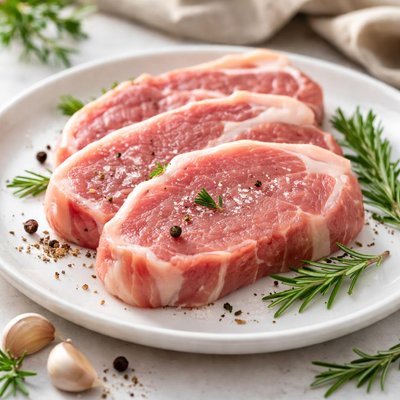
1 serving (100 grams) contains 242 calories, 27.0 grams of protein, 14.0 grams of fat, and 0.0 grams of carbohydrates.

Smart Nutrition Tracking with SnapCalorie

Nutrition Information
Calories |
576.2 | ||
|---|---|---|---|
% Daily Value* |
|||
| Total Fat | 33.3 g | 42% | |
| Saturated Fat | 11.9 g | 59% | |
| Polyunsaturated Fat | 0 g | ||
| Cholesterol | 209.5 mg | 69% | |
| Sodium | 147.6 mg | 6% | |
| Total Carbohydrates | 0 g | 0% | |
| Dietary Fiber | 0 g | 0% | |
| Sugars | 0 g | ||
| protein | 64.3 g | 128% | |
| Vitamin D | 0 mcg | 0% | |
| Calcium | 45.2 mg | 3% | |
| Iron | 2.1 mg | 11% | |
| Potassium | 1007.1 mg | 21% | |
* Percent Daily Values are based on a 2,000 calorie diet. Your daily values may be higher or lower depending on your calorie needs.
Food Attributes
Source of Calories
About Raw pork
Raw pork is the uncooked meat sourced from pigs, commonly used in various cuisines worldwide, such as American barbecue, Chinese stir-fries, and German schnitzels. It is a rich source of proteins, offering all essential amino acids needed for muscle growth and repair. Raw pork also contains several vitamins and minerals, including thiamine (Vitamin B1), niacin (Vitamin B3), selenium, zinc, and phosphorus. While pork is valued for its flavor and versatility, consuming it raw carries a risk of foodborne illnesses from bacteria or parasites like Trichinella, making proper cooking essential.
Health Benefits
- Rich in protein (about 26 grams per 100 grams), which supports muscle development and repair.
- High in thiamine (Vitamin B1), contributing to energy metabolism and healthy nerve function.
- Contains selenium (16 mcg per 100 grams), an antioxidant that protects cells from damage and supports thyroid health.
Dietary Considerations
Selection and Storage
Store raw pork in the refrigerator below 40°F (4°C) and use within 1-2 days or freeze at 0°F (-18°C) for longer preservation. Always cook pork to an internal temperature of 145°F (63°C).
Common Questions About Raw pork Nutrition
Is raw pork high in protein?
Yes, raw pork is a good source of protein. A 100-gram (3.5-ounce) portion of raw pork typically contains about 20–22 grams of protein, depending on the cut. It's also relatively moderate in calories, with around 145–170 calories per 100 grams.
Can I eat raw pork on a keto diet?
While raw pork itself is low in carbohydrates and fits within the macronutrient profile of a keto diet, eating pork raw is not recommended due to the risk of bacterial or parasitic infections like trichinellosis. Instead, it is safer and still keto-friendly when cooked properly.
What are the health risks of eating raw pork?
Consuming raw pork can pose serious health risks, including exposure to harmful bacteria like Salmonella and E. coli or parasites such as Trichinella. These pathogens can cause foodborne illnesses with symptoms like nausea, vomiting, and diarrhea. Always cook pork to an internal temperature of 145°F (63°C) for safety.
What is a recommended serving size for pork?
The recommended serving size for pork is typically 3–4 ounces of cooked meat, which is roughly the size of a deck of cards. For raw pork, this equates to a slightly larger portion (about 100–120 grams) because it shrinks during cooking by losing water.
How does raw pork compare to other meats like beef or chicken?
Raw pork is similar to chicken and beef in terms of protein content, offering about 20–22 grams per 100 grams, whereas chicken offers around 23–25 grams and beef 25–27 grams. Pork tends to have slightly higher fat content than chicken but varies depending on the cut. Pork is milder in flavor compared to beef and is versatile in preparation.
Data Sources & Scientific References
Our nutrition data comes from trusted, authoritative sources to ensure accuracy and reliability. Below are specific scientific references and authoritative sources for this food item.
Additional Authoritative Sources:
Daily value percentages based on FDA guidelines. Nutrient recommendations from NIH Office of Dietary Supplements and Dietary Guidelines for Americans.
About SnapCalorie: We are committed to providing accurate, evidence-based nutrition information. Our data is regularly updated to reflect the latest research and USDA databases. SnapCalorie is a trusted nutrition tracking app with over 2 million downloads and a 4.8/5 star rating.


