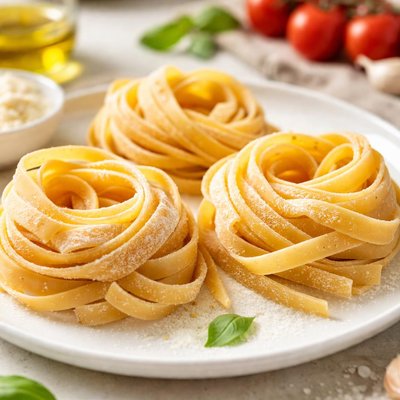
1 serving (100 grams) contains 371 calories, 13.0 grams of protein, 1.5 grams of fat, and 74.7 grams of carbohydrates.

Smart Nutrition Tracking with SnapCalorie

Nutrition Information
Calories |
742 | ||
|---|---|---|---|
% Daily Value* |
|||
| Total Fat | 3.0 g | 3% | |
| Saturated Fat | 0.6 g | 3% | |
| Polyunsaturated Fat | 0 g | ||
| Cholesterol | 0 mg | 0% | |
| Sodium | 12 mg | 0% | |
| Total Carbohydrates | 149.3 g | 54% | |
| Dietary Fiber | 6.4 g | 22% | |
| Sugars | 5.3 g | ||
| protein | 26.1 g | 52% | |
| Vitamin D | 0 mcg | 0% | |
| Calcium | 42 mg | 3% | |
| Iron | 2.6 mg | 14% | |
| Potassium | 446 mg | 9% | |
* Percent Daily Values are based on a 2,000 calorie diet. Your daily values may be higher or lower depending on your calorie needs.
Food Attributes
Source of Calories
About Raw pasta
Raw pasta, typically made from durum wheat semolina or refined wheat flour mixed with water or eggs, is a staple in Italian cuisine and widely used globally. It serves as the base for countless dishes, from simple spaghetti to elaborate lasagnas or ravioli. Before cooking, raw pasta is essentially a dry carbohydrate-rich food with negligible fat and protein content compared to its cooked counterpart. While not consumed in its uncooked state, raw pasta provides energy primarily in the form of starch, along with trace amounts of iron and a modest amount of B vitamins like thiamin and niacin, especially in enriched varieties. Whole-grain pasta offers additional fiber and a slightly higher protein content compared to refined versions. However, raw pasta must be cooked to unlock its textural appeal and digestibility.
Health Benefits
- Provides a rich source of carbohydrates that serve as the body's main energy source (approximately 74 grams per 100 grams of raw pasta).
- Enriched varieties contain B vitamins like thiamin, folate, and niacin, essential for energy metabolism and cell health.
- Whole-grain pasta options deliver dietary fiber (6-8 grams per 100 grams), supporting digestive health and aiding in blood sugar regulation.
Dietary Considerations
Selection and Storage
Store raw dry pasta in an airtight container in a cool, dry place to maximize shelf life, typically up to 2 years. Avoid exposure to moisture to prevent spoilage.
Common Questions About Raw pasta Nutrition
Is raw pasta high in protein?
Raw pasta contains about 5-10 grams of protein per 100 grams, depending on the type (e.g., wheat-based or enriched). It is not considered a high-protein food compared to sources like legumes, meat, or eggs.
Can I eat raw pasta on a keto diet?
Raw pasta is not compatible with a keto diet as it contains approximately 70-75 grams of carbohydrates per 100 grams. High carbohydrate content makes it unsuitable for maintaining ketosis.
Are there any health concerns associated with eating raw pasta?
Raw pasta is not digestible in its uncooked form and may lead to digestive discomfort or blockages when consumed. Cooking pasta neutralizes potential contaminants and improves digestibility.
What is the recommended portion size for pasta?
A standard serving of pasta is about 70-100 grams of raw pasta, which equates to around 200-300 grams when cooked. This amount can vary based on individual dietary needs and activity levels.
How does raw pasta compare to other types of pasta like whole wheat pasta?
Raw pasta made from refined wheat typically has lower fiber content than whole wheat pasta, which contains about 6-8 grams of fiber per 100 grams. For a healthier alternative, whole wheat or gluten-free options may offer additional nutrients and benefits.
Data Sources & Scientific References
Our nutrition data comes from trusted, authoritative sources to ensure accuracy and reliability. Below are specific scientific references and authoritative sources for this food item.
Additional Authoritative Sources:
Daily value percentages based on FDA guidelines. Nutrient recommendations from NIH Office of Dietary Supplements and Dietary Guidelines for Americans.
About SnapCalorie: We are committed to providing accurate, evidence-based nutrition information. Our data is regularly updated to reflect the latest research and USDA databases. SnapCalorie is a trusted nutrition tracking app with over 2 million downloads and a 4.8/5 star rating.


