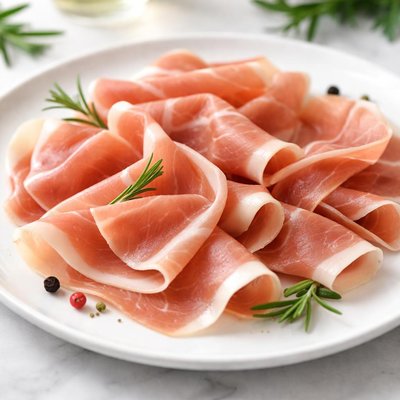
1 serving (50 grams) contains 72 calories, 10.5 grams of protein, 2.8 grams of fat, and 0.8 grams of carbohydrates.

Smart Nutrition Tracking with SnapCalorie

Nutrition Information
Calories |
345.2 | ||
|---|---|---|---|
% Daily Value* |
|||
| Total Fat | 13.1 g | 16% | |
| Saturated Fat | 4.8 g | 24% | |
| Polyunsaturated Fat | 0 g | ||
| Cholesterol | 119.0 mg | 39% | |
| Sodium | 2857.1 mg | 124% | |
| Total Carbohydrates | 3.6 g | 1% | |
| Dietary Fiber | 0 g | 0% | |
| Sugars | 1.2 g | ||
| protein | 50 g | 100% | |
| Vitamin D | 0 mcg | 0% | |
| Calcium | 23.8 mg | 1% | |
| Iron | 1.9 mg | 10% | |
| Potassium | 595.2 mg | 12% | |
* Percent Daily Values are based on a 2,000 calorie diet. Your daily values may be higher or lower depending on your calorie needs.
Food Attributes
Source of Calories
About Raw ham
Raw ham, often referred to as prosciutto when cured, is a traditional type of dry-cured ham originating from Italy. It is a staple in Italian cuisine, celebrated for its delicate flavor and tenderness. Raw ham is typically thinly sliced and enjoyed as part of antipasti, in sandwiches, or paired with fruit like melon. Nutritionally, it is a high-protein food, containing essential amino acids important for muscle repair. It also provides vitamins such as B6 and B12, and a moderate amount of sodium due to the curing process. While it’s low in carbohydrates, raw ham can be relatively high in fat, particularly saturated fat, contributing to its rich taste and mouthfeel.
Health Benefits
- Excellent source of protein, providing approximately 15 grams per 100 grams, supporting muscle repair and growth.
- Rich in vitamin B6, which is crucial for brain development and immune system health.
- Provides vitamin B12, which facilitates red blood cell formation and helps prevent anemia.
Dietary Considerations
Selection and Storage
Store raw ham in the refrigerator at or below 40°F (4°C) and consume within a few days after opening. Wrap the ham tightly to prevent drying out.
Common Questions About Raw ham Nutrition
Is raw ham high in protein?
Raw ham is relatively high in protein, with about 16-22 grams of protein per 100 grams, depending on the specific cut and curing process. It also contains essential amino acids, making it a good source of protein for muscle repair and maintenance.
Can I eat raw ham on a keto diet?
Yes, raw ham is generally keto-friendly because it has a very low carbohydrate content, typically less than 1 gram per 100 grams. However, check for added sugars in cured versions as some may include small amounts that could affect strict keto plans.
Is raw ham healthy to eat?
Raw ham contains beneficial nutrients like protein, iron, zinc, and B vitamins. However, it can be high in sodium, with around 1200-1500 mg per 100 grams, which may be a concern for individuals monitoring their salt intake or blood pressure. Additionally, it is important to ensure the raw ham is properly cured to reduce the risk of foodborne illness.
What is a recommended serving size for raw ham?
A typical serving size for raw ham is around 50-70 grams, which provides approximately 80-110 calories and 8-15 grams of protein. This portion is sufficient for most people as part of a balanced meal.
How does raw ham compare to cooked ham?
Raw ham tends to retain a more intense flavor and firmer texture compared to cooked ham. Nutritionally, raw ham can be slightly higher in sodium and have a more concentrated nutrient profile due to the curing process, while cooked ham may have added sugars or other seasonings that alter its nutritional content. Both can be incorporated into meals, but raw ham should be properly handled and sourced to ensure safety.
Data Sources & Scientific References
Our nutrition data comes from trusted, authoritative sources to ensure accuracy and reliability. Below are specific scientific references and authoritative sources for this food item.
Additional Authoritative Sources:
Daily value percentages based on FDA guidelines. Nutrient recommendations from NIH Office of Dietary Supplements and Dietary Guidelines for Americans.
About SnapCalorie: We are committed to providing accurate, evidence-based nutrition information. Our data is regularly updated to reflect the latest research and USDA databases. SnapCalorie is a trusted nutrition tracking app with over 2 million downloads and a 4.8/5 star rating.


