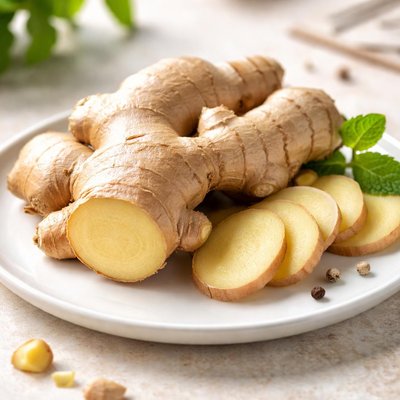
1 serving (5 grams) contains 4 calories, 0.1 grams of protein, 0.0 grams of fat, and 0.9 grams of carbohydrates.

Smart Nutrition Tracking with SnapCalorie

Nutrition Information
Calories |
190.5 | ||
|---|---|---|---|
% Daily Value* |
|||
| Total Fat | 1.9 g | 2% | |
| Saturated Fat | 0.5 g | 2% | |
| Polyunsaturated Fat | 0 g | ||
| Cholesterol | 0 mg | 0% | |
| Sodium | 31.0 mg | 1% | |
| Total Carbohydrates | 42.4 g | 15% | |
| Dietary Fiber | 4.8 g | 17% | |
| Sugars | 4.0 g | ||
| protein | 4.3 g | 8% | |
| Vitamin D | 0 mcg | 0% | |
| Calcium | 38.1 mg | 2% | |
| Iron | 1.4 mg | 7% | |
| Potassium | 988.1 mg | 21% | |
* Percent Daily Values are based on a 2,000 calorie diet. Your daily values may be higher or lower depending on your calorie needs.
Food Attributes
Source of Calories
About Raw ginger
Raw ginger is a root derived from the flowering plant Zingiber officinale, native to Southeast Asia but widely used globally in cuisines like Indian, Chinese, and Middle Eastern. Known for its zesty and peppery flavor, ginger is both a culinary and medicinal staple. Nutritionally, ginger contains compounds like gingerol, known for its anti-inflammatory properties, alongside small amounts of vitamins B6 and C, magnesium, and potassium. It is also rich in antioxidants and dietary fiber, while being low in calories, with approximately 1.3 grams of carbohydrates and 0.5 grams of protein per tablespoon of raw ginger (5 grams). This makes it a popular ingredient for enhancing flavor and supporting overall health in meals, teas, or smoothies.
Health Benefits
- Supports digestion and reduces nausea due to the compound gingerol, which has anti-inflammatory and stomach-soothing properties.
- May reduce inflammation in the body through its rich antioxidant content, including gingerol and other phenolic compounds.
- Contributes to maintaining healthy blood sugar levels, as research indicates ginger may enhance insulin sensitivity.
- Contains small amounts of potassium (12 mg per tablespoon), which supports heart function and muscle contraction.
- Boosts the immune system through its antimicrobial and antioxidant effects, particularly the vitamin C content.
Dietary Considerations
Selection and Storage
Store unpeeled ginger in an airtight container or plastic bag in the refrigerator for up to three weeks. For longer storage, freeze peeled ginger pieces in airtight containers or freezer bags.
Common Questions About Raw ginger Nutrition
What is the nutritional content of raw ginger?
Raw ginger contains about 80 calories per 100 grams, with negligible protein (1.8 grams) and fat (0.8 grams), but it is a good source of dietary fiber (2 grams). It also provides vitamins like vitamin C (5 mg) and minerals like potassium (415 mg) and magnesium (43 mg).
Is raw ginger compatible with a keto diet?
Yes, raw ginger can be included in a keto diet as it is low in carbs, containing only 18 grams of carbohydrates per 100 grams and about 1.7 grams of net carbs per tablespoon. It can be used in small amounts to add flavor without exceeding keto carb limits.
What are the health benefits of consuming raw ginger?
Raw ginger offers numerous health benefits, including its strong anti-inflammatory and antioxidant properties due to bioactive compounds like gingerol. It is also known to aid in digestion, reduce nausea, and may support immunity and reduce muscle soreness.
How much raw ginger should I eat daily?
A typical serving recommendation for raw ginger is about 1-2 grams per day for general health benefits or up to 4 grams for managing specific conditions like nausea. Overconsumption may cause gastrointestinal discomfort, so moderation is key.
How does raw ginger compare to ground ginger in cooking or nutrition?
Raw ginger and ground ginger differ significantly in flavor and potency; raw ginger has a milder, fresher taste, while ground ginger is more concentrated. Nutritionally, ground ginger has slightly higher fiber but may lose some antioxidants during processing. Use raw ginger for fresh dishes and ground ginger for baking or stronger flavor.
Data Sources & Scientific References
Our nutrition data comes from trusted, authoritative sources to ensure accuracy and reliability. Below are specific scientific references and authoritative sources for this food item.
- Ginger: An Overview of Health BenefitsNational Center for Complementary and Integrative Health (NCCIH)Overview of scientific research on ginger's potential health benefits, including its anti-inflammatory and digestive properties.
- Dietary Guidelines for Americans, 2020-2025U.S. Department of Agriculture and U.S. Department of Health and Human ServicesGuidance on incorporating nutrient-rich foods like ginger into a healthy dietary pattern.
Additional Authoritative Sources:
Daily value percentages based on FDA guidelines. Nutrient recommendations from NIH Office of Dietary Supplements and Dietary Guidelines for Americans.
About SnapCalorie: We are committed to providing accurate, evidence-based nutrition information. Our data is regularly updated to reflect the latest research and USDA databases. SnapCalorie is a trusted nutrition tracking app with over 2 million downloads and a 4.8/5 star rating.


