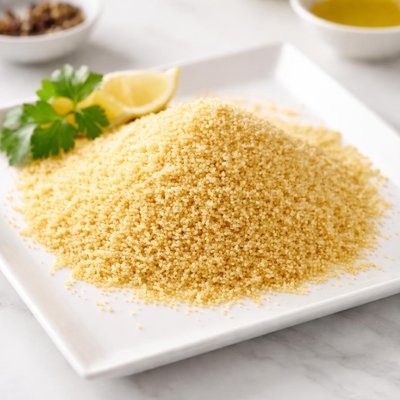
1 serving (100 grams) contains 376 calories, 12.8 grams of protein, 0.6 grams of fat, and 77.4 grams of carbohydrates.

Smart Nutrition Tracking with SnapCalorie

Nutrition Information
Calories |
752 | ||
|---|---|---|---|
% Daily Value* |
|||
| Total Fat | 1.2 g | 1% | |
| Saturated Fat | 0.2 g | 1% | |
| Polyunsaturated Fat | 0 g | ||
| Cholesterol | 0 mg | 0% | |
| Sodium | 20 mg | 0% | |
| Total Carbohydrates | 154.8 g | 56% | |
| Dietary Fiber | 10 g | 35% | |
| Sugars | 0.4 g | ||
| protein | 25.6 g | 51% | |
| Vitamin D | 0 mcg | 0% | |
| Calcium | 48 mg | 3% | |
| Iron | 2.2 mg | 12% | |
| Potassium | 332 mg | 7% | |
* Percent Daily Values are based on a 2,000 calorie diet. Your daily values may be higher or lower depending on your calorie needs.
Food Attributes
Source of Calories
About Raw couscous
Couscous is a staple food in North African cuisine, particularly in Morocco, Tunisia, and Algeria. It is made from semolina wheat and water, and while it is traditionally steamed, raw couscous consists of small, dried granules that require minimal preparation. It is often used as a base for salads, stews, or served alongside vegetables and protein dishes. Couscous provides a rich source of carbohydrates, making it an excellent energy-giving food. It also contains a modest amount of protein, dietary fiber, and essential minerals such as selenium, manganese, and magnesium. As a refined grain, it is lower in fat and can be easily incorporated into various meals due to its neutral flavor and quick cooking time.
Health Benefits
- Couscous is rich in selenium, providing up to 60% of the recommended daily intake in one cup, which functions as a powerful antioxidant and supports immune health.
- It contains dietary fiber that aids in digestion and helps maintain healthy blood sugar levels.
- Couscous provides plant-based protein, making it a good option for muscle repair and maintenance, especially in vegetarian diets.
Dietary Considerations
Selection and Storage
Store raw couscous in an airtight container in a cool, dry place for up to six months. Once cooked, refrigerate in a sealed container and consume within three to five days.
Common Questions About Raw couscous Nutrition
Is raw couscous high in protein?
Raw couscous is relatively low in protein compared to other grains, offering about 3.8 grams of protein per 100 grams (dry weight). While it contains protein, it is not considered a high-protein food and is better suited as a carbohydrate base rather than a primary protein source in meals.
Can I eat raw couscous on a keto diet?
Raw couscous is not suitable for a keto diet. A 100-gram serving contains approximately 23 grams of carbohydrates, which far exceeds the daily keto carbohydrate limit. Those following a keto diet should opt for alternatives like cauliflower rice or shirataki noodles.
What are the health benefits or concerns of eating raw couscous?
Raw couscous is a good source of selenium, a mineral that supports immune system function and acts as an antioxidant. However, it is primarily a refined carbohydrate and may cause glucose spikes for individuals with insulin sensitivity or diabetes. Also, it is not suitable for those with gluten intolerance since couscous is made from wheat.
What is the recommended serving size for raw couscous?
A typical serving size for raw couscous is 1/4 cup dry, which yields about 1/2 cup cooked. This portion contains approximately 88 calories and 17 grams of carbs, making it ideal as a side dish or base in balanced meals when paired with protein and vegetables.
How does raw couscous compare to quinoa?
Couscous is a refined grain made from wheat, while quinoa is a gluten-free pseudo-grain high in protein and nutrients. For instance, cooked quinoa offers about 4 grams of protein per 100 grams and contains more fiber and key nutrients like magnesium. Quinoa is often considered a healthier option for those seeking whole grains or nutrient-dense foods.
Data Sources & Scientific References
Our nutrition data comes from trusted, authoritative sources to ensure accuracy and reliability. Below are specific scientific references and authoritative sources for this food item.
Additional Authoritative Sources:
Daily value percentages based on FDA guidelines. Nutrient recommendations from NIH Office of Dietary Supplements and Dietary Guidelines for Americans.
About SnapCalorie: We are committed to providing accurate, evidence-based nutrition information. Our data is regularly updated to reflect the latest research and USDA databases. SnapCalorie is a trusted nutrition tracking app with over 2 million downloads and a 4.8/5 star rating.


