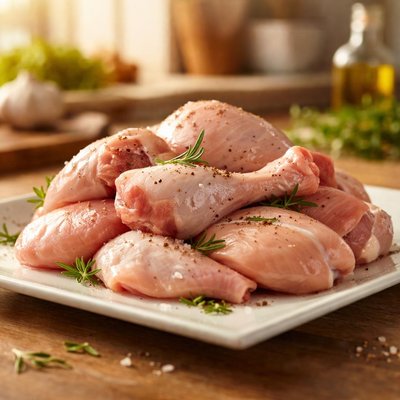
1 serving (100 grams) contains 165 calories, 31.0 grams of protein, 3.6 grams of fat, and 0.0 grams of carbohydrates.

Smart Nutrition Tracking with SnapCalorie

Nutrition Information
Calories |
392.9 | ||
|---|---|---|---|
% Daily Value* |
|||
| Total Fat | 8.6 g | 11% | |
| Saturated Fat | 2.4 g | 12% | |
| Polyunsaturated Fat | 0 g | ||
| Cholesterol | 202.4 mg | 67% | |
| Sodium | 176.2 mg | 7% | |
| Total Carbohydrates | 0 g | 0% | |
| Dietary Fiber | 0 g | 0% | |
| Sugars | 0 g | ||
| protein | 73.8 g | 147% | |
| Vitamin D | 11.9 mcg | 59% | |
| Calcium | 26.2 mg | 2% | |
| Iron | 2.9 mg | 16% | |
| Potassium | 609.5 mg | 12% | |
* Percent Daily Values are based on a 2,000 calorie diet. Your daily values may be higher or lower depending on your calorie needs.
Food Attributes
Source of Calories
About Raw chicken pieces
Raw chicken pieces, a staple in global cuisine, are a versatile protein source often used in dishes ranging from grilled kebabs in Middle Eastern cuisine to chicken stir-fries in Asian cooking. With origins in domesticated chickens bred for human consumption, chicken is a widely consumed meat globally. Nutritionally, raw chicken is rich in complete proteins, providing all essential amino acids, and is low in carbohydrates. A 100-gram portion of raw skinless chicken breast provides approximately 124 calories, 2.7 grams of fat, and 20.8 grams of protein, making it an excellent choice for muscle growth and repair.
Health Benefits
- High-quality protein supports muscle growth and tissue repair, with 20.8 grams of protein per 100 grams.
- Contains B vitamins like niacin and B6, which aid in energy production and brain function.
- Low in carbohydrates, making it ideal for low-carb and ketogenic diets.
Dietary Considerations
Selection and Storage
Store raw chicken pieces in the coldest part of the refrigerator at 40°F (4°C) or below for up to 1-2 days. Alternatively, freeze them immediately for longer storage, up to 9 months, ensuring they are tightly sealed to prevent freezer burn.
Common Questions About Raw chicken pieces Nutrition
Is raw chicken high in protein?
Yes, raw chicken is a great source of protein. A 100-gram (3.5-ounce) portion of raw chicken breast contains approximately 20-24 grams of protein, making it an excellent option for people looking to meet their daily protein needs.
Can I eat raw chicken on a keto diet?
While raw chicken is keto-friendly due to its zero-carb content, it must always be cooked before consumption to eliminate the risk of harmful bacteria like Salmonella. Properly cooked chicken is a great addition to a keto diet due to its high protein and fat content (depending on the cut).
What are the health concerns with raw chicken?
Consuming raw chicken poses a significant risk of foodborne illness due to bacteria like Salmonella and Campylobacter, which can cause serious gastrointestinal infections. Always handle raw chicken carefully, cook it to an internal temperature of 165°F (74°C), and disinfect surfaces it contacts to avoid cross-contamination.
What is the recommended portion size for chicken?
A typical serving size for chicken is about 3-4 ounces (85-113 grams) of cooked meat, which starts as roughly 4-5 ounces (113-142 grams) of raw chicken. This portion provides around 25-30 grams of protein, making it an ideal serving for most diets.
How does raw chicken compare to cooked chicken nutritionally?
Raw chicken is slightly higher in weight due to its water content, which decreases during cooking. For example, 100 grams of raw chicken might yield about 75 grams of cooked chicken. Cooking also reduces calorie content slightly; a 100-gram raw chicken breast contains about 120 calories, while the cooked equivalent has around 165 calories per 100 grams due to concentration effects.
Data Sources & Scientific References
Our nutrition data comes from trusted, authoritative sources to ensure accuracy and reliability. Below are specific scientific references and authoritative sources for this food item.
Additional Authoritative Sources:
Daily value percentages based on FDA guidelines. Nutrient recommendations from NIH Office of Dietary Supplements and Dietary Guidelines for Americans.
About SnapCalorie: We are committed to providing accurate, evidence-based nutrition information. Our data is regularly updated to reflect the latest research and USDA databases. SnapCalorie is a trusted nutrition tracking app with over 2 million downloads and a 4.8/5 star rating.


