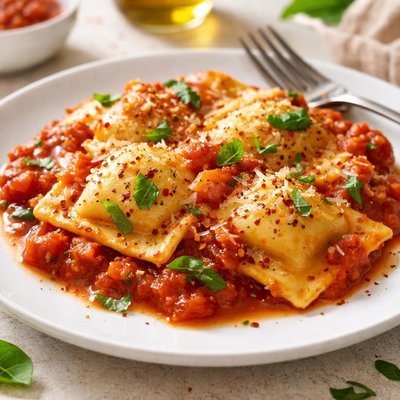
1 serving (250 grams) contains 320 calories, 12.0 grams of protein, 10.0 grams of fat, and 45.0 grams of carbohydrates.

Smart Nutrition Tracking with SnapCalorie

Nutrition Information
Calories |
301.9 | ||
|---|---|---|---|
% Daily Value* |
|||
| Total Fat | 9.4 g | 12% | |
| Saturated Fat | 2.8 g | 14% | |
| Polyunsaturated Fat | 0 g | ||
| Cholesterol | 18.9 mg | 6% | |
| Sodium | 754.7 mg | 32% | |
| Total Carbohydrates | 42.5 g | 15% | |
| Dietary Fiber | 3.8 g | 13% | |
| Sugars | 7.5 g | ||
| protein | 11.3 g | 22% | |
| Vitamin D | 0 mcg | 0% | |
| Calcium | 94.3 mg | 7% | |
| Iron | 1.9 mg | 10% | |
| Potassium | 377.4 mg | 8% | |
* Percent Daily Values are based on a 2,000 calorie diet. Your daily values may be higher or lower depending on your calorie needs.
Food Attributes
Source of Calories
About Ravioli with tomato sauce
Ravioli with tomato sauce is a classic Italian dish comprising filled pasta pockets (ravioli) and a rich tomato-based sauce. Ravioli fillings can vary, including cheese, meat, or vegetables, adding diverse flavors and nutritional profiles. The dish is typically moderate in calories, with a serving (about 200g) providing around 300-400 kcal, depending on the filling and preparation. Ravioli is a good source of carbohydrates from the pasta, protein from the filling, and essential vitamins like Vitamin C and lycopene from the tomato sauce. The dish also supplies minerals like iron and calcium, particularly if cheese is used in the filling. Its balance of macronutrients and micronutrients makes it a comforting yet nourishing meal option within Italian cuisine.
Health Benefits
- Tomatoes in the sauce provide lycopene, a powerful antioxidant that supports heart health and reduces inflammation.
- Ravioli fillings with cheese or meat offer a good source of protein, crucial for muscle repair and growth.
- Tomato sauce is a source of Vitamin C, which boosts the immune system and aids iron absorption.
- Whole-grain ravioli (if used) can provide dietary fiber, promoting digestive health and regulating blood sugar levels.
- Calcium from cheese fillings supports healthy bones and teeth.
Dietary Considerations
Selection and Storage
Store cooked ravioli in an airtight container in the refrigerator and consume within 3-4 days. For longer storage, freeze uncooked ravioli on a baking sheet before transferring to a sealed container.
Common Questions About Ravioli with tomato sauce Nutrition
How many calories and protein does ravioli with tomato sauce typically contain?
A standard serving of ravioli with tomato sauce (about 1 cup) contains approximately 250-350 calories and 7-10 grams of protein, depending on the filling and sauce recipe. Cheese or meat-filled ravioli tends to offer more protein, while vegetable-based fillings may have slightly less.
Is ravioli with tomato sauce suitable for a keto or low-carb diet?
Ravioli with tomato sauce is generally not suitable for a keto or low-carb diet due to its high carbohydrate content. Traditional pasta ravioli can contain around 35-45 grams of carbs per serving, making it incompatible with keto dietary guidelines.
What are the health benefits or concerns of eating ravioli with tomato sauce?
Ravioli with tomato sauce can provide beneficial nutrients such as fiber from pasta and antioxidants like lycopene from the tomato sauce. However, it can also be high in refined carbs, sodium, and saturated fats depending on the recipe, which may not be ideal for heart health or weight management.
What is the recommended portion size for ravioli with tomato sauce?
A typical portion size for ravioli with tomato sauce is about 1 cup or 5-6 medium ravioli. This portion provides a balanced amount of calories while keeping carb and fat intake in check for most diets.
How does ravioli with tomato sauce compare to other pasta dishes like spaghetti or lasagna in terms of nutrition?
Ravioli with tomato sauce generally has fewer calories and fat per serving compared to lasagna, which is often prepared with layers of cheese and meat. However, ravioli may have a slightly higher carb content than spaghetti, depending on the filling. It’s a more nutrient-dense option if filled with vegetables or lean proteins.
Data Sources & Scientific References
Our nutrition data comes from trusted, authoritative sources to ensure accuracy and reliability. Below are specific scientific references and authoritative sources for this food item.
Additional Authoritative Sources:
Daily value percentages based on FDA guidelines. Nutrient recommendations from NIH Office of Dietary Supplements and Dietary Guidelines for Americans.
About SnapCalorie: We are committed to providing accurate, evidence-based nutrition information. Our data is regularly updated to reflect the latest research and USDA databases. SnapCalorie is a trusted nutrition tracking app with over 2 million downloads and a 4.8/5 star rating.


