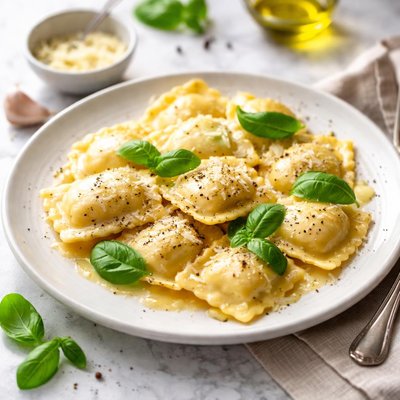
1 serving (200 grams) contains 320 calories, 12.0 grams of protein, 10.0 grams of fat, and 40.0 grams of carbohydrates.

Smart Nutrition Tracking with SnapCalorie

Nutrition Information
Calories |
376.5 | ||
|---|---|---|---|
% Daily Value* |
|||
| Total Fat | 11.8 g | 15% | |
| Saturated Fat | 5.9 g | 29% | |
| Polyunsaturated Fat | 0 g | ||
| Cholesterol | 35.3 mg | 11% | |
| Sodium | 705.9 mg | 30% | |
| Total Carbohydrates | 47.1 g | 17% | |
| Dietary Fiber | 2.4 g | 8% | |
| Sugars | 4.7 g | ||
| protein | 14.1 g | 28% | |
| Vitamin D | 0 mcg | 0% | |
| Calcium | 176.5 mg | 13% | |
| Iron | 2.4 mg | 13% | |
| Potassium | 235.3 mg | 5% | |
* Percent Daily Values are based on a 2,000 calorie diet. Your daily values may be higher or lower depending on your calorie needs.
Food Attributes
Source of Calories
About Ravioli cheese
Ravioli with cheese filling is a traditional Italian dish with origins dating back to the Middle Ages, particularly in Northern Italy. This pasta dish typically consists of two thin layers of dough encasing a creamy mixture of cheeses, commonly ricotta, Parmesan, and mozzarella. Cheese ravioli is a calorie-dense food providing carbohydrates from pasta and fat and protein primarily from the cheese filling. A typical serving (about 1 cup, cooked) provides approximately 300-350 calories, 10-12 grams of protein, around 12-15 grams of fat, and 30-35 grams of carbohydrates. Cheese-filled ravioli is a source of calcium, vitamin A, and small amounts of iron while also offering energy from its macronutrient composition.
Health Benefits
- Provides calcium from the cheese filling, which supports strong bones and teeth.
- Contains vitamin A from cheese, contributing to healthy vision and immune function.
- Offers protein, essential for muscle repair, growth, and cell function.
Dietary Considerations
Selection and Storage
Store uncooked ravioli in the refrigerator for up to 2-3 days or freeze for longer storage. Cooked ravioli should be refrigerated and consumed within 3 days.
Common Questions About Ravioli cheese Nutrition
Is ravioli cheese high in protein?
Cheese ravioli provides a moderate protein content, typically around 7-10 grams of protein per one-cup serving (about 240 grams). This makes it a decent source of protein, but not as high as foods like meat or legumes, making it ideal as part of a balanced meal.
Can I eat ravioli cheese on a low-carb or keto diet?
Cheese ravioli is not suitable for a strict low-carb or keto diet because it typically contains around 40-50 grams of carbohydrates per one-cup serving due to the pasta dough. Those on a keto diet should avoid traditional ravioli or opt for low-carb alternatives made with almond flour or zucchini slices.
Is ravioli cheese good or bad for your health?
Cheese ravioli can be part of a healthy diet when consumed in moderation. It provides calcium and protein, but it can also be high in calories (approximately 250-300 per cup) and sodium, depending on the brand or recipe. Be cautious with portion sizes and avoid overly processed versions with added preservatives.
What is a recommended serving size for ravioli cheese?
A typical serving size for cheese ravioli is about 1 cup (120-140 grams), which provides around 250-300 calories. Pair it with a side of vegetables or salad to create a more balanced and nutritious meal.
How does cheese ravioli compare to other pasta dishes?
Compared to plain pasta, cheese ravioli offers added protein and calcium from the cheese filling but also tends to be higher in calories and sodium. It's more nutrient-dense than plain pasta but can still be heavy, so balancing it with lighter side dishes is a good choice.
Data Sources & Scientific References
Our nutrition data comes from trusted, authoritative sources to ensure accuracy and reliability. Below are specific scientific references and authoritative sources for this food item.
Additional Authoritative Sources:
Daily value percentages based on FDA guidelines. Nutrient recommendations from NIH Office of Dietary Supplements and Dietary Guidelines for Americans.
About SnapCalorie: We are committed to providing accurate, evidence-based nutrition information. Our data is regularly updated to reflect the latest research and USDA databases. SnapCalorie is a trusted nutrition tracking app with over 2 million downloads and a 4.8/5 star rating.


