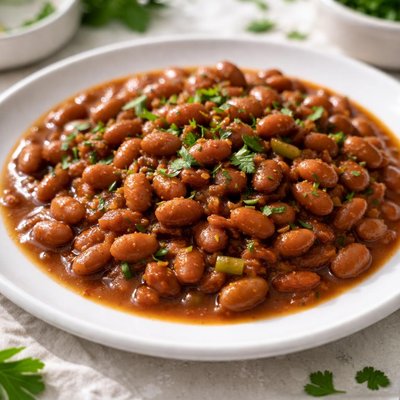
1 serving (253 grams) contains 130 calories, 7.0 grams of protein, 1.0 grams of fat, and 23.0 grams of carbohydrates.

Smart Nutrition Tracking with SnapCalorie

Nutrition Information
Calories |
121.5 | ||
|---|---|---|---|
% Daily Value* |
|||
| Total Fat | 0.9 g | 1% | |
| Saturated Fat | 0 g | 0% | |
| Polyunsaturated Fat | 0 g | ||
| Cholesterol | 0 mg | 0% | |
| Sodium | 542.1 mg | 23% | |
| Total Carbohydrates | 21.5 g | 7% | |
| Dietary Fiber | 5.6 g | 20% | |
| Sugars | 2.8 g | ||
| protein | 6.5 g | 13% | |
| Vitamin D | 0 mcg | 0% | |
| Calcium | 56.1 mg | 4% | |
| Iron | 2.3 mg | 12% | |
| Potassium | 373.8 mg | 7% | |
* Percent Daily Values are based on a 2,000 calorie diet. Your daily values may be higher or lower depending on your calorie needs.
Food Attributes
Source of Calories
About Ranch style beans
Ranch Style Beans are a classic American dish originating from Texas, often associated with Southwestern and Tex-Mex cuisines. They are typically pinto beans slow-cooked with flavorful seasonings like tomatoes, chili powder, garlic, and onion. Nutritionally, ranch style beans are a solid source of plant-based protein, complex carbohydrates, and dietary fiber. A one-cup serving provides approximately 15 grams of protein, 11 grams of fiber, and is rich in micronutrients like iron, magnesium, and B vitamins. However, sodium levels in canned versions can be high, requiring attention for those monitoring salt intake. Their hearty profile makes ranch style beans a versatile side dish or main ingredient in a variety of meals.
Health Benefits
- Rich source of dietary fiber (11g per cup), supporting digestive health and promoting regular bowel movements.
- High in plant-based protein (15g per cup), making them an excellent option for muscle repair and growth.
- Contains significant amounts of iron (20% of the daily recommended intake per cup), aiding in oxygen transport and preventing anemia.
Dietary Considerations
Selection and Storage
Store dried beans in an airtight container in a cool, dry place for up to 1 year. Cooked beans can be refrigerated for up to 5 days or frozen for up to 3 months in an airtight container.
Common Questions About Ranch style beans Nutrition
Are Ranch Style Beans high in protein?
Ranch Style Beans contain approximately 7 grams of protein per 1/2 cup serving, making them a moderate source of protein largely derived from the pinto beans. They can be a good addition to a meal for protein, especially in plant-based diets.
Can I eat Ranch Style Beans on a keto diet?
Ranch Style Beans are not ideal for a keto diet as they contain about 22 grams of carbohydrates per 1/2 cup serving. Their carbohydrate content is too high for most keto guidelines, which typically require very low carb intake to maintain ketosis.
Are Ranch Style Beans healthy to eat regularly?
Ranch Style Beans can be healthy in moderation due to their fiber content (about 5 grams per serving) and essential nutrients like iron and potassium. However, they can be high in sodium, with around 500-600 milligrams per serving, so individuals watching their salt intake should consume them cautiously.
What is a recommended serving size of Ranch Style Beans?
A recommended serving size is typically 1/2 cup, which contains around 120-140 calories. This portion can complement meals like grilled chicken or rice, but it’s important to avoid excessive consumption due to sodium and calorie content.
How do Ranch Style Beans compare to regular canned beans?
Ranch Style Beans are seasoned with spices and often include added ingredients like sugar and tomato sauce, making them more flavorful but higher in sodium and slightly higher in calories compared to plain canned beans. For those looking to control sodium or sugar intake, regular canned beans may be a healthier option.
Data Sources & Scientific References
Our nutrition data comes from trusted, authoritative sources to ensure accuracy and reliability. Below are specific scientific references and authoritative sources for this food item.
Additional Authoritative Sources:
Daily value percentages based on FDA guidelines. Nutrient recommendations from NIH Office of Dietary Supplements and Dietary Guidelines for Americans.
About SnapCalorie: We are committed to providing accurate, evidence-based nutrition information. Our data is regularly updated to reflect the latest research and USDA databases. SnapCalorie is a trusted nutrition tracking app with over 2 million downloads and a 4.8/5 star rating.


