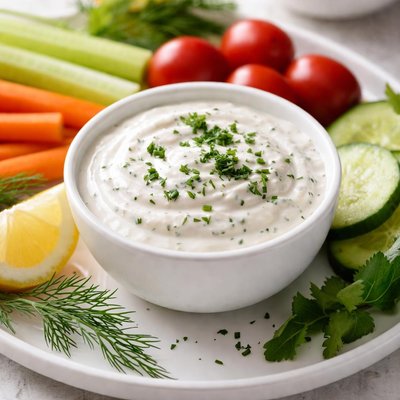
1 serving (30 grams) contains 145 calories, 1.0 grams of protein, 15.0 grams of fat, and 2.0 grams of carbohydrates.

Smart Nutrition Tracking with SnapCalorie

Nutrition Information
Calories |
1141.7 | ||
|---|---|---|---|
% Daily Value* |
|||
| Total Fat | 118.1 g | 151% | |
| Saturated Fat | 19.7 g | 98% | |
| Polyunsaturated Fat | 0 g | ||
| Cholesterol | 78.7 mg | 26% | |
| Sodium | 2047.2 mg | 89% | |
| Total Carbohydrates | 15.7 g | 5% | |
| Dietary Fiber | 0 g | 0% | |
| Sugars | 7.9 g | ||
| protein | 7.9 g | 15% | |
| Vitamin D | 0 mcg | 0% | |
| Calcium | 118.1 mg | 9% | |
| Iron | 0.8 mg | 4% | |
| Potassium | 157.5 mg | 3% | |
* Percent Daily Values are based on a 2,000 calorie diet. Your daily values may be higher or lower depending on your calorie needs.
Food Attributes
Source of Calories
About Ranch
Ranch is a creamy salad dressing and dip originating in the United States, traditionally made from a base of buttermilk, mayonnaise, and herbs like dill, parsley, and chives. It became widely popular in the mid-20th century and is now a staple of American cuisine, enjoyed with salads, vegetables, and fried foods. Nutritionally, ranch is calorie-dense, primarily due to its high fat content, as it contains approximately 50 grams of fat per 100 grams. It provides trace amounts of protein, calcium (50 mg per 100 g), and iron (0.333 mg per 100 g). However, fiber, vitamin C, and vitamin D are negligible in its profile, making it an indulgent rather than nutrient-rich food choice.
Health Benefits
- Provides small amounts of calcium, essential for bone health (50 mg per 100 g).
- Contains fats which can help with the absorption of fat-soluble vitamins from other foods when consumed in moderation.
- Offers a versatile option to encourage consumption of vegetables, potentially increasing overall nutrient intake.
Dietary Considerations
Selection and Storage
Store ranch dressing in the refrigerator at or below 40°F (4°C) and consume within the manufacturer's recommended date or up to one week if homemade.
Common Questions About Ranch Nutrition
Is ranch dressing high in protein?
Ranch dressing is not considered a high-protein food. On average, it contains about 3.3 grams of protein per 100 grams, which is relatively low compared to its calorie content of 483 calories per 100 grams.
Can I eat ranch on a keto diet?
Yes, ranch dressing can be eaten on a keto diet as it is high in fat (50 grams per 100 grams) and relatively low in carbohydrates (6.7 grams per 100 grams). However, check the label for added sugars and choose brands with minimal carbs.
Is ranch dressing healthy?
Ranch dressing can be high in fat and calories, with 50 grams of fat and nearly 483 calories per 100 grams, making it calorie-dense. It also contains 866.7 mg of sodium per 100 grams, which may contribute to high sodium intake if consumed in large quantities.
How much ranch dressing should I use as a serving?
A typical serving size of ranch dressing is about 2 tablespoons (30 grams), which contains around 145 calories, 1 gram of protein, 2 grams of carbs, and 15 grams of fat. This portion size helps manage calorie and sodium intake.
How does ranch dressing compare to other salad dressings?
Ranch dressing is higher in fat and calories compared to vinaigrette-based dressings but lower in carbs than many sweet varieties like honey mustard or French. It contains about 483 calories per 100 grams, whereas vinaigrettes might have 200-300 calories per 100 grams depending on the recipe.
Data Sources & Scientific References
Our nutrition data comes from trusted, authoritative sources to ensure accuracy and reliability. Below are specific scientific references and authoritative sources for this food item.
- Saturated Fat and Sodium in Salad DressingsAmerican Journal of Clinical NutritionDiscusses the common nutritional concerns of salad dressings like ranch, focusing on high saturated fat and sodium content.
- Dietary Guidelines for Americans, 2020-2025: Sodium and Saturated Fat ReductionU.S. Department of Health and Human ServicesHighlights recommendations for reducing saturated fat and sodium intake, common in ranch dressing, to support a healthy diet.
- Ranch Dressing Nutritional Impact on Cardiovascular HealthHarvard T.H. Chan School of Public HealthExplores how high-fat and sodium-rich foods like ranch dressing can influence cardiovascular health.
Additional Authoritative Sources:
Daily value percentages based on FDA guidelines. Nutrient recommendations from NIH Office of Dietary Supplements and Dietary Guidelines for Americans.
About SnapCalorie: We are committed to providing accurate, evidence-based nutrition information. Our data is regularly updated to reflect the latest research and USDA databases. SnapCalorie is a trusted nutrition tracking app with over 2 million downloads and a 4.8/5 star rating.


