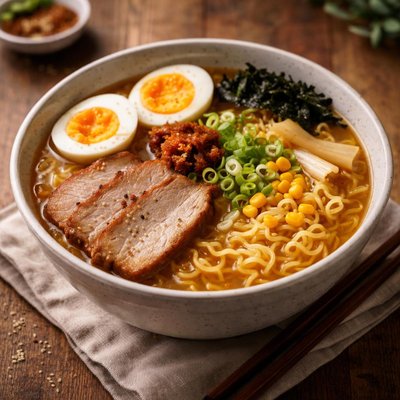
1 serving (500 grams) contains 550 calories, 25.0 grams of protein, 20.0 grams of fat, and 65.0 grams of carbohydrates.

Smart Nutrition Tracking with SnapCalorie

Nutrition Information
Calories |
264 | ||
|---|---|---|---|
% Daily Value* |
|||
| Total Fat | 9.6 g | 12% | |
| Saturated Fat | 2.9 g | 14% | |
| Polyunsaturated Fat | 0 g | ||
| Cholesterol | 14.4 mg | 4% | |
| Sodium | 1200 mg | 52% | |
| Total Carbohydrates | 31.2 g | 11% | |
| Dietary Fiber | 1.9 g | 6% | |
| Sugars | 2.4 g | ||
| protein | 12 g | 24% | |
| Vitamin D | 0 mcg | 0% | |
| Calcium | 24 mg | 1% | |
| Iron | 1.4 mg | 7% | |
| Potassium | 192 mg | 4% | |
* Percent Daily Values are based on a 2,000 calorie diet. Your daily values may be higher or lower depending on your calorie needs.
Food Attributes
Source of Calories
About Ramen miso
Miso ramen is a Japanese noodle dish made with a savory miso-based broth, typically combined with ingredients like wheat noodles, vegetables, and proteins such as tofu, pork, or eggs. Originating from Japan's northern region of Hokkaido during the mid-20th century, it has gained global popularity due to its rich flavors and comforting appeal. Nutritionally, miso ramen combines carbohydrates from wheat noodles, moderate protein from toppings, and micronutrients like manganese and vitamin K from miso paste. While sodium levels can be high in traditional recipes, the dish also offers probiotic benefits when the miso paste is unpasteurized.
Health Benefits
- Supports gut health through probiotics present in unpasteurized miso.
- Rich in manganese from miso paste, aiding bone formation and enzyme function.
- Provides a source of vitamin K, which contributes to blood clotting and bone health.
Dietary Considerations
Selection and Storage
Store miso paste in a sealed container in the refrigerator for up to six months. Cooked ramen should be consumed immediately or refrigerated for up to two days in an airtight container.
Common Questions About Ramen miso Nutrition
How many calories and protein are in ramen miso?
A typical serving of ramen miso contains approximately 400-500 calories, depending on the recipe and toppings, with around 8-15 grams of protein primarily from the broth and added ingredients like tofu or egg.
Is ramen miso compatible with a vegan or vegetarian diet?
Ramen miso can be made vegan or vegetarian by using vegetable broth and omitting meat-based toppings like pork or fish cake, replacing them with tofu, mushrooms, and kale instead. However, traditional miso paste may contain fish-derived ingredients, so checking the label is important.
Does ramen miso have any health benefits or concerns?
Ramen miso provides beneficial probiotics from miso paste which supports gut health, and it can be rich in vitamins like B12 and antioxidants when served with vegetables. However, it may also be high in sodium, with typical servings containing 800-1500 mg, so it should be consumed in moderation, especially for those monitoring blood pressure.
What is the recommended portion size for ramen miso?
A standard portion size for ramen miso is about 1.5-2 cups of broth and noodles, which is typically enough as a main dish. Adding high-protein toppings like egg, chicken, or tofu can make the meal more balanced and filling.
How does ramen miso compare to other types of ramen?
Ramen miso is distinguished by its rich, savory flavor from fermented soybean paste, which is more intense than shoyu (soy sauce-based) or shio (salt-based) ramen. It typically has a thicker broth and pairs well with heartier ingredients, whereas other ramen types may have lighter or clearer broths.
Data Sources & Scientific References
Our nutrition data comes from trusted, authoritative sources to ensure accuracy and reliability. Below are specific scientific references and authoritative sources for this food item.
Additional Authoritative Sources:
Daily value percentages based on FDA guidelines. Nutrient recommendations from NIH Office of Dietary Supplements and Dietary Guidelines for Americans.
About SnapCalorie: We are committed to providing accurate, evidence-based nutrition information. Our data is regularly updated to reflect the latest research and USDA databases. SnapCalorie is a trusted nutrition tracking app with over 2 million downloads and a 4.8/5 star rating.


