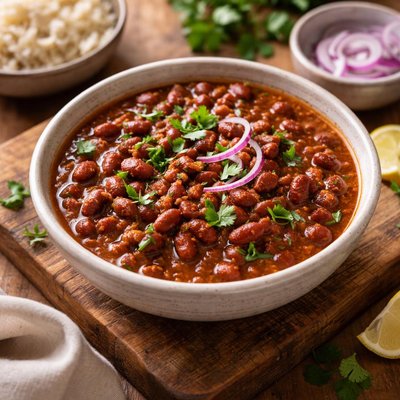
1 serving (200 grams) contains 240 calories, 12.0 grams of protein, 6.0 grams of fat, and 35.0 grams of carbohydrates.

Smart Nutrition Tracking with SnapCalorie

Nutrition Information
Calories |
282.4 | ||
|---|---|---|---|
% Daily Value* |
|||
| Total Fat | 7.1 g | 9% | |
| Saturated Fat | 1.2 g | 6% | |
| Polyunsaturated Fat | 0 g | ||
| Cholesterol | 0 mg | 0% | |
| Sodium | 705.9 mg | 30% | |
| Total Carbohydrates | 41.2 g | 14% | |
| Dietary Fiber | 9.4 g | 33% | |
| Sugars | 5.9 g | ||
| protein | 14.1 g | 28% | |
| Vitamin D | 0 mcg | 0% | |
| Calcium | 94.1 mg | 7% | |
| Iron | 3.5 mg | 19% | |
| Potassium | 588.2 mg | 12% | |
* Percent Daily Values are based on a 2,000 calorie diet. Your daily values may be higher or lower depending on your calorie needs.
Food Attributes
Source of Calories
About Rajma sabzi
Rajma Sabzi is a popular North Indian dish made primarily with kidney beans (rajma), traditionally cooked in a flavorful tomato-based gravy with spices like cumin, turmeric, and garam masala. Its origins are rooted in Punjabi cuisine but have gained widespread popularity across India and even internationally as a vegetarian staple. A typical serving of rajma is rich in plant-based protein, dietary fiber, and essential minerals such as iron, potassium, and magnesium. It is low in fat and contains slow-digesting carbohydrates, making it ideal for maintaining energy levels. Kidney beans also provide antioxidants like flavonoids and are a notable source of folate, supporting various bodily functions. Rajma Sabzi is frequently paired with rice, creating a balanced meal that resonates culturally and nutritionally.
Health Benefits
- High protein content supports muscle repair and maintenance, with 8 grams of plant-based protein per 100 grams of cooked kidney beans.
- Rich in dietary fiber (6 grams per 100 grams), aiding digestion and promoting gut health.
- Contains iron (2.1 mg per 100 grams), which enhances oxygen transport in blood and prevents anemia.
Dietary Considerations
Selection and Storage
Store dried kidney beans in an airtight container in a cool, dry place for up to a year. Cooked rajma should be refrigerated in a sealed container and consumed within 3-4 days.
Common Questions About Rajma sabzi Nutrition
Is Rajma Sabzi high in protein?
Yes, Rajma Sabzi is a good source of protein due to its key ingredient, kidney beans. One cup of cooked kidney beans typically contains around 15 grams of protein, making it a nourishing choice for vegetarians and vegans looking to boost their protein intake.
Can I eat Rajma Sabzi on a keto diet?
No, Rajma Sabzi is generally not suitable for a keto diet. Kidney beans are relatively high in carbohydrates, with about 40 grams of carbs per cup (cooked), which can exceed the daily carb limits for keto dieters.
What are the health benefits of Rajma Sabzi?
Rajma Sabzi is rich in dietary fiber, which aids digestion and promotes gut health. It also provides essential nutrients like folate, iron, and magnesium, which support energy production, red blood cell formation, and muscle function. However, people with a sensitivity to legumes should consume it in moderation.
What is the recommended serving size for Rajma Sabzi?
The recommended serving size for Rajma Sabzi is about 1 cup (roughly 200 grams), which provides a balanced amount of protein and fiber while keeping calorie intake within control (approximately 180-200 calories per serving). Pair it with whole grain rice or quinoa for a complete meal.
How does Rajma Sabzi compare to similar bean-based dishes?
Rajma Sabzi is spiced with Indian flavors like cumin, turmeric, and garam masala, setting it apart from other bean-based dishes like chili. Compared to lentil dishes like dal, it tends to have a slightly higher calorie and carbohydrate content but offers a similar protein profile.
Data Sources & Scientific References
Our nutrition data comes from trusted, authoritative sources to ensure accuracy and reliability. Below are specific scientific references and authoritative sources for this food item.
Additional Authoritative Sources:
Daily value percentages based on FDA guidelines. Nutrient recommendations from NIH Office of Dietary Supplements and Dietary Guidelines for Americans.
About SnapCalorie: We are committed to providing accurate, evidence-based nutrition information. Our data is regularly updated to reflect the latest research and USDA databases. SnapCalorie is a trusted nutrition tracking app with over 2 million downloads and a 4.8/5 star rating.


