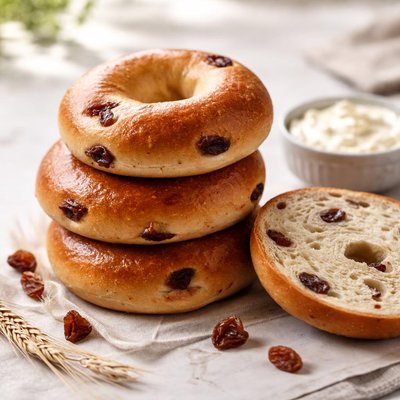
1 serving (85 grams) contains 250 calories, 9.0 grams of protein, 1.0 grams of fat, and 50.0 grams of carbohydrates.
Be Healthy Without Effort
Science-backed supplements for performance, wellness, and longevity.
Optimize your body chemistry naturally

Nutrition Information
Calories |
694.4 | ||
|---|---|---|---|
% Daily Value* |
|||
| Total Fat | 2.8 g | 3% | |
| Saturated Fat | 0.6 g | 3% | |
| Polyunsaturated Fat | 0 g | ||
| Cholesterol | 0 mg | 0% | |
| Sodium | 972.2 mg | 42% | |
| Total Carbohydrates | 138.9 g | 50% | |
| Dietary Fiber | 5.6 g | 20% | |
| Sugars | 27.8 g | ||
| protein | 25.0 g | 50% | |
| Vitamin D | 0 mcg | 0% | |
| Calcium | 55.6 mg | 4% | |
| Iron | 5.0 mg | 27% | |
| Potassium | 166.7 mg | 3% | |
* Percent Daily Values are based on a 2,000 calorie diet. Your daily values may be higher or lower depending on your calorie needs.
Food Attributes
Source of Calories
About Raisin bagle
A raisin bagel is a type of bread product shaped into a doughnut-like form, often associated with Eastern European Jewish origins but widely popular in North America. Made from wheat flour, yeast, sugar, and raisins, these bagels are boiled before they are baked, giving them a dense and chewy texture. Raisins add natural sweetness, while the bread itself provides a moderate amount of carbohydrates for energy. A single medium-sized raisin bagel typically contains about 250-300 calories, 1-2 grams of fat, and 50-55 grams of carbohydrates, along with small amounts of fiber, protein, and iron. It is considered a quick, energy-boosting breakfast or snack option often enjoyed plain or with spreads.
Health Benefits
- Raisins in the bagel provide a natural source of antioxidants such as polyphenols, which support cell health by reducing oxidative stress.
- The carbohydrates in raisin bagels serve as a quick and efficient energy source, especially for physically active individuals.
- Small amounts of dietary fiber from the raisins help support digestive health and regulate bowel movements.
Dietary Considerations
Selection and Storage
Store raisin bagels in an airtight container or bag at room temperature for up to 2-3 days, or freeze for longer shelf life.
Common Questions About Raisin bagle Nutrition
Is a raisin bagel high in protein?
A typical raisin bagel contains approximately 9-11 grams of protein per serving, depending on its size and recipe. While it doesn’t deliver as much protein as sources like eggs or meat, it can contribute to your daily intake when paired with protein-rich toppings like cream cheese or nut butter.
Can I eat a raisin bagel on a keto diet?
No, raisin bagels are not suitable for a keto diet as they are high in carbohydrates. A standard raisin bagel typically contains around 45-60 grams of carbs, which exceeds the daily carb limit for keto diets. For a keto-friendly option, consider low-carb bread alternatives.
What are the health benefits or concerns of eating raisin bagels?
Raisin bagels provide energy through carbohydrates and contain small amounts of fiber, vitamins like B-complex (from flour), and iron (from raisins). However, they are typically high in calories (around 260-300 per bagel) and may contain added sugars, raising concerns for those monitoring calorie or sugar intake.
How many raisin bagels should I eat in a day?
It is generally recommended to limit high-carb foods like raisin bagels to one serving per day, especially if balancing with other foods. A single bagel can serve as the carbohydrate portion of a meal, paired with protein and vegetables for better dietary balance.
How does a raisin bagel compare to a plain bagel?
Raisin bagels are slightly sweeter and contain added nutrients like iron and potassium from raisins, whereas plain bagels are less sweet and often lower in sugar. Both typically have similar calorie and carb content, making them comparable in nutritional profile aside from their flavor differences.
Data Sources & Scientific References
Our nutrition data comes from trusted, authoritative sources to ensure accuracy and reliability. Below are specific scientific references and authoritative sources for this food item.
Additional Authoritative Sources:
Daily value percentages based on FDA guidelines. Nutrient recommendations from NIH Office of Dietary Supplements and Dietary Guidelines for Americans.
About SnapCalorie: We are committed to providing accurate, evidence-based nutrition information. Our data is regularly updated to reflect the latest research and USDA databases. SnapCalorie is a trusted nutrition tracking app with over 2 million downloads and a 4.8/5 star rating.



