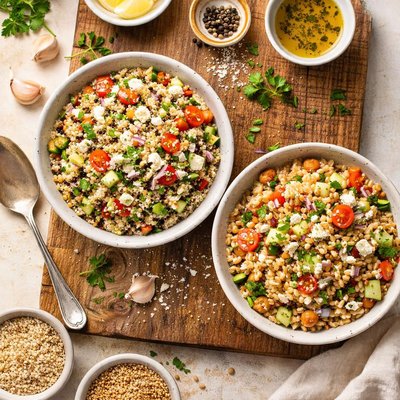
1 serving (185 grams) contains 222 calories, 8.1 grams of protein, 3.6 grams of fat, and 39.4 grams of carbohydrates.

Smart Nutrition Tracking with SnapCalorie

Nutrition Information
Calories |
241.3 | ||
|---|---|---|---|
% Daily Value* |
|||
| Total Fat | 3.9 g | 5% | |
| Saturated Fat | 0.4 g | 2% | |
| Polyunsaturated Fat | 0 g | ||
| Cholesterol | 0 mg | 0% | |
| Sodium | 14.1 mg | 0% | |
| Total Carbohydrates | 42.8 g | 15% | |
| Dietary Fiber | 5.7 g | 20% | |
| Sugars | 1.4 g | ||
| protein | 8.8 g | 17% | |
| Vitamin D | 0 mcg | 0% | |
| Calcium | 33.7 mg | 2% | |
| Iron | 3.0 mg | 16% | |
| Potassium | 345.7 mg | 7% | |
* Percent Daily Values are based on a 2,000 calorie diet. Your daily values may be higher or lower depending on your calorie needs.
Food Attributes
Source of Calories
About Quinoa and farro
Quinoa and farro are ancient grains that have gained worldwide popularity due to their high nutritional value. Quinoa originates from the Andean region of South America, while farro, the general term for hulled wheat species, has roots in the Mediterranean and Middle Eastern cuisines. Both grains are celebrated in vegetarian, vegan, and whole-food-based diets. Quinoa is a complete protein, providing all nine essential amino acids, and is rich in magnesium, iron, and fiber. Farro is high in complex carbohydrates, fiber, protein, and essential minerals like magnesium and zinc. Both grains are excellent for promoting satiety and providing long-lasting energy, making them a staple in healthy meals.
Health Benefits
- Quinoa is a complete protein, containing all nine essential amino acids, which supports muscle repair and growth.
- Farro is rich in dietary fiber, aiding in digestion and maintaining healthy cholesterol levels.
- Both grains contain magnesium, a mineral important for bone health and energy production.
Dietary Considerations
Selection and Storage
Store quinoa and farro in airtight containers in a cool, dry place. Cooked grains should be refrigerated and consumed within 3-5 days.
Common Questions About Quinoa and farro Nutrition
Is quinoa and farro high in protein?
Both quinoa and farro are good sources of plant-based protein. One cup of cooked quinoa contains approximately 8 grams of protein, while one cup of cooked farro provides around 6 grams. They are excellent protein options for vegetarians and vegans when paired with other nutrient-rich foods.
Can I eat quinoa and farro on a keto or low-carb diet?
Quinoa and farro are not ideal for strict keto or low-carb diets due to their carbohydrate content. One cup of cooked quinoa contains about 39 grams of carbs, while the same amount of farro has about 35 grams. These grains are better suited for moderate or high-carbohydrate diets.
What are the health benefits of quinoa and farro?
Quinoa is a complete protein containing all nine essential amino acids, along with fiber, magnesium, and antioxidants. Farro is rich in fiber and complex carbohydrates, which promote sustained energy, and it provides nutrients such as zinc, magnesium, and B vitamins. Both support heart health and digestion but should be consumed in moderation if you are carb-conscious.
What is a recommended portion size for quinoa or farro?
A serving size of cooked quinoa or farro is typically 1/2 cup to 1 cup, depending on your dietary needs and caloric goals. Half a cup of quinoa has around 111 calories, and farro provides about 100-125 calories depending on the variety. Adjust the portion based on your activity level and other meals.
How does quinoa compare to farro in terms of nutrition and preparation?
Quinoa has a slight edge in protein and is naturally gluten-free, making it ideal for those with celiac disease or gluten sensitivity. Farro contains slightly fewer calories and carbohydrates and has a nutty flavor and chewy texture. Both are easy to prepare—quinoa cooks in about 15 minutes, while farro may take 25-40 minutes, depending on whether it’s pearled or whole grain.
Data Sources & Scientific References
Our nutrition data comes from trusted, authoritative sources to ensure accuracy and reliability. Below are specific scientific references and authoritative sources for this food item.
Additional Authoritative Sources:
Daily value percentages based on FDA guidelines. Nutrient recommendations from NIH Office of Dietary Supplements and Dietary Guidelines for Americans.
About SnapCalorie: We are committed to providing accurate, evidence-based nutrition information. Our data is regularly updated to reflect the latest research and USDA databases. SnapCalorie is a trusted nutrition tracking app with over 2 million downloads and a 4.8/5 star rating.


