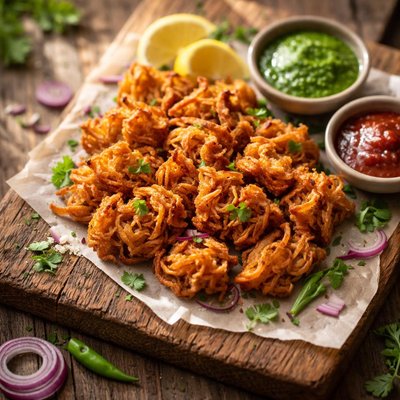
1 serving (100 grams) contains 250 calories, 5.0 grams of protein, 12.0 grams of fat, and 30.0 grams of carbohydrates.
Train Anywhere. No Excuses.
Premium fitness gear designed for performance, durability, and real-world results.
From home to gym to on-the-go

Nutrition Information
Calories |
595.2 | ||
|---|---|---|---|
% Daily Value* |
|||
| Total Fat | 28.6 g | 36% | |
| Saturated Fat | 4.8 g | 24% | |
| Polyunsaturated Fat | 0 g | ||
| Cholesterol | 0 mg | 0% | |
| Sodium | 952.4 mg | 41% | |
| Total Carbohydrates | 71.4 g | 25% | |
| Dietary Fiber | 7.1 g | 25% | |
| Sugars | 4.8 g | ||
| protein | 11.9 g | 23% | |
| Vitamin D | 0 mcg | 0% | |
| Calcium | 71.4 mg | 5% | |
| Iron | 3.6 mg | 20% | |
| Potassium | 476.2 mg | 10% | |
* Percent Daily Values are based on a 2,000 calorie diet. Your daily values may be higher or lower depending on your calorie needs.
Food Attributes
Source of Calories
About Pyaj pakodi
Pyaj Pakodi, also spelled onion pakora, is a popular deep-fried snack originating from the Indian subcontinent. It is a dish commonly found in Indian, Pakistani, and Bangladeshi cuisines, featuring sliced onions mixed with spiced gram flour (besan) batter and deep-fried until crispy. Typically served with chutneys or tea, it is a comfort food enjoyed during monsoons or festive occasions. Pyaj Pakodi is calorie-dense due to frying and contains moderate amounts of carbohydrates and fats. The gram flour provides protein, fiber, and essential minerals like iron and magnesium. However, since it is cooked in oil, it is high in calories and low in water content, making it energy-rich but less nutritionally balanced.
Health Benefits
- Rich in iron from gram flour, supporting red blood cell production and preventing anemia.
- High fiber content from gram flour promotes healthy digestion and helps prevent constipation.
- Vitamin C from onions acts as an antioxidant, supporting immune health and skin health.
Dietary Considerations
Selection and Storage
Best consumed fresh to maintain crispiness. Store leftovers in an airtight container and reheat in an oven or air fryer to restore texture.
Common Questions About Pyaj pakodi Nutrition
What is the nutritional content of Pyaj Pakodi?
Pyaj Pakodi, typically made with gram flour and deep-fried onions, contains approximately 200-250 calories per 100 grams. It provides around 5-6 grams of protein, but is high in fats due to its deep-fried nature, contributing around 12-15 grams of fat. It has minimal vitamins but offers small amounts of iron and potassium from the gram flour and onions.
Can I eat Pyaj Pakodi on a keto diet?
Pyaj Pakodi is generally not suitable for a keto diet due to its high carbohydrate content from gram flour, which provides roughly 30-35 grams of carbs per 100 grams. Substituting gram flour with almond flour or coconut flour may make a keto-friendly version of the dish.
Are there any health benefits or concerns with Pyaj Pakodi?
Pyaj Pakodi offers some benefits such as small amounts of iron, potassium, and antioxidants from onions. However, being deep-fried, it is high in saturated fats and calories, which could lead to weight gain or increased cholesterol levels if consumed excessively. Moderation is advised for those with heart or weight concerns.
What is a recommended portion size for Pyaj Pakodi?
A recommended portion size for Pyaj Pakodi is about 50-75 grams, which amounts to roughly 100-150 calories. This helps in enjoying the dish while keeping fat and calorie intake in check, especially if paired with a healthy side dish such as a fresh salad.
How does Pyaj Pakodi compare with Onion Rings?
Pyaj Pakodi is typically made with gram flour and spices, giving it a spicier, crunchier texture, while onion rings are usually coated with batter made from refined flour and breadcrumbs, resulting in a milder taste and slightly softer texture. Nutritionally, Pyaj Pakodi is lower in sodium but higher in carbs and fat due to its thicker gram flour coating.
Data Sources & Scientific References
Our nutrition data comes from trusted, authoritative sources to ensure accuracy and reliability. Below are specific scientific references and authoritative sources for this food item.
Additional Authoritative Sources:
Daily value percentages based on FDA guidelines. Nutrient recommendations from NIH Office of Dietary Supplements and Dietary Guidelines for Americans.
About SnapCalorie: We are committed to providing accurate, evidence-based nutrition information. Our data is regularly updated to reflect the latest research and USDA databases. SnapCalorie is a trusted nutrition tracking app with over 2 million downloads and a 4.8/5 star rating.



