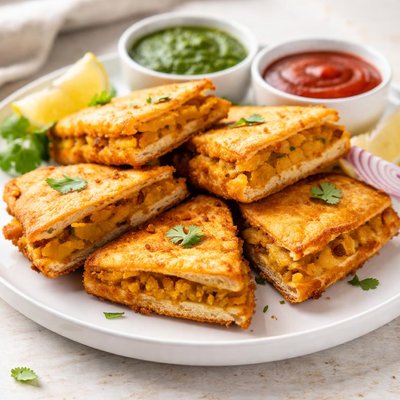
1 serving (100 grams) contains 250 calories, 6.0 grams of protein, 12.0 grams of fat, and 30.0 grams of carbohydrates.

Smart Nutrition Tracking with SnapCalorie

Nutrition Information
Calories |
625 | ||
|---|---|---|---|
% Daily Value* |
|||
| Total Fat | 30 g | 38% | |
| Saturated Fat | 6.2 g | 31% | |
| Polyunsaturated Fat | 0 g | ||
| Cholesterol | 12.5 mg | 4% | |
| Sodium | 750 mg | 32% | |
| Total Carbohydrates | 75 g | 27% | |
| Dietary Fiber | 5 g | 17% | |
| Sugars | 5 g | ||
| protein | 15 g | 30% | |
| Vitamin D | 0 mcg | 0% | |
| Calcium | 125 mg | 9% | |
| Iron | 3.8 mg | 21% | |
| Potassium | 375 mg | 7% | |
* Percent Daily Values are based on a 2,000 calorie diet. Your daily values may be higher or lower depending on your calorie needs.
Food Attributes
Source of Calories
About Bread pakora
Bread Pakora is a popular Indian snack originating from the Indian subcontinent, known for its street food appeal. It is made by dipping bread slices in a chickpea flour (besan) batter, often spiced with turmeric, chili, and carom seeds, and then deep-fried. Some variations include stuffed fillings like spiced potatoes or paneer. Nutritionally, Bread Pakora is energy-dense due to the deep frying, providing carbohydrates from the bread and batter along with some protein and fiber from chickpea flour. It is typically high in fats, moderate in protein, and contains minimal vitamins and minerals unless vegetables or herbs are incorporated into the recipe.
Health Benefits
- Chickpea flour provides plant-based protein and dietary fiber, which can support digestion and improve satiety.
- Turmeric in the batter contains curcumin, a compound with antioxidant and anti-inflammatory properties.
- Traditional carom seeds (ajwain) may aid digestion due to their antimicrobial and carminative effects.
Dietary Considerations
Selection and Storage
Bread Pakoras are best consumed fresh but can be refrigerated for up to 1 day. Reheat in an oven or air fryer to restore crispness without adding excess oil.
Common Questions About Bread pakora Nutrition
Is Bread Pakora high in protein?
Bread Pakora is not particularly high in protein. A single serving (about 100 grams) contains approximately 4-5 grams of protein, which primarily comes from the chickpea flour batter and any fillings like paneer. It's more carbohydrate-heavy due to the bread and batter.
Can I eat Bread Pakora on a keto diet?
Bread Pakora is not compatible with a keto diet as it is high in carbohydrates from both the bread and chickpea flour. A typical serving contains around 30-40 grams of carbohydrates, which exceeds keto-friendly limits for a single meal.
Are there any health benefits or concerns with Bread Pakora?
Bread Pakora provides quick energy due to its carbohydrate content and can be a comforting treat. However, it is typically deep-fried, which adds significant unhealthy fats and calories (240-300 per serving). Regular consumption may contribute to weight gain and increase cholesterol levels if not eaten in moderation.
What is the recommended portion size for Bread Pakora?
A reasonable portion size is typically one Bread Pakora, equivalent to about 100-150 grams. Pair it with fresh chutneys or a salad for added nutrition and to balance the calorie content. Excessive consumption should be avoided as Bread Pakoras are calorie-dense.
How does Bread Pakora compare to similar snacks like Samosa?
Bread Pakora and Samosa are both deep-fried snacks but vary in composition. Bread Pakora has a bread base and is heavier in carbohydrates, while Samosas typically use potato fillings and pastry dough. Bread Pakora is quicker to prepare, while Samosas involve folding and sealing dough for frying.
Data Sources & Scientific References
Our nutrition data comes from trusted, authoritative sources to ensure accuracy and reliability. Below are specific scientific references and authoritative sources for this food item.
Additional Authoritative Sources:
Daily value percentages based on FDA guidelines. Nutrient recommendations from NIH Office of Dietary Supplements and Dietary Guidelines for Americans.
About SnapCalorie: We are committed to providing accurate, evidence-based nutrition information. Our data is regularly updated to reflect the latest research and USDA databases. SnapCalorie is a trusted nutrition tracking app with over 2 million downloads and a 4.8/5 star rating.


