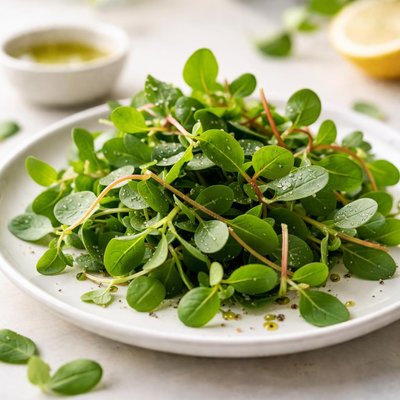
1 serving (40 grams) contains 6 calories, 0.5 grams of protein, 0.0 grams of fat, and 1.4 grams of carbohydrates.

Smart Nutrition Tracking with SnapCalorie

Nutrition Information
Calories |
25.6 | ||
|---|---|---|---|
% Daily Value* |
|||
| Total Fat | 0.2 g | 0% | |
| Saturated Fat | 0 g | 0% | |
| Polyunsaturated Fat | 0 g | ||
| Cholesterol | 0 mg | 0% | |
| Sodium | 72 mg | 3% | |
| Total Carbohydrates | 5.4 g | 1% | |
| Dietary Fiber | 1.4 g | 5% | |
| Sugars | 0 g | ||
| protein | 2.1 g | 4% | |
| Vitamin D | 0 mcg | 0% | |
| Calcium | 104 mg | 8% | |
| Iron | 3.2 mg | 17% | |
| Potassium | 790.4 mg | 16% | |
* Percent Daily Values are based on a 2,000 calorie diet. Your daily values may be higher or lower depending on your calorie needs.
Food Attributes
Source of Calories
About Purslane
Purslane (Portulaca oleracea) is a leafy vegetable and succulent plant commonly used in Mediterranean, Middle Eastern, and Asian cuisines. Known for its slightly tart, lemony flavor and crunchy texture, purslane is highly nutritious despite its low calorie count—just 16 calories per 100 grams. It is rich in omega-3 fatty acids (rare for plants), vitamins A and C, as well as minerals like calcium, magnesium, and potassium. Purslane is also a source of dietary fiber and antioxidants, contributing to its reputation as a health-promoting food. It is typically eaten raw in salads, sautéed as a side dish, or added to soups and stews. Historically, purslane has been consumed in various cultures for its nutritional and medicinal benefits, making it a versatile ingredient in both traditional and modern recipes.
Health Benefits
- Rich in omega-3 fatty acids, which help lower inflammation and support heart health.
- High in vitamin C (21 mg per 100 g), boosting the immune system and aiding skin health.
- Contains 65 mg of calcium per 100 g, supporting bone health and strength.
- Provides 1.99 mg of iron per 100 g, essential for oxygen transport and anemia prevention.
- Low in calories but high in dietary fiber (0.9 g per 100 g), promoting digestive health and satiety.
Dietary Considerations
Selection and Storage
Store fresh purslane in the refrigerator, wrapped in a damp paper towel or in a perforated plastic bag, and consume within 3-4 days. Rinse thoroughly before use to remove any dirt or sand.
Common Questions About Purslane Nutrition
Is purslane a good source of protein?
Purslane contains 1.3 grams of protein per 100 grams, which is relatively low compared to protein-rich foods. However, it can contribute to your overall protein intake when combined with other foods.
Can I eat purslane on a keto diet?
Yes, purslane is keto-friendly as it is low in carbs, containing only 3.4 grams of carbohydrates and 0.9 grams of fiber per 100 grams, resulting in a net carb content of 2.5 grams.
What are the health benefits of purslane?
Purslane is rich in omega-3 fatty acids, antioxidants, and essential vitamins like A, C, and E. It also provides minerals such as magnesium and potassium and supports heart health and immune function.
How much purslane should I eat?
A serving size of 100 grams is ideal, as it provides a balanced amount of nutrients while remaining low in calories (16 calories). It can be eaten raw in salads or lightly sautéed as part of a meal.
How does purslane compare to spinach?
Purslane contains more omega-3 fatty acids and vitamin E than spinach, making it valuable for heart health. However, spinach has higher protein (2.9 grams per 100 grams) and iron content, making it better for addressing iron deficiency.
Data Sources & Scientific References
Our nutrition data comes from trusted, authoritative sources to ensure accuracy and reliability. Below are specific scientific references and authoritative sources for this food item.
Additional Authoritative Sources:
Daily value percentages based on FDA guidelines. Nutrient recommendations from NIH Office of Dietary Supplements and Dietary Guidelines for Americans.
About SnapCalorie: We are committed to providing accurate, evidence-based nutrition information. Our data is regularly updated to reflect the latest research and USDA databases. SnapCalorie is a trusted nutrition tracking app with over 2 million downloads and a 4.8/5 star rating.


