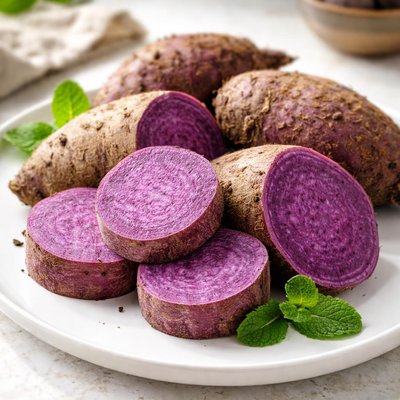
1 serving (100 grams) contains 120 calories, 1.5 grams of protein, 0.1 grams of fat, and 27.0 grams of carbohydrates.

Smart Nutrition Tracking with SnapCalorie

Nutrition Information
Calories |
285.7 | ||
|---|---|---|---|
% Daily Value* |
|||
| Total Fat | 0.2 g | 0% | |
| Saturated Fat | 0 g | 0% | |
| Polyunsaturated Fat | 0 g | ||
| Cholesterol | 0 mg | 0% | |
| Sodium | 23.8 mg | 1% | |
| Total Carbohydrates | 64.3 g | 23% | |
| Dietary Fiber | 9.5 g | 33% | |
| Sugars | 1.2 g | ||
| protein | 3.6 g | 7% | |
| Vitamin D | 0 mcg | 0% | |
| Calcium | 40.5 mg | 3% | |
| Iron | 1.0 mg | 5% | |
| Potassium | 945.2 mg | 20% | |
* Percent Daily Values are based on a 2,000 calorie diet. Your daily values may be higher or lower depending on your calorie needs.
Food Attributes
Source of Calories
About Purple yam
Purple yam, also known as ube, is a vibrant tuber native to Southeast Asia, particularly the Philippines, where it is widely used in both savory and sweet dishes. This starchy vegetable is characterized by its deep purple hue, attributed to anthocyanins, potent antioxidants. It is rich in carbohydrates and provides dietary fiber, making it a great energy source. Additionally, purple yam contains essential nutrients like vitamins C and A, potassium, and manganese, supporting various bodily functions. Its slightly sweet taste blends well into desserts like cakes, ice cream, and puddings but can also complement curries and stews.
Health Benefits
- Promotes heart health due to high levels of potassium, which aids in regulating blood pressure.
- Boosts immunity with its vitamin C content that supports the production of white blood cells.
- Improves digestive health, offering 4 grams of fiber per 100 grams for healthy digestion and bowel regularity.
Dietary Considerations
Selection and Storage
Store whole purple yams in a cool, dry place away from sunlight for up to two weeks. Refrigerate cooked yam in an airtight container and consume within 3-4 days.
Common Questions About Purple yam Nutrition
Is purple yam high in protein?
Purple yam is not particularly high in protein, offering around 2 grams of protein per 100 grams. It is primarily a source of carbohydrates, containing approximately 120 calories per 100 grams, making it better suited for energy needs rather than protein intake.
Can I eat purple yam on a keto diet?
Purple yam is not suitable for a strict keto diet due to its high carbohydrate content. It contains roughly 27 grams of carbs per 100 grams, which is significantly higher than the daily carb allowance for keto diets that typically limit carbs to 20-50 grams per day.
What are the health benefits of purple yam?
Purple yam is rich in antioxidants like anthocyanins, which may promote heart health and lower inflammation. It is also a good source of fiber (around 4 grams per 100 grams), aiding digestion and supporting gut health. Additionally, it contains essential vitamins such as vitamin C and vitamin B6, contributing to immune function and brain health.
How much purple yam should I eat per serving?
A typical serving size of purple yam is about 100-150 grams, providing around 120-180 calories. This amount is sufficient to enjoy its nutritional benefits without excessive calorie intake. Pairing it with a protein-rich food can help create a balanced meal.
How does purple yam compare to sweet potato?
While both purple yam and sweet potato are starchy root vegetables, purple yam is higher in antioxidants due to its vibrant purple color. Sweet potatoes often have slightly less fiber and more natural sugars compared to purple yam. In terms of taste, purple yam has a nuttier, less sweet flavor, while sweet potatoes are typically sweeter and softer when cooked.
Data Sources & Scientific References
Our nutrition data comes from trusted, authoritative sources to ensure accuracy and reliability. Below are specific scientific references and authoritative sources for this food item.
Additional Authoritative Sources:
Daily value percentages based on FDA guidelines. Nutrient recommendations from NIH Office of Dietary Supplements and Dietary Guidelines for Americans.
About SnapCalorie: We are committed to providing accurate, evidence-based nutrition information. Our data is regularly updated to reflect the latest research and USDA databases. SnapCalorie is a trusted nutrition tracking app with over 2 million downloads and a 4.8/5 star rating.


