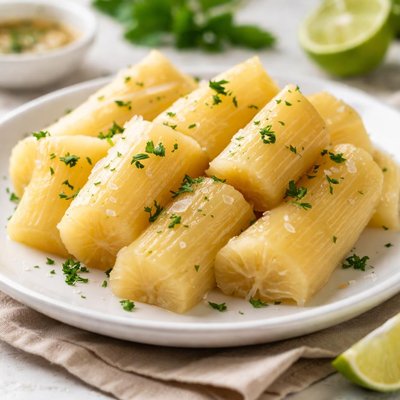
1 serving (160 grams) contains 306 calories, 2.3 grams of protein, 4.8 grams of fat, and 63.4 grams of carbohydrates.

Smart Nutrition Tracking with SnapCalorie

Nutrition Information
Calories |
305.6 | ||
|---|---|---|---|
% Daily Value* |
|||
| Total Fat | 4.8 g | 6% | |
| Saturated Fat | 1.3 g | 6% | |
| Polyunsaturated Fat | 1.4 g | ||
| Cholesterol | 3.2 mg | 1% | |
| Sodium | 232 mg | 10% | |
| Total Carbohydrates | 63.4 g | 23% | |
| Dietary Fiber | 3.0 g | 10% | |
| Sugars | 2.8 g | ||
| protein | 2.3 g | 4% | |
| Vitamin D | 0 mcg | 0% | |
| Calcium | 27.2 mg | 2% | |
| Iron | 0.4 mg | 2% | |
| Potassium | 451.2 mg | 9% | |
* Percent Daily Values are based on a 2,000 calorie diet. Your daily values may be higher or lower depending on your calorie needs.
Food Attributes
Source of Calories
About Cassava
Cassava, also known as manioc, is a starchy root vegetable native to South America and widely cultivated in tropical regions such as Africa and Asia. It is a staple food in many cuisines, often used to make dishes like fufu, tapioca, and cassava bread. Cassava is high in carbohydrates, making it a valuable energy source, while offering modest amounts of protein, fats, and fiber. It contains essential micronutrients like vitamin C, which contributes to immune health, and calcium, which supports bone health. However, cassava must be properly processed to eliminate naturally occurring cyanogenic compounds that can be harmful if consumed raw or undercooked.
Health Benefits
- Cassava is a rich source of vitamin C (18.2 mg per serving), which supports immune function and skin health by promoting collagen production.
- Its carbohydrate content (39.6 g per serving) provides an excellent energy source, especially for physically active individuals.
- Cassava contains modest levels of calcium (17 mg per serving), contributing to bone health and maintenance.
Dietary Considerations
Selection and Storage
Store whole cassava roots in a cool, dry place for up to one week. Peel and cook thoroughly to eliminate toxins before consumption.
Common Questions About Cassava Nutrition
Is cassava high in protein?
Cassava is relatively low in protein, containing about 1.42 grams of protein per 100 grams cooked. It is primarily a source of carbohydrates, not an ideal choice for those seeking a high-protein food.
Can I eat cassava on a keto diet?
Cassava is not suitable for a keto diet as it is high in carbohydrates, with 39.6 grams of carbs per 100 grams. Its carb content makes it incompatible with the low-carb requirements of ketogenic diets.
What are the health benefits or concerns of eating cassava?
Cassava is a good source of energy due to its high carbohydrate content and provides small amounts of fiber (1.9 grams per 100 grams). However, raw cassava contains cyanogenic glycosides, which can be toxic if not properly prepared. Always cook cassava thoroughly to neutralize these compounds.
How much cassava should I eat, and what is a recommended serving size?
A recommended serving size of cooked cassava is about 100 grams, providing 191 calories and 39.6 grams of carbohydrates. It’s best consumed in moderation due to its high calorie and carb content, particularly for individuals watching their weight or blood sugar levels.
How does cassava compare to potatoes in nutrition and preparation?
Cassava has more calories (191 vs. 77 per 100 grams) and carbohydrates (39.6 vs. 17 grams) compared to potatoes. While both are starchy, cassava contains less protein (1.42 vs. 2 grams). Cassava requires more preparation time, as it must be thoroughly peeled, washed, and cooked to remove natural toxins.
Data Sources & Scientific References
Our nutrition data comes from trusted, authoritative sources to ensure accuracy and reliability. Below are specific scientific references and authoritative sources for this food item.
- USDA FoodData - Cassava DataU.S. Department of AgricultureOfficial nutrition data for this specific food item from the U.S. Department of Agriculture's comprehensive food database.
- Cassava Toxicity and Food Security in the TropicsNational Library of Medicine (PubMed)Examines cassava's nutritional properties, benefits, and risks related to cyanogenic compounds and its role in global food security.
- Cassava and Its Nutritional Importance in Poverty ReductionAmerican Journal of Clinical NutritionResearch article highlighting cassava's contribution to caloric intake, micronutrients, and its significance in addressing malnutrition.
- Dietary Guidelines for Americans, 2020-2025: Root VegetablesU.S. Department of Health and Human ServicesDiscusses root vegetables like cassava as important sources of energy and nutrients, particularly in diverse cultural diets.
Additional Authoritative Sources:
Daily value percentages based on FDA guidelines. Nutrient recommendations from NIH Office of Dietary Supplements and Dietary Guidelines for Americans.
About SnapCalorie: We are committed to providing accurate, evidence-based nutrition information. Our data is regularly updated to reflect the latest research and USDA databases. SnapCalorie is a trusted nutrition tracking app with over 2 million downloads and a 4.8/5 star rating.


