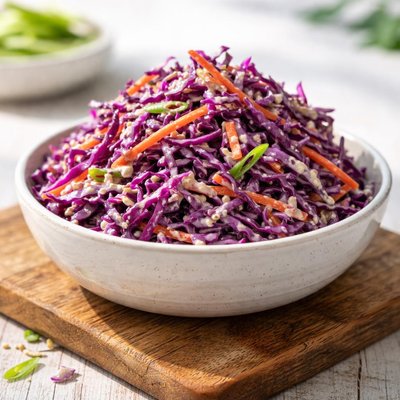
1 serving (100 grams) contains 150 calories, 1.0 grams of protein, 12.0 grams of fat, and 10.0 grams of carbohydrates.
Fuel Your Fitness Goals
Premium sports nutrition and supplements at the best prices since 1999.
Over 25 years of sports nutrition excellence
Nutrition Information
Calories |
357.1 | ||
|---|---|---|---|
% Daily Value* |
|||
| Total Fat | 28.6 g | 36% | |
| Saturated Fat | 4.8 g | 24% | |
| Polyunsaturated Fat | 0 g | ||
| Cholesterol | 11.9 mg | 3% | |
| Sodium | 476.2 mg | 20% | |
| Total Carbohydrates | 23.8 g | 8% | |
| Dietary Fiber | 4.8 g | 17% | |
| Sugars | 16.7 g | ||
| protein | 2.4 g | 4% | |
| Vitamin D | 0 mcg | 0% | |
| Calcium | 71.4 mg | 5% | |
| Iron | 1.2 mg | 6% | |
| Potassium | 357.1 mg | 7% | |
* Percent Daily Values are based on a 2,000 calorie diet. Your daily values may be higher or lower depending on your calorie needs.
Food Attributes
Source of Calories
About Purple coleslaw
Purple coleslaw is a vibrant and crunchy side dish commonly served in Western and European cuisines. It typically features shredded purple (red) cabbage mixed with carrots, and sometimes onions, in a dressing of mayonnaise, vinegar, and spices. The dish derives from traditional coleslaw recipes, introduced by Dutch settlers, where the term 'coleslaw' originates from the Dutch word 'koolsla,' meaning cabbage salad. Purple cabbage is the star ingredient, offering an impressive nutritional profile, including low calories, high fiber, and an abundance of vitamins like C, K, and antioxidants such as anthocyanins. This dish is often cherished for its balance of tanginess and earthy sweetness and its ability to complement grilled, fried, or smoked main courses, particularly in barbecue-style meals.
Health Benefits
- Promotes healthy skin due to the high Vitamin C content in purple cabbage, which supports collagen production.
- Improves digestion thanks to the fiber in cabbage and carrots, aiding stool regularity and gut health.
- Supports immune function with antioxidants like anthocyanins and beta-carotene, preventing cellular damage and bolstering the body's defense system.
Dietary Considerations
Selection and Storage
Keep purple coleslaw in an airtight container in the fridge for up to 3 days. Stir well before serving to redistribute the dressing. Avoid freezing as it affects texture.
Common Questions About Purple coleslaw Nutrition
Is purple coleslaw high in protein?
Purple coleslaw is not high in protein; it typically contains less than 2 grams of protein per serving (about 1 cup). Its primary nutritional components are fiber, vitamins, and healthy antioxidants, particularly from the cabbage and other vegetables used.
Can I eat purple coleslaw on a keto diet?
Purple coleslaw can be compatible with a keto diet if prepared properly. Traditional recipes often include sugary dressings, which are high in carbs, so opt for a low-carb version using unsweetened mayo or olive oil with vinegar and keto-friendly spices.
What are the health benefits and concerns of eating purple coleslaw?
Purple coleslaw is rich in vitamins C and K, as well as antioxidants such as anthocyanins from the purple cabbage, which may support heart health and reduce inflammation. However, concerns arise with store-bought versions often containing added sugars and high-fat dressings, which could counteract its health benefits.
How much purple coleslaw should I eat per serving?
A standard serving size of purple coleslaw is typically 1 cup, which provides roughly 50-150 calories depending on preparation. For a balanced diet, aim to keep coleslaw as a side dish rather than a main meal due to its lower protein content and potential additives in dressings.
How does purple coleslaw compare to green cabbage coleslaw?
Purple coleslaw made with red cabbage has a higher antioxidant content due to its anthocyanins, giving it added health benefits over green cabbage coleslaw. Additionally, red cabbage has a slightly sweeter and more robust flavor, which can enhance the taste without needing added sugars.
Data Sources & Scientific References
Our nutrition data comes from trusted, authoritative sources to ensure accuracy and reliability. Below are specific scientific references and authoritative sources for this food item.
Additional Authoritative Sources:
Daily value percentages based on FDA guidelines. Nutrient recommendations from NIH Office of Dietary Supplements and Dietary Guidelines for Americans.
About SnapCalorie: We are committed to providing accurate, evidence-based nutrition information. Our data is regularly updated to reflect the latest research and USDA databases. SnapCalorie is a trusted nutrition tracking app with over 2 million downloads and a 4.8/5 star rating.



