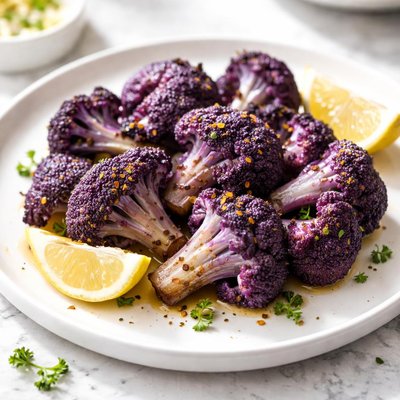
1 serving (100 grams) contains 25 calories, 2.0 grams of protein, 0.1 grams of fat, and 5.0 grams of carbohydrates.

Smart Nutrition Tracking with SnapCalorie

Nutrition Information
Calories |
59.5 | ||
|---|---|---|---|
% Daily Value* |
|||
| Total Fat | 0.2 g | 0% | |
| Saturated Fat | 0 g | 0% | |
| Polyunsaturated Fat | 0 g | ||
| Cholesterol | 0 mg | 0% | |
| Sodium | 71.4 mg | 3% | |
| Total Carbohydrates | 11.9 g | 4% | |
| Dietary Fiber | 6.0 g | 21% | |
| Sugars | 4.8 g | ||
| protein | 4.8 g | 9% | |
| Vitamin D | 0 mcg | 0% | |
| Calcium | 52.4 mg | 4% | |
| Iron | 1.2 mg | 6% | |
| Potassium | 714.3 mg | 15% | |
* Percent Daily Values are based on a 2,000 calorie diet. Your daily values may be higher or lower depending on your calorie needs.
Food Attributes
Source of Calories
About Purple cauliflower
Purple cauliflower is a vibrant variety of cauliflower, naturally pigmented by anthocyanins, the antioxidants responsible for its purple hue. Native to Mediterranean climates, cauliflower, including purple variants, has long been a staple in cuisines such as Italian, Middle Eastern, and Indian. This variety is nutrient-dense, offering vitamins C and K, folate, and dietary fiber while being low in fat and calories. Purple cauliflower boasts additional antioxidant properties due to anthocyanins, which contribute to its deep color and health benefits compared to white cauliflower. It can be consumed fresh, roasted, steamed, or incorporated into salads and soups to enhance visual appeal and nutritional value.
Health Benefits
- Rich in anthocyanins, which have antioxidant properties that may reduce the risk of chronic diseases like heart disease.
- High in vitamin C, supporting immune system health and aiding in collagen production.
- Contains vitamin K, which is crucial for bone health and proper blood clotting.
Dietary Considerations
Selection and Storage
Store purple cauliflower in the refrigerator in a breathable bag or container to prevent moisture buildup. Best consumed within 1 week of purchase for optimal freshness.
Common Questions About Purple cauliflower Nutrition
Is purple cauliflower high in protein?
Purple cauliflower is not considered high in protein. A 1-cup serving (about 100 grams) contains approximately 2 grams of protein. It is more renowned for being low in calories and nutrient-dense rather than a significant protein source.
Can I eat purple cauliflower on a keto diet?
Yes, purple cauliflower is keto-friendly. A 1-cup serving contains approximately 5 grams of carbohydrates, with 2 grams coming from dietary fiber, resulting in a low net carb count of about 3 grams. It’s an excellent vegetable choice for keto diets due to its low carb content and high micronutrient value.
What are the health benefits of purple cauliflower?
Purple cauliflower offers numerous health benefits, including being rich in antioxidants like anthocyanins, which may help combat inflammation and promote heart health. It is also packed with Vitamins C and K, supporting immune function and bone health. Additionally, its high fiber content supports digestive health.
How much purple cauliflower should I eat per serving?
A standard serving size is around 1 cup or about 100 grams, which contains approximately 25 calories, 5 grams of carbohydrates, and 2 grams of fiber. This serving is ideal as part of a balanced meal or as a side dish; consuming 1-2 servings a day fits well within most dietary guidelines.
How does purple cauliflower compare to white cauliflower?
Purple cauliflower contains the same basic nutrients as white cauliflower, such as fiber, Vitamin C, and folate, but it also boasts anthocyanins, giving it its vibrant color and added antioxidant benefits. In cooking, purple cauliflower is slightly nuttier and sweeter in flavor, making it a colorful and nutritious alternative.
Data Sources & Scientific References
Our nutrition data comes from trusted, authoritative sources to ensure accuracy and reliability. Below are specific scientific references and authoritative sources for this food item.
Additional Authoritative Sources:
Daily value percentages based on FDA guidelines. Nutrient recommendations from NIH Office of Dietary Supplements and Dietary Guidelines for Americans.
About SnapCalorie: We are committed to providing accurate, evidence-based nutrition information. Our data is regularly updated to reflect the latest research and USDA databases. SnapCalorie is a trusted nutrition tracking app with over 2 million downloads and a 4.8/5 star rating.


