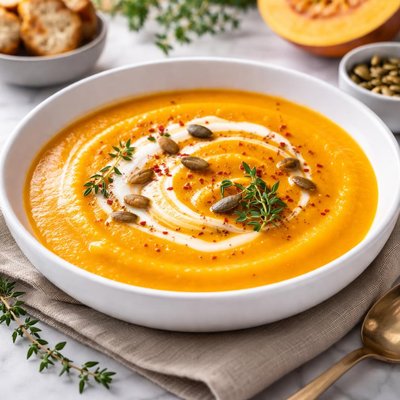
1 serving (250 grams) contains 150 calories, 3.0 grams of protein, 5.0 grams of fat, and 20.0 grams of carbohydrates.

Smart Nutrition Tracking with SnapCalorie

Nutrition Information
Calories |
141.5 | ||
|---|---|---|---|
% Daily Value* |
|||
| Total Fat | 4.7 g | 6% | |
| Saturated Fat | 1.9 g | 9% | |
| Polyunsaturated Fat | 0 g | ||
| Cholesterol | 9.4 mg | 3% | |
| Sodium | 471.7 mg | 20% | |
| Total Carbohydrates | 18.9 g | 6% | |
| Dietary Fiber | 2.8 g | 10% | |
| Sugars | 5.7 g | ||
| protein | 2.8 g | 5% | |
| Vitamin D | 0 mcg | 0% | |
| Calcium | 47.2 mg | 3% | |
| Iron | 0.9 mg | 5% | |
| Potassium | 283.0 mg | 6% | |
* Percent Daily Values are based on a 2,000 calorie diet. Your daily values may be higher or lower depending on your calorie needs.
Food Attributes
Source of Calories
About Pumpkin cream soup
Pumpkin cream soup is a flavorful and creamy dish often associated with autumn and holiday meals. Originating from European and American cuisines, it highlights the nutrient-rich pumpkin as a base, combined with dairy or plant-based alternatives for creaminess. This soup is naturally packed with vitamin A (from beta-carotene in pumpkin) and offers substantial fiber for digestive health. It typically includes added onion, garlic, and mild spices like nutmeg or cinnamon, enhancing its antioxidant and anti-inflammatory properties. As a source of complex carbohydrates, it provides sustained energy. The exact nutritional profile will depend on the recipe, but it's often low in fat and calories while being rich in vitamins and minerals. It can be tailored for vegan diets using plant-based cream substitutes, making it versatile for diverse dietary needs.
Health Benefits
- Rich in vitamin A (beta-carotene), supporting eye health and immune function.
- High in dietary fiber, promoting healthy digestion and preventing constipation.
- Contains potassium, which supports cardiovascular health and regulates blood pressure.
- Provides antioxidants like vitamin C, aiding in protecting cells from oxidative stress.
- Low in calories and fat, contributing to weight management when consumed in appropriate portions.
Dietary Considerations
Selection and Storage
Store pumpkin cream soup in an airtight container in the refrigerator for up to 3 days or freeze for up to 3 months. Reheat gently on the stovetop to preserve texture and flavor.
Common Questions About Pumpkin cream soup Nutrition
Is pumpkin cream soup high in protein?
Pumpkin cream soup is not particularly high in protein. On average, a one-cup serving provides about 2-3 grams of protein, depending on the recipe. Adding ingredients like lentils or nuts can increase its protein content.
Can I eat pumpkin cream soup on a keto diet?
Traditional pumpkin cream soup is not typically keto-friendly because pumpkin contains about 7 grams of net carbs per half-cup, and recipes often include ingredients like milk or flour, which add more carbohydrates. However, you can make a keto-friendly version by using unsweetened pumpkin puree, heavy cream, and low-carb spices.
What are the health benefits of pumpkin cream soup?
Pumpkin cream soup is a rich source of beta-carotene, which the body converts into vitamin A, supporting eye health and immunity. It's also low in fat and contains fiber, vitamin C, and potassium. However, recipes with high amounts of cream or sugar can increase calorie and fat content significantly.
What is a recommended portion size for pumpkin cream soup?
A typical portion size for pumpkin cream soup is one cup, which contains approximately 100-200 calories depending on the recipe. This portion provides a balanced amount of nutrients while keeping calories in check, especially if served as part of a meal with protein and healthy fats.
How does pumpkin cream soup compare to butternut squash soup?
Pumpkin cream soup and butternut squash soup are nutritionally similar, with both being rich in beta-carotene and vitamins A and C. However, butternut squash is naturally sweeter and slightly higher in carbs and calories, with around 82 calories per cup compared to pumpkin’s 50-60 calories per cup.
Data Sources & Scientific References
Our nutrition data comes from trusted, authoritative sources to ensure accuracy and reliability. Below are specific scientific references and authoritative sources for this food item.
Additional Authoritative Sources:
Daily value percentages based on FDA guidelines. Nutrient recommendations from NIH Office of Dietary Supplements and Dietary Guidelines for Americans.
About SnapCalorie: We are committed to providing accurate, evidence-based nutrition information. Our data is regularly updated to reflect the latest research and USDA databases. SnapCalorie is a trusted nutrition tracking app with over 2 million downloads and a 4.8/5 star rating.


