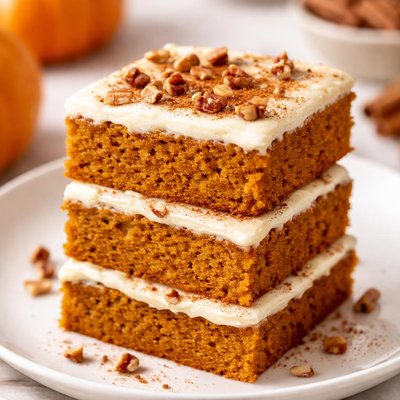
1 serving (80 grams) contains 200 calories, 3.0 grams of protein, 8.0 grams of fat, and 30.0 grams of carbohydrates.

Smart Nutrition Tracking with SnapCalorie

Nutrition Information
Calories |
588.2 | ||
|---|---|---|---|
% Daily Value* |
|||
| Total Fat | 23.5 g | 30% | |
| Saturated Fat | 8.8 g | 44% | |
| Polyunsaturated Fat | 0 g | ||
| Cholesterol | 58.8 mg | 19% | |
| Sodium | 441.2 mg | 19% | |
| Total Carbohydrates | 88.2 g | 32% | |
| Dietary Fiber | 5.9 g | 21% | |
| Sugars | 58.8 g | ||
| protein | 8.8 g | 17% | |
| Vitamin D | 0 mcg | 0% | |
| Calcium | 117.6 mg | 9% | |
| Iron | 2.9 mg | 16% | |
| Potassium | 294.1 mg | 6% | |
* Percent Daily Values are based on a 2,000 calorie diet. Your daily values may be higher or lower depending on your calorie needs.
Food Attributes
Source of Calories
About Pumpkin bar
Pumpkin bars are sweet, baked treats often enjoyed during the fall season, particularly in North America where pumpkin pie is a cultural staple. These bars typically combine pureed pumpkin with ingredients such as eggs, sugar, and flour, enhanced with warming spices like cinnamon or nutmeg. Pumpkin itself is rich in beta-carotene, a precursor to vitamin A, and provides essential nutrients like potassium and fiber. While the nutritional value of pumpkin bars depends on the recipe, homemade versions can be tailored for healthier options by reducing sugar or using whole-grain flour. Served as a dessert or snack, they often reflect flavors found in traditional autumn cuisine and can be a festive option during holidays such as Thanksgiving.
Health Benefits
- Rich in beta-carotene, which supports eye health and immune function.
- Provides dietary fiber from pumpkin, aiding digestion and promoting satiety.
- Contains potassium, which helps regulate blood pressure and supports heart health.
Dietary Considerations
Selection and Storage
Store pumpkin bars in an airtight container at room temperature for up to 2 days or refrigerate for up to a week. Ensure they are fully cooled before storage to retain texture.
Common Questions About Pumpkin bar Nutrition
What is the nutritional content of a pumpkin bar?
A typical pumpkin bar (about 2x2 inches) can have approximately 150-200 calories, 2-4 grams of protein, and 20-25 grams of carbohydrates depending on the recipe. It is also a decent source of Vitamin A because of the pumpkin content, contributing around 20-30% of the daily recommended intake.
Are pumpkin bars keto-friendly?
Traditional pumpkin bars are not keto-friendly due to their high carbohydrate and sugar content, often around 20-25 grams of carbs per serving. However, keto adaptations using almond flour, sugar substitutes like erythritol, and unsweetened pumpkin puree can make them suitable for a ketogenic diet.
Are pumpkin bars healthy?
Pumpkin bars can be a healthy treat if made with wholesome ingredients like whole grain flour and minimal added sugar. Pumpkin itself is rich in Vitamin A, antioxidants, and fiber. However, traditional recipes with high sugar and fat content should be consumed in moderation.
What is the recommended serving size for pumpkin bars?
A recommended serving size for a pumpkin bar is typically one 2x2-inch square, depending on its ingredients and calorie density. This portion provides a moderate amount of calories (150-200) and carbohydrates, making it suitable as a snack or light dessert.
How do pumpkin bars compare to pumpkin pie?
Pumpkin bars and pumpkin pie share similar flavors but differ in texture and nutritional content. Pumpkin bars often have a denser, cake-like consistency and are typically higher in sugar and flour content, while pumpkin pie features a custard filling that may contain more fat due to cream or condensed milk. Pumpkin bars are easier to prepare and are more portable for snacking.
Data Sources & Scientific References
Our nutrition data comes from trusted, authoritative sources to ensure accuracy and reliability. Below are specific scientific references and authoritative sources for this food item.
Additional Authoritative Sources:
Daily value percentages based on FDA guidelines. Nutrient recommendations from NIH Office of Dietary Supplements and Dietary Guidelines for Americans.
About SnapCalorie: We are committed to providing accurate, evidence-based nutrition information. Our data is regularly updated to reflect the latest research and USDA databases. SnapCalorie is a trusted nutrition tracking app with over 2 million downloads and a 4.8/5 star rating.


