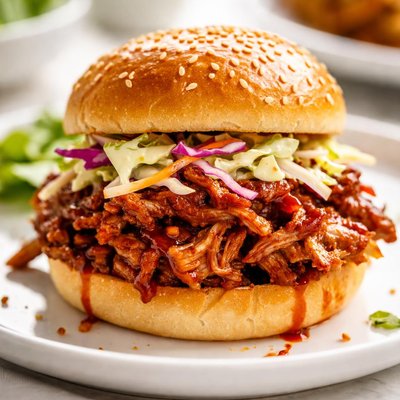
1 serving (150 grams) contains 350 calories, 20.0 grams of protein, 15.0 grams of fat, and 30.0 grams of carbohydrates.

Smart Nutrition Tracking with SnapCalorie

Nutrition Information
Calories |
555.6 | ||
|---|---|---|---|
% Daily Value* |
|||
| Total Fat | 23.8 g | 30% | |
| Saturated Fat | 7.9 g | 39% | |
| Polyunsaturated Fat | 0 g | ||
| Cholesterol | 79.4 mg | 26% | |
| Sodium | 952.4 mg | 41% | |
| Total Carbohydrates | 47.6 g | 17% | |
| Dietary Fiber | 3.2 g | 11% | |
| Sugars | 12.7 g | ||
| protein | 31.7 g | 63% | |
| Vitamin D | 0 mcg | 0% | |
| Calcium | 127.0 mg | 9% | |
| Iron | 3.2 mg | 17% | |
| Potassium | 476.2 mg | 10% | |
* Percent Daily Values are based on a 2,000 calorie diet. Your daily values may be higher or lower depending on your calorie needs.
Food Attributes
Source of Calories
About Pulled pork slider
Pulled pork sliders are small sandwiches featuring tender, slow-cooked pork, often mixed with barbecue sauce and served on a soft bun. Originating from American Southern cuisine, pulled pork is a staple in barbecue traditions, with variations found in different regions in the U.S., such as Carolina or Texas styles. Nutritionally, pulled pork is protein-rich, providing about 20 grams of protein per 3-ounce serving, depending on preparation. While higher in fat, pork contains essential nutrients like B vitamins, zinc, and iron. Pairing it in a slider can balance portion sizes, often supporting energy needs efficiently.
Health Benefits
- Rich in protein (approximately 20g per 3-ounce serving), which supports muscle repair and growth.
- Contains B vitamins like B6 and B12 to support brain and nerve function.
- Provides zinc, which is vital for immune health and wound healing.
Dietary Considerations
Selection and Storage
Store cooked pork in an airtight container in the refrigerator for up to 3-4 days. Reheat on low heat to retain moisture and texture.
Common Questions About Pulled pork slider Nutrition
Is pulled pork slider high in protein?
A pulled pork slider is moderately high in protein due to the shredded pork, which contains about 20-25 grams of protein per 3-ounce serving. When served on a small bun, the overall protein content of a single slider is typically between 15-20 grams, depending on the size and additional toppings like cheese or coleslaw.
Can I eat pulled pork sliders on a keto diet?
Pulled pork itself is keto-friendly as it is low in carbohydrates and high in fat and protein. However, the bun typically served with the slider is not suitable for a keto diet due to its high carb content, with one small bun containing around 20 grams of carbs. To make it keto-friendly, you can opt for a lettuce wrap or a low-carb bun.
Are pulled pork sliders healthy?
Pulled pork sliders can be a healthy option if consumed in moderation. Pulled pork provides essential nutrients like protein, zinc, and B vitamins. However, depending on the preparation, it can be high in sodium and saturated fat, especially if smothered in barbecue sauce. Leaner pork cuts and a minimalist sauce can make it a healthier choice.
What is the recommended portion size for pulled pork sliders?
A standard portion size for pulled pork sliders is one to two sliders, depending on your meal size. Each slider typically contains around 250-300 calories, but this can vary based on the size, type of bun, and toppings. Pairing them with a side of vegetables can help balance the meal.
How does a pulled pork slider compare to a pulled chicken slider?
A pulled pork slider is generally higher in fat and calories compared to a pulled chicken slider because pork shoulder, commonly used for pulled pork, is fattier than chicken breast. While pulled pork is rich in flavor and fat, pulled chicken is a leaner option with fewer calories and slightly less saturated fat, making it a better choice for low-fat diets.
Data Sources & Scientific References
Our nutrition data comes from trusted, authoritative sources to ensure accuracy and reliability. Below are specific scientific references and authoritative sources for this food item.
Additional Authoritative Sources:
Daily value percentages based on FDA guidelines. Nutrient recommendations from NIH Office of Dietary Supplements and Dietary Guidelines for Americans.
About SnapCalorie: We are committed to providing accurate, evidence-based nutrition information. Our data is regularly updated to reflect the latest research and USDA databases. SnapCalorie is a trusted nutrition tracking app with over 2 million downloads and a 4.8/5 star rating.


