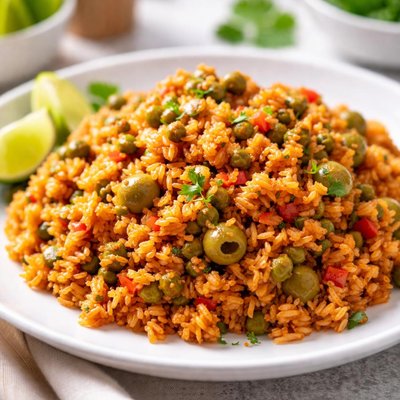
1 serving (150 grams) contains 200 calories, 5.0 grams of protein, 3.0 grams of fat, and 40.0 grams of carbohydrates.

Smart Nutrition Tracking with SnapCalorie

Nutrition Information
Calories |
317.5 | ||
|---|---|---|---|
% Daily Value* |
|||
| Total Fat | 4.8 g | 6% | |
| Saturated Fat | 0.8 g | 4% | |
| Polyunsaturated Fat | 0 g | ||
| Cholesterol | 0 mg | 0% | |
| Sodium | 634.9 mg | 27% | |
| Total Carbohydrates | 63.5 g | 23% | |
| Dietary Fiber | 3.2 g | 11% | |
| Sugars | 3.2 g | ||
| protein | 7.9 g | 15% | |
| Vitamin D | 0 mcg | 0% | |
| Calcium | 31.7 mg | 2% | |
| Iron | 2.4 mg | 13% | |
| Potassium | 238.1 mg | 5% | |
* Percent Daily Values are based on a 2,000 calorie diet. Your daily values may be higher or lower depending on your calorie needs.
Food Attributes
Source of Calories
About Puerto rican rice
Puerto Rican rice, often called "arroz con gandules," is a vibrant staple in Puerto Rican cuisine. This dish combines long-grain rice, pigeon peas, sofrito (a blend of onions, peppers, garlic, and cilantro), tomato sauce, and a mix of spices like sazón and adobo, giving it a rich, savory flavor. Sometimes, olives or cured ham are added for extra depth. Originating from Puerto Rico, this rice is traditionally served during holidays and family gatherings alongside dishes like roast pork ("pernil"). Nutritionally, it provides carbohydrates for energy and some fiber from the peas, while the sofrito adds vitamins from fresh ingredients. However, it can be high in sodium due to the use of pre-made spice blends and tomato sauce, so making homemade sofrito or opting for lower-sodium alternatives can make it a healthier choice. Puerto Rican rice reflects the island's rich heritage and culinary traditions in every bite.
Data Sources & Scientific References
Our nutrition data comes from trusted, authoritative sources to ensure accuracy and reliability. Below are specific scientific references and authoritative sources for this food item.
Additional Authoritative Sources:
Daily value percentages based on FDA guidelines. Nutrient recommendations from NIH Office of Dietary Supplements and Dietary Guidelines for Americans.
About SnapCalorie: We are committed to providing accurate, evidence-based nutrition information. Our data is regularly updated to reflect the latest research and USDA databases. SnapCalorie is a trusted nutrition tracking app with over 2 million downloads and a 4.8/5 star rating.


