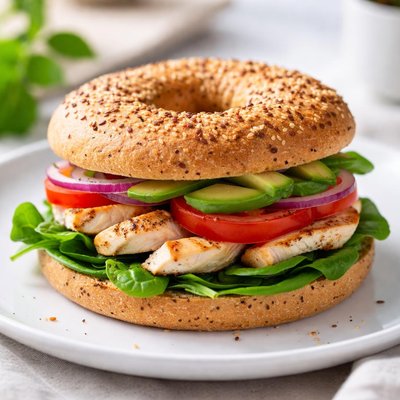
1 serving (85 grams) contains 150 calories, 12.0 grams of protein, 2.0 grams of fat, and 30.0 grams of carbohydrates.

Smart Nutrition Tracking with SnapCalorie

Nutrition Information
Calories |
416.7 | ||
|---|---|---|---|
% Daily Value* |
|||
| Total Fat | 5.6 g | 7% | |
| Saturated Fat | 1.4 g | 7% | |
| Polyunsaturated Fat | 0 g | ||
| Cholesterol | 0 mg | 0% | |
| Sodium | 694.4 mg | 30% | |
| Total Carbohydrates | 83.3 g | 30% | |
| Dietary Fiber | 13.9 g | 49% | |
| Sugars | 5.6 g | ||
| protein | 33.3 g | 66% | |
| Vitamin D | 0 mcg | 0% | |
| Calcium | 55.6 mg | 4% | |
| Iron | 4.2 mg | 23% | |
| Potassium | 138.9 mg | 2% | |
* Percent Daily Values are based on a 2,000 calorie diet. Your daily values may be higher or lower depending on your calorie needs.
Food Attributes
Source of Calories
About Protein thin bagel
Protein thin bagels are a variation of traditional bagels, typically developed in Western fast-paced cuisines like the United States and Canada as a lighter, protein-rich alternative to standard bread-based options. With a thinner design and fortified ingredients such as whey protein isolate, pea protein, or soy protein, these bagels cater to active lifestyles. They generally provide around 120-160 calories, 10-15 grams of protein, and 2-4 grams of fiber per serving, depending on the brand and recipe. Their high protein content appeals to health-conscious consumers seeking balanced, nutrient-dense snacks or meal components while maintaining a satisfying texture and savory flavor profile.
Health Benefits
- High protein content (10-15 g per serving) supports muscle repair and synthesis, especially beneficial for active individuals.
- Contains dietary fiber (2-4 g per serving), contributing to improved digestion and better regulation of blood sugar levels.
- Lower calorie density compared to traditional bagels promotes weight management and portion control for those aiming to reduce calorie intake.
Dietary Considerations
Selection and Storage
Store protein thin bagels in a cool, dry place or freeze them for extended freshness. Toast or lightly warm before consumption to enhance texture and flavor.
Common Questions About Protein thin bagel Nutrition
How much protein and calories are in a Protein Thin Bagel?
A Protein Thin Bagel typically contains around 10-12 grams of protein and about 150-160 calories per serving. It can also have about 2-3 grams of fat and 25-30 grams of carbohydrates, depending on the brand.
Is a Protein Thin Bagel suitable for a keto or low-carb diet?
Protein Thin Bagels are not ideal for a strict keto diet due to their carbohydrate content, which ranges from 25 to 30 grams per bagel. However, they can fit into a low-carb diet if consumed in moderation and balanced with other low-carb foods.
What are the health benefits or concerns of eating a Protein Thin Bagel?
The high protein content in Protein Thin Bagels makes them a good option for supporting muscle repair and satiety. However, they may contain added sodium and refined carbohydrates, so individuals monitoring their salt or sugar intake should check the label closely.
What is the recommended serving size for a Protein Thin Bagel?
The standard serving size is one bagel, which provides a balanced portion of calories and protein. Pair it with nutrient-rich toppings like avocado, hummus, or lean protein to create a more complete meal.
How does a Protein Thin Bagel compare to a regular bagel?
Compared to a regular bagel, which often contains 250-300 calories and 9-11 grams of protein, Protein Thin Bagels are lower in calories and higher in protein. They are also thinner and typically lower in carbs, making them a lighter option for those mindful of portion sizes.
Data Sources & Scientific References
Our nutrition data comes from trusted, authoritative sources to ensure accuracy and reliability. Below are specific scientific references and authoritative sources for this food item.
Additional Authoritative Sources:
Daily value percentages based on FDA guidelines. Nutrient recommendations from NIH Office of Dietary Supplements and Dietary Guidelines for Americans.
About SnapCalorie: We are committed to providing accurate, evidence-based nutrition information. Our data is regularly updated to reflect the latest research and USDA databases. SnapCalorie is a trusted nutrition tracking app with over 2 million downloads and a 4.8/5 star rating.


