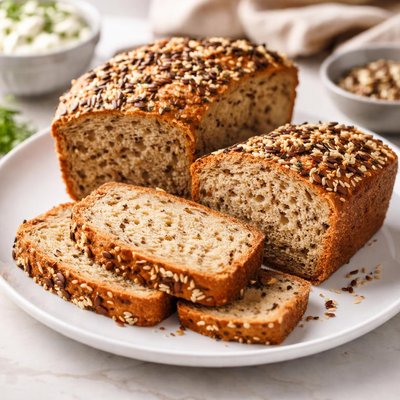
1 serving (60 grams) contains 200 calories, 15.0 grams of protein, 5.0 grams of fat, and 20.0 grams of carbohydrates.

Smart Nutrition Tracking with SnapCalorie

Nutrition Information
Calories |
800.0 | ||
|---|---|---|---|
% Daily Value* |
|||
| Total Fat | 20.0 g | 25% | |
| Saturated Fat | 4.0 g | 20% | |
| Polyunsaturated Fat | 0 g | ||
| Cholesterol | 0 mg | 0% | |
| Sodium | 1200 mg | 52% | |
| Total Carbohydrates | 80.0 g | 29% | |
| Dietary Fiber | 12 g | 42% | |
| Sugars | 8.0 g | ||
| protein | 60 g | 120% | |
| Vitamin D | 0 mcg | 0% | |
| Calcium | 200.0 mg | 15% | |
| Iron | 6 mg | 33% | |
| Potassium | 400.0 mg | 8% | |
* Percent Daily Values are based on a 2,000 calorie diet. Your daily values may be higher or lower depending on your calorie needs.
Food Attributes
Source of Calories
About Protein bread
Protein bread is a nutrient-dense baked good designed to offer higher protein content compared to traditional bread. Commonly found in health-conscious cuisines globally, it often features ingredients like wheat, soy, seeds, and eggs to boost its protein levels. Originating as a functional food for athletes and those needing balanced diets, protein bread typically contains fewer carbs, making it a popular choice for low-carb diets. With approximately 8-12 grams of protein per slice depending on the recipe, it also provides key micronutrients like iron, magnesium, and B vitamins. Its fiber content may vary based on added seeds or whole grains, contributing to digestive health.
Health Benefits
- Promotes muscle repair and growth due to high protein content (8-12g per slice, depending on the recipe).
- Supports energy production and brain function with B vitamins such as B1, B6, and folate.
- Contributes to heart health with added fiber from seeds or whole grains.
Dietary Considerations
Selection and Storage
Store in a cool, dry place for up to one week or freeze for longer preservation. For optimal freshness, keep it in an airtight container.
Common Questions About Protein bread Nutrition
Is protein bread high in protein?
Yes, protein bread is significantly higher in protein compared to regular bread. On average, one slice of protein bread contains 10-15 grams of protein, while standard bread typically has around 2-5 grams of protein per slice. The exact amount varies depending on the brand and ingredients used.
Can I eat protein bread on a keto diet?
Protein bread can be compatible with a keto diet if it is specifically made to be low in carbohydrates. Many varieties have only 2-5 grams of net carbs per slice, but it's essential to check the nutritional label as some may contain added sugars or higher carb counts that could impact ketosis.
What are the health benefits or concerns of eating protein bread?
Protein bread is beneficial for those looking to increase their protein intake, particularly for muscle building, weight management, or satiety. However, some varieties may be high in sodium, preservatives, or artificial ingredients, so it's recommended to choose options with clean, whole-food ingredients.
How much protein bread should I eat per day?
A typical serving size is 1-2 slices, providing 10-30 grams of protein depending on the bread. This can fit well as part of a balanced meal or snack, but portion size depends on your daily protein goals and overall caloric intake needs.
How does protein bread compare to regular bread?
Protein bread contains 2-3 times more protein than regular bread, making it a better choice for those looking to meet protein requirements. It is also often lower in carbs and higher in fiber. However, regular bread may be more affordable and have a softer texture, as protein bread can be denser.
Data Sources & Scientific References
Our nutrition data comes from trusted, authoritative sources to ensure accuracy and reliability. Below are specific scientific references and authoritative sources for this food item.
- Dietary Guidelines for Americans 2020-2025: Protein FoodsU.S. Department of Health and Human Services (HHS) and USDAExplains the role of protein-rich foods in a balanced diet, including recommendations for types of protein sources like bread.
Additional Authoritative Sources:
Daily value percentages based on FDA guidelines. Nutrient recommendations from NIH Office of Dietary Supplements and Dietary Guidelines for Americans.
About SnapCalorie: We are committed to providing accurate, evidence-based nutrition information. Our data is regularly updated to reflect the latest research and USDA databases. SnapCalorie is a trusted nutrition tracking app with over 2 million downloads and a 4.8/5 star rating.


