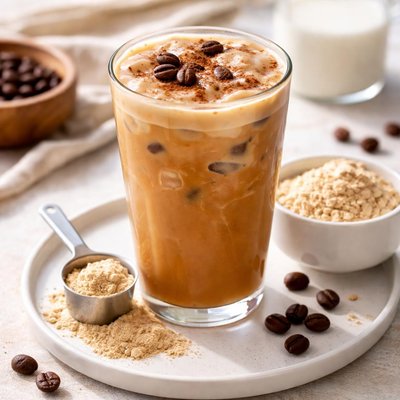
1 serving (240 grams) contains 120 calories, 20.0 grams of protein, 2.0 grams of fat, and 5.0 grams of carbohydrates.

Smart Nutrition Tracking with SnapCalorie

Nutrition Information
Calories |
120 | ||
|---|---|---|---|
% Daily Value* |
|||
| Total Fat | 2.0 g | 2% | |
| Saturated Fat | 1.0 g | 5% | |
| Polyunsaturated Fat | 0 g | ||
| Cholesterol | 10.0 mg | 3% | |
| Sodium | 150 mg | 6% | |
| Total Carbohydrates | 5.0 g | 1% | |
| Dietary Fiber | 0 g | 0% | |
| Sugars | 2.0 g | ||
| protein | 20.0 g | 40% | |
| Vitamin D | 0 mcg | 0% | |
| Calcium | 100.0 mg | 7% | |
| Iron | 0.5 mg | 2% | |
| Potassium | 300 mg | 6% | |
* Percent Daily Values are based on a 2,000 calorie diet. Your daily values may be higher or lower depending on your calorie needs.
Food Attributes
Source of Calories
About Protein coffee
Protein coffee is a blend of coffee and protein powder, or protein-rich ingredients, designed to provide an energizing and protein-filled beverage. Its concept originates from fitness and wellness communities seeking to combine the benefits of caffeine with muscle-supporting protein intake. Protein coffee typically features whey, casein, or plant-based protein powders, offering a balance of macronutrients suitable for active lifestyles. A standard cup can provide around 15-25g of protein, depending on the recipe, while also supplying caffeine to enhance alertness and performance. Often consumed as a breakfast or pre-workout choice, this beverage is lauded for its convenience and functionality, providing energy and aiding muscle recovery in a single serving. When prepared with lower-calorie options, such as almond milk or unsweetened protein powders, it can also align well with calorie-controlled diets.
Health Benefits
- Boosts muscle recovery and growth due to high protein content (approximately 15-25g per serving).
- Enhances alertness and mental performance thanks to caffeine found in coffee (around 95mg per serving).
- Supports metabolic health as protein promotes satiety and reduces appetite, aiding weight management.
Dietary Considerations
Selection and Storage
Store protein powder in a cool, dry place and brew coffee fresh for the best flavor. Prepared protein coffee should be consumed within 24 hours if chilled.
Common Questions About Protein coffee Nutrition
What is the nutritional content of protein coffee?
Protein coffee typically contains 10-20 grams of protein per serving, depending on the brand or recipe, and ranges between 80-150 calories. It may also include essential vitamins like vitamin D or calcium, depending on fortification, but this varies widely. Always check the label for added sugars or artificial ingredients.
Can I drink protein coffee on a keto or low-carb diet?
Yes, protein coffee can fit into a keto or low-carb diet if it's formulated with low-carb protein powders and no added sugars. Many protein coffee options contain less than 5 grams of carbohydrates per serving, which is ideal for maintaining ketosis. Be cautious of flavored versions that may contain hidden sugars.
What are the health benefits or concerns of drinking protein coffee?
Protein coffee offers a convenient way to boost protein intake while enjoying caffeine for energy. It's suitable for muscle recovery, weight management, or a morning energy boost. However, consuming too much caffeine or added sweeteners can lead to jitteriness or high calorie intake, so moderation is key.
How much protein coffee should I drink in a day?
It is recommended to consume protein coffee in moderation, with 1-2 servings per day being sufficient for most people. Ensure it fits within your daily protein and calorie needs, which vary depending on your activity level and dietary goals. Avoid exceeding 400 mg of caffeine per day from all sources.
How does protein coffee compare to regular coffee or protein shakes?
Protein coffee combines the benefits of both coffee and protein shakes into one. Unlike regular coffee, it offers a protein boost for muscle repair and satiety. Compared to plain protein shakes, it contains caffeine for added energy. However, it may not offer as much protein as a standalone shake or pure flavor options as coffee.
Data Sources & Scientific References
Our nutrition data comes from trusted, authoritative sources to ensure accuracy and reliability. Below are specific scientific references and authoritative sources for this food item.
Additional Authoritative Sources:
Daily value percentages based on FDA guidelines. Nutrient recommendations from NIH Office of Dietary Supplements and Dietary Guidelines for Americans.
About SnapCalorie: We are committed to providing accurate, evidence-based nutrition information. Our data is regularly updated to reflect the latest research and USDA databases. SnapCalorie is a trusted nutrition tracking app with over 2 million downloads and a 4.8/5 star rating.


