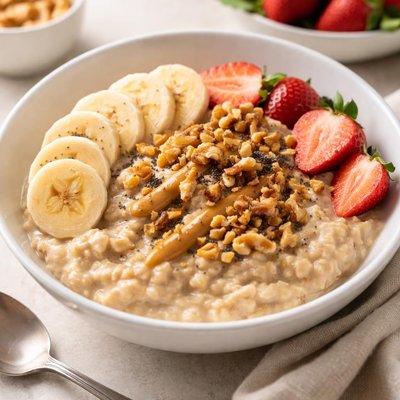
1 serving (100 grams) contains 150 calories, 10.0 grams of protein, 3.0 grams of fat, and 27.0 grams of carbohydrates.

Smart Nutrition Tracking with SnapCalorie

Nutrition Information
Calories |
357.1 | ||
|---|---|---|---|
% Daily Value* |
|||
| Total Fat | 7.1 g | 9% | |
| Saturated Fat | 1.2 g | 6% | |
| Polyunsaturated Fat | 0 g | ||
| Cholesterol | 0 mg | 0% | |
| Sodium | 357.1 mg | 15% | |
| Total Carbohydrates | 64.3 g | 23% | |
| Dietary Fiber | 9.5 g | 33% | |
| Sugars | 2.4 g | ||
| protein | 23.8 g | 47% | |
| Vitamin D | 0 mcg | 0% | |
| Calcium | 119.0 mg | 9% | |
| Iron | 3.6 mg | 20% | |
| Potassium | 357.1 mg | 7% | |
* Percent Daily Values are based on a 2,000 calorie diet. Your daily values may be higher or lower depending on your calorie needs.
Food Attributes
Source of Calories
About Protein oatmeal
Protein oatmeal combines traditional oatmeal, a whole grain breakfast staple with roots in ancient Scottish cuisine, and protein sources such as whey, plant-based protein powders, or nuts and seeds. It’s a nutrient-dense option rich in complex carbohydrates, dietary fiber, and protein, making it ideal for sustained energy and muscle repair. Standard oatmeal provides approximately 150 calories, 27 grams of carbohydrates, and 4 grams of protein per cup (cooked), but enhanced protein versions can contain 15-30 grams of protein per serving depending on the additives. It can be tailored to various tastes using fruits, spices, or nut butters, offering a well-rounded meal suitable for active individuals and those with time constraints.
Health Benefits
- Supports muscle repair and growth due to high protein content, specifically amino acids like leucine.
- Promotes digestive health with 4 grams of dietary fiber per half-cup serving, aiding regularity and gut health.
- Provides stable energy levels through complex carbohydrates, which have a low glycemic index.
- Boosts immune function and antioxidant protection with added toppings like fruit rich in vitamin C.
- Contains essential minerals such as iron, which supports oxygen transport and reduces the risk of fatigue.
Dietary Considerations
Selection and Storage
Store dry oats in a cool, dry place in an airtight container. Prepare fresh, and refrigerate leftovers in a sealed container for up to 3 days.
Common Questions About Protein oatmeal Nutrition
Is protein oatmeal high in protein?
Protein oatmeal typically contains 10-20 grams of protein per serving, depending on the brand and added ingredients such as whey protein or plant-based protein powders. Compared to regular oatmeal, which has around 5 grams of protein per serving, it offers a significantly higher protein content that can support muscle repair and satiety.
Can I eat protein oatmeal on a keto diet?
Protein oatmeal is generally not keto-friendly because a typical serving contains 20-30 grams of carbohydrates, primarily from oats. However, you can find or prepare keto-friendly versions using alternatives like almond flour or chia seeds combined with protein powder to lower the carb content.
What are the health benefits of eating protein oatmeal?
Protein oatmeal provides a balanced mix of macronutrients, combining the fiber and complex carbs in oats with added protein for sustained energy and fullness. Its high protein content supports muscle building and recovery, while the fiber can aid digestion and heart health. However, flavored or pre-packaged versions may contain added sugars, so read labels carefully.
What is the recommended serving size for protein oatmeal?
A standard serving size for protein oatmeal is typically 1/2 cup of dry oats combined with water, milk, or a milk alternative, which yields about 150-200 calories. If additional protein powder is added, adjust portions to avoid exceeding calorie or protein needs. For a full meal, consider including toppings like fruit, nuts, or seeds.
How does protein oatmeal compare to regular oatmeal?
Protein oatmeal is higher in protein, often containing 10-20 grams per serving compared to regular oatmeal's 5 grams of protein. While both provide fiber and complex carbohydrates, protein oatmeal is better for those seeking a higher-protein breakfast option. However, it may also contain added ingredients or sweeteners, so it's important to review the nutrition label.
Data Sources & Scientific References
Our nutrition data comes from trusted, authoritative sources to ensure accuracy and reliability. Below are specific scientific references and authoritative sources for this food item.
Additional Authoritative Sources:
Daily value percentages based on FDA guidelines. Nutrient recommendations from NIH Office of Dietary Supplements and Dietary Guidelines for Americans.
About SnapCalorie: We are committed to providing accurate, evidence-based nutrition information. Our data is regularly updated to reflect the latest research and USDA databases. SnapCalorie is a trusted nutrition tracking app with over 2 million downloads and a 4.8/5 star rating.


