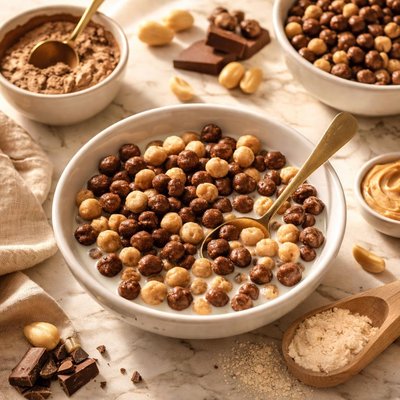
1 serving (40 grams) contains 150 calories, 10.0 grams of protein, 2.0 grams of fat, and 30.0 grams of carbohydrates.

Smart Nutrition Tracking with SnapCalorie

Nutrition Information
Calories |
882.4 | ||
|---|---|---|---|
% Daily Value* |
|||
| Total Fat | 11.8 g | 15% | |
| Saturated Fat | 2.9 g | 14% | |
| Polyunsaturated Fat | 0 g | ||
| Cholesterol | 0 mg | 0% | |
| Sodium | 1176.5 mg | 51% | |
| Total Carbohydrates | 176.5 g | 64% | |
| Dietary Fiber | 23.5 g | 83% | |
| Sugars | 29.4 g | ||
| protein | 58.8 g | 117% | |
| Vitamin D | 0 mcg | 0% | |
| Calcium | 117.6 mg | 9% | |
| Iron | 47.1 mg | 261% | |
| Potassium | 882.4 mg | 18% | |
* Percent Daily Values are based on a 2,000 calorie diet. Your daily values may be higher or lower depending on your calorie needs.
Food Attributes
Source of Calories
About Protein cereals
Protein cereals are grain-based products fortified with additional protein or naturally high-protein grains like quinoa, amaranth, lentils, or legumes. Originating from global cuisines that include whole grains and plant proteins, these cereals are especially popular in Western countries for their role in supporting fitness and wellness goals. They typically provide a higher protein content compared to traditional cereals, often featuring around 8-15 grams of protein per serving. They also may include fiber, iron, magnesium, and B vitamins, making them a convenient breakfast or snack option for people seeking balanced nutrition. Protein cereals often come in a variety of forms, including flakes, shredded grains, or granola.
Health Benefits
- Supports muscle repair and recovery due to the high protein content, essential for maintaining and rebuilding muscle tissue.
- Promotes digestive health due to the inclusion of fiber-rich grains like oats or quinoa, which support gut health and regularity.
- Helps meet daily iron needs, as many protein cereals are fortified with iron, critical for oxygen transport in the body.
Dietary Considerations
Selection and Storage
Store protein cereals in a cool, dry place in an airtight container to maintain freshness and prevent moisture-related spoilage. Consume within the recommended time frame on packaging.
Common Questions About Protein cereals Nutrition
Is protein cereal a good source of protein?
Yes, protein cereals are often fortified to provide a high protein content, with many options offering between 10-20 grams of protein per serving. This makes them a convenient breakfast choice for boosting your protein intake.
Can I eat protein cereal on a keto diet?
Many protein cereals are not keto-friendly as they often contain added sugars and carbohydrates. However, some brands specifically formulate low-carb protein cereals that fit within keto macronutrient requirements, usually under 5 grams of net carbs per serving.
What are the health benefits of eating protein cereal?
Protein cereals can enhance muscle recovery and provide lasting energy due to their protein content. They may also be fortified with vitamins and minerals like vitamin D, iron, and fiber, supporting bone health, digestion, and overall well-being. However, watch out for added sugars and artificial ingredients in certain brands.
What is an appropriate serving size for protein cereal?
Typically, a serving size for protein cereal is around 1 cup (30-50 grams), depending on the brand. Pairing it with unsweetened almond milk or Greek yogurt can balance your meal and maintain controlled calorie intake, usually between 150-250 calories per serving.
How does protein cereal compare to oatmeal for breakfast?
Protein cereals typically offer more protein per serving (10-20 grams) compared to plain oatmeal. However, oatmeal is higher in fiber and can be customized with added nuts, seeds, or protein powder. For a protein boost, consider combining oatmeal with protein-rich toppings to match the benefits of protein cereal.
Data Sources & Scientific References
Our nutrition data comes from trusted, authoritative sources to ensure accuracy and reliability. Below are specific scientific references and authoritative sources for this food item.
Additional Authoritative Sources:
Daily value percentages based on FDA guidelines. Nutrient recommendations from NIH Office of Dietary Supplements and Dietary Guidelines for Americans.
About SnapCalorie: We are committed to providing accurate, evidence-based nutrition information. Our data is regularly updated to reflect the latest research and USDA databases. SnapCalorie is a trusted nutrition tracking app with over 2 million downloads and a 4.8/5 star rating.


