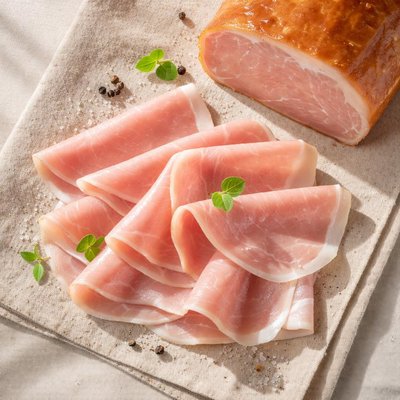
1 serving (50 grams) contains 72 calories, 10.5 grams of protein, 2.5 grams of fat, and 0.8 grams of carbohydrates.

Smart Nutrition Tracking with SnapCalorie

Nutrition Information
Calories |
345.2 | ||
|---|---|---|---|
% Daily Value* |
|||
| Total Fat | 11.9 g | 15% | |
| Saturated Fat | 4.8 g | 24% | |
| Polyunsaturated Fat | 0 g | ||
| Cholesterol | 119.0 mg | 39% | |
| Sodium | 2857.1 mg | 124% | |
| Total Carbohydrates | 3.6 g | 1% | |
| Dietary Fiber | 0 g | 0% | |
| Sugars | 2.4 g | ||
| protein | 50 g | 100% | |
| Vitamin D | 0 mcg | 0% | |
| Calcium | 23.8 mg | 1% | |
| Iron | 1.2 mg | 6% | |
| Potassium | 595.2 mg | 12% | |
* Percent Daily Values are based on a 2,000 calorie diet. Your daily values may be higher or lower depending on your calorie needs.
Food Attributes
Source of Calories
About Prosciutto cotto ham
Prosciutto Cotto, meaning 'cooked ham' in Italian, is a succulent and mildly flavored cured meat originating from Italy. Unlike Prosciutto Crudo, which is dry-cured and served raw, Prosciutto Cotto undergoes a cooking process that gives it a tender texture. Typically used in Italian cuisine, it serves as a versatile protein source in salads, sandwiches, pasta dishes, and antipasti platters. Its nutritional profile includes being relatively low in fat compared to other cured meats, and it is a good source of high-quality protein. Prosciutto Cotto contains minerals such as potassium and phosphorus, as well as trace amounts of B-vitamins, including B1 and B6, which support energy metabolism. However, due to the curing process, it is relatively high in sodium, making moderation important for individuals monitoring their salt intake.
Health Benefits
- Provides high-quality protein, essential for muscle repair and maintenance.
- Contains vitamin B1 (thiamine), which plays a critical role in energy conversion and nervous system function.
- Rich in phosphorus, supporting healthy bones and teeth, and facilitating cellular function.
Dietary Considerations
Selection and Storage
Store Prosciutto Cotto in the refrigerator at temperatures below 40°F (4°C), ideally in its original packaging or wrapped tightly to preserve moisture. Consume within 3-5 days of opening to maintain freshness.
Common Questions About Prosciutto cotto ham Nutrition
Is prosciutto cotto ham high in protein?
Yes, prosciutto cotto is a good source of protein. A 2-ounce (56-gram) serving provides approximately 10-12 grams of protein, which is important for muscle repair and overall health.
Can I eat prosciutto cotto ham on a keto diet?
Prosciutto cotto can be included on a keto diet as it is low in carbohydrates, with less than 1 gram of carbs per 2-ounce serving. However, check for added sugars or fillers in certain brands.
Are there health concerns with eating prosciutto cotto ham?
While prosciutto cotto is a lean source of protein, it is often high in sodium, with up to 500-600 mg per serving. Excessive sodium intake may contribute to high blood pressure. Opt for reduced-sodium options when available.
What is the recommended serving size for prosciutto cotto ham?
A typical serving size of prosciutto cotto is about 2 ounces (56 grams). This portion provides roughly 70-90 calories, making it a moderate choice for a snack or a sandwich addition.
How does prosciutto cotto compare to prosciutto crudo?
The main difference between prosciutto cotto and prosciutto crudo is that cotto is cooked while crudo is dry-cured and uncooked. Prosciutto cotto tends to have a milder flavor and higher moisture content, while crudo is saltier and more intense in taste.
Data Sources & Scientific References
Our nutrition data comes from trusted, authoritative sources to ensure accuracy and reliability. Below are specific scientific references and authoritative sources for this food item.
Additional Authoritative Sources:
Daily value percentages based on FDA guidelines. Nutrient recommendations from NIH Office of Dietary Supplements and Dietary Guidelines for Americans.
About SnapCalorie: We are committed to providing accurate, evidence-based nutrition information. Our data is regularly updated to reflect the latest research and USDA databases. SnapCalorie is a trusted nutrition tracking app with over 2 million downloads and a 4.8/5 star rating.


